Wednesday, June 20, 2018

Substitution Mutation

Substitution Mutation Definition


A substitution mutation is a type of replication error during DNA replication which places the wrong nucleotide or sequence of nucleotides in the wrong position. A type of substitution mutation, a point mutation, occurs which a single nucleotide is substituted. This can be seen in the image below.


https://upload.wikimedia.org/wikipedia/commons/3/37/Single_nucleotide_polymorphism_substitution_mutation_diagram_-_cytosine_to_thymine.png


Importantly, a substitution mutation results in DNA of the same length. It does not add or subtract from the number of nucleotides in the sequence. A single nucleotide substitution mutation is the most common, as most large-scale nucleotide swaps involve other mechanisms. For example, a reciprocal translocation involves the movement of entire portions of chromosomes, and swaps one portion for a portion of another chromosome.


As with all mutations, a substitution mutation can drastically change the proteins created by an organism. The proteins responsible for reading DNA process the molecule in units of three base pairs at a time. These codons each specify a different amino acid. If the sequence change even by one nucleotide, a different amino acid is placed within the protein. The function of each protein is dependent on the specific interaction between the amino acids they consist of. A substitution mutation can displace many more than one nucleotide. In this case, it may make the protein completely dysfunctional, or give it an entirely new function. New adaptations can arise this way, if they are transferred to the offspring and are beneficial. However, the large majority of mutations are deleterious, or cause negative effects.


What causes a Substitution Mutation?


A substitution mutation can be caused by a number of sources directly related to the reading and storage of DNA. For instance, every hour each cell in your body losses around 1,000 nucleotides from the DNA backbone. These nucleotides fall off due to the process of depurination. In the process of replacing them, the proteins that manage the DNA make a mistake approximately 75% of the time, because there are 4 nucleotides to choose from. Other proteins must come along after and check the DNA for errors. If they miss the substitution mutation, it may stay and be replicated.


Another factor which can drive a substitution mutation is deamination, the process by which amino groups degrade off of nucleotides. One of the only ways the protein machinery can differentiate between nucleotides is the amino groups attached to them. As these fall off, the protein machinery can misrecognize the nucleotide, and supply the wrong nucleotide pair. When the DNA replicates, the new nucleotide will become established in a new cell line.


On top of these internal drivers which can cause a substitution mutation, there are also external forces which can cause nucleotide swaps. Carcinogens and mutagens are a special classes of chemicals which drastically impede the protein machinery and cause lots of mutations. Even sunlight can degrade and impede with DNA function, driving a substitution mutation.


Substitution Mutation Examples


Sickle-Cell Anemia


The blood disease Sickle-cell anemia is caused by a simple substitution mutation. In the mutation, a single nucleotide is replaced in the portion of DNA which codes for a unit of hemoglobin. Hemoglobin is a multi-protein complex, responsible for carrying oxygen and supporting the shape of blood cells. The substitution mutation causes a glutamic acid in the protein to be changed to a valine amino acid.


While this might not seem like much of a change in a protein which contain over 140 amino acids, it makes all the difference. Valine, unlike glutamic acid, is hydrophobic. As such, it repels polar interactions where glutamic acid would attract them. This severely impacts the protein’s ability to function. Blood cells immediately reflect this change, becoming shriveled and sickle-shaped. With a lower ability to carry oxygen, these cells also are more prone to clot within the small capillaries of organs. This can lead to an increased risk of heart attack, stroke, and other cardiovascular diseases.


Interestingly, the substitution mutation has survived in the population for a surprising reason. The parasite which causes malaria depends on human blood cells for part of its life cycle. People with the sickle-cell substitution mutation are less susceptible to getting malaria. Apparently the different shape and function of the blood cells impedes their reproductive processes.


Color Blindness


In your eye, certain cells are responsible for picking up the colors red, green, and blue. These cells rely on different proteins, which react to the various colors. A substitution mutation in the DNA that codes for one of these proteins can lead to the condition of color blindness. People with this condition have a hard time distinguishing between the colors, while their vision is still clear otherwise. Oftentimes, only one color is knocked out. The various proteins are coded for on different places on the DNA, which makes a substitution unlikely to occur in all three genes.


Types of Substitution Mutations


Transition


There are two basic types which a substitution mutation can be. Within the four nucleotides, there are two types: the purines and pyrimidines. Adenine (A) and guanine (G) are both purines, while cytosine (C) and thymine (T) are pyrimidines. If a purine changes to a purine, the substitution mutation is considered a transition. Likewise, if a pyrimidine changes into a pyrimidine, the substitution mutation is also a transition. In the image below, transitions are labeled by the alpha lines.


https://upload.wikimedia.org/wikipedia/commons/b/b4/TsTvMutation.jpg


Transversion


The opposite of transition is transversion. In a substitution mutation involving a transversion, a purine is substituted for a pyrimidine, or vis versa. In the above image, a transversion is labeled by the beta lines. Transversions are much less likely than transitions. This is probably due to the fact that the machinery used to repair and proof-read the DNA are more specific for purine versus pyrimidine than specifying between individual nucleotides.


Quiz


1. What is the difference between a substitution mutation and a deletion mutation?
A. No difference
B. A deletion causes a frame-shift
C. A substitution causes a frame-shift

Answer to Question #1
B is correct. A substitution mutation may cause a difference in the protein, but a mutation can completely change the entire code. A frame-shift mutation happens whenever an insertion or deletion into the DNA causes the 3-codon frame to shift, which calls for entirely different amino acids.

2. Look at the following sequence of DNA


  • CTTGACTC

  • CCTGACTC

Which of the following happened?


A. Deletion Mutation

B. Insertion Mutation

C. Substitution Mutation
A. XXXX
B. XXXX
C. XXXX
D. XXXX

Answer to Question #2
C is correct. If a deletion or insertion had happened, the code would be a different length. A substitution occurred on the second nucleotide from the left, changing a T to a C. This would be considered a transition substitution mutation.

3. A substitution mutation occurred in an organism. It happened to change the sequence of amino acids just slightly, and the new amino acid is only slightly different than the old one. Will the mutation result in a functional change?
A. No
B. Yes
C. Maybe…

Answer to Question #3
C is correct. There are a lot of factors which affect the function of a protein. Even a single change in amino acid can drastically change the function. However, if the amino acid changed is very similar to the first one, it may not change the overall function.

References


  • Hartwell, L. H., Hood, L., Goldberg, M. L., Reynolds, A. E., & Silver, L. M. (2011). Genetics: From Genes to Genomes. Boston: McGraw Hill.

  • Lodish, H., Berk, A., Kaiser, C. A., Krieger, M., Scott, M. P., Bretscher, A., . . . Matsudaira, P. (2008). Molecular Cell Biology (6th ed.). New York: W.H. Freeman and Company.

  • Nelson, D. L., & Cox, M. M. (2008). Principles of Biochemistry. New York: W.H. Freeman and Company.


Substitution Mutation

Parenchyma Cells

Parenchyma Cells Definition


In plants, parenchyma is one of three types of ground tissue. Ground tissue is anything that is not vascular tissue or part of the dermis (skin) of the plant. In contrast to collenchyma and sclerenchyma cells, parenchyma cells primarily consists of all of the simple, thin walled, undifferentiated cells which form a large majority of many plant tissues.


Structure of Parenchyma Cells


Parenchyma cells are notable for their thin walls, and for being alive at maturity. Collenchyma cells tend to develop thicker secondary cell walls, to support structure. Sclerenchyma cells get both thicker walls and die off at maturity, producing tissues like bark and vascular tissue. The parenchyma cells have thinner walls and stay alive at maturity. While this makes them less useful in structural applications, the cells can move and store water and nutrients as well as divide quickly. This is important for the growth and repair functions of the parenchyma cells.


Each parenchyma cell may be a different shape, depending on its exact location and which tissue it is present in. However, it will always have a large central vacuole. This organelle is responsible for storing water and ions. This both creates a pressure between the parenchyma cells and their neighbors (called turgor pressure) and also allows the plant to store enormous amounts of water and nutrients. The thin walls of the parenchyma cells also allow the easy passage of sugars created in the leaves.


In fact, most photosynthesis takes place within specialized parenchyma cells found within leaves. These parenchyma cells, called chlorenchyma cells, contain chloroplasts. Chloroplasts are special organelles which carry out the process of photosynthesis, storing the energy of sunlight in the newly created bonds of sugar molecules. These sugars can then be converted into other sugars, fats, and oils, and stored in other parenchyma cells within the stems and roots. Potatoes, for example, are mostly parenchyma cells packed with stored starches. The plant would typically use the stores to survive the winter and get a boost the next spring.


Parenchyma Cells Functions


Healing and Repair


One of the most important functions of parenchyma cells is that of healing and repair. Parenchyma cells are unique in their meristematic nature. This means that the cells are pluripotent, having the ability to divide into a number of different cells. This plays an important role in how a plant can heal itself after a wound. While it may seem silly to think that a tree heals, the process is not much different to healing in a human body.


Parenchyma cells, once exposed to the outside when a wound occurs, are stimulated to start dividing. The cells divide towards the wound, differentiating into the different cell types which are needed, such as bark and epidermis. The parenchyma cells on the inside of the wound remain undifferentiated, and provide a source of meristematic cells in case the plant is attacked again. This process is responsible for healing in plants, from giant trees to a blade of grass.


Photosynthesis


Another important role parenchyma cells play is that of provider. While the other cell types provide much of the support and foundation on which the parenchyma cells operate, they produce a majority of the photosynthesis products. Simply through sheer numbers, parenchyma cells outnumber the other types. The chlorenchyma cells specifically do the majority of the photosynthesis.


However, photosynthesis would come to halt if the products had nowhere to go. Some parenchyma cells differentiate into part of the phloem, a special passageway for the sugars and products of photosynthesis to traverse the plant. These parenchyma cells allow the products to make it from the leaves, where they are created, all the way to the roots. The living cells have specialized proteins and channels which are used to help the sugars make their way efficiently to the roots and other tissues. These other parenchyma tissues need the sugars because they are internal and do not contain chloroplasts with which to create their own energy.


Nutrient and Food Storage


Humans rely on the storage ability of parenchyma cells as our main source of food. The entire food chain is based upon the storage of sugar within parenchyma cells. So, whether you eat meat or are a vegan, you need parenchyma cells. The large central vacuole within plant cells allows the storage of large amounts of soluble nutrients, which dissolve into the water. The plant can control the usage and distribution of the nutrients within cells via the activation of specific proteins and pathways. Parenchyma cells are a major storage place for ions, water, and all photosynthesis products. Many of the foods we know, like fruits and vegetables, are purposefully bred exaggerations of natural plant processes. Corn, potatoes, and wheat were all selected from less productive ancestors which stored higher amounts of nutrients in their parenchyma cells.


Quiz


1. What is the difference between a parenchyma and sclerenchyma cell?
A. Parenchyma cells typically don’t die at maturity
B. They are essentially the same
C. Parenchyma cells provide more structural support

Answer to Question #1
A is correct. Sclerenchyma cells typically have very thick walls, embedded with structural proteins like lignin. When these tissues die, they form rigid, tough structural support. Parenchyma cells stay alive, typically helping produce and store nutrients. They constitute the majority of most plants.

2. What is the difference between a parenchyma and chlorenchyma cell?
A. Chlorenchyma cells are internal, without chloroplasts
B. Parenchyma cells do not have chloroplasts
C. Chlorenchyma cells are a type of parenchyma cells, which contain chloroplasts

Answer to Question #2
C is correct. Chlorenchyma cells differentiate from parenchyma cells, and produce chloroplasts. To say that parenchyma cells do not have chloroplasts is false, because chlorenchyma cells are a type of parenchyma cell.

3. Could a plant survive without parenchyma cells?
A. No
B. Yes, if you water it
C. Yes under all circumstances

Answer to Question #3
A is correct. The parenchyma cells form a majority of the living cells in the plant. They carry out most of the metabolism reactions, and conduct most of the activities which constitute life, such as growth and photosynthesis. Without the parenchyma cells, a plant would be a hollow shell of mostly structural cells. Without chloroplasts or an ability to transport nutrients, they would be useless.

References


  • Feldhamer, G. A., Drickamer, L. C., Vessey, S. H., Merritt, J. F., & Krajewski, C. (2007). Mammology: Adaptation, Diversity, Ecology (3rd ed.). Baltimore: The Johns Hopkins University Press.

  • McMahon, M. J., Kofranek, A. M., & Rubatzky, V. E. (2011). Plant Science: Growth, Development, and Utilization of Cultivated Plants(5th ed.). Boston: Prentince Hall.

  • Nelson, D. L., & Cox, M. M. (2008). Principles of Biochemistry. New York: W.H. Freeman and Company.


Parenchyma Cells

Apical Meristem

Apical Meristem Definition


The apical meristem is the growth region in plants found within the root tips and the tips of the new shoots and leaves. Apical meristem is one of three types of meristem, or tissue which can differentiate into different cell types. Meristem is the tissue in which growth occurs in plants. Apical is a description of growth occurring at the tips of the plant, both top and bottom. Intercalary meristem is found between branches, while lateral meristem grow in girth, such as in woody plants.


Apical meristem is crucial in extending both access to nutrients and water via the roots and access to light energy via the leaves. Plants must expand in both of these directions in order to be successful. Some plants show apical dominance, in which only one main shoot apical meristem is the most prominent. In plants like this, there is a single main trunk which reaches to great heights. If the apical meristem is cut off, the branches below will start to assume the role of primary apical meristem, which will lead to a bushier plant. Horticulturalists use this phenomenon to increase the bushiness and yield of certain agricultural crops and ornamental plants.


Apical Meristem Function


The apical meristem, found just below the surface of the branches and roots furthest from the center of the plant, is continually dividing. Some cells divide into more meristematic cells, while other cells divide and differentiate into structural or vascular cells. There are two apical meristem locations in most plants. The shoot apical meristem is found in the tips of plants. This apical meristem is responsible for creating cells and growth to drive the plant into the light and air, where it can photosynthesize and exchange built up gases.


The root apical meristem is found at the tips of roots. Sensing the conditions of the soil around the root, signals are created within the apical meristem which direct the plant towards water and desired nutrients. It is for this reason that roots often invade pipes for water and drainage, which carry many of the nutrients they need. The apical meristem, protected by the root cap continues to produce cells even as the root cap is scraped away as it pushes through the dirt. The apical meristem must produce enough cells to not only extend into the soil, but also to replace the cells lost to abrasion.


Apical Meristem Structure


The apical meristem is located just below the root cap in the roots, as seen in the image below. The actual apical meristem is a cluster of densely packed and undifferentiated cells. From these cells will come all of the various cell structure the plant uses. An undifferentiated apical meristem cell will divide again and again, slowly becoming a specialized cell.


https://upload.wikimedia.org/wikipedia/commons/3/3f/Figure_25_01_03.jpg


In the root apical meristem, the cells are produced in two directions. In the shoot apical meristem, cells are only created in one direction. The shoot apical meristem may exist at the tips of plants, as in many dicots, or may start slightly below the soil and generate leaves which grow upward, like most monocots. However, in both groups the shoot apical meristem is the growth center of all above ground growth.


Interestingly, the shoot apical meristem in most plants is capable of producing an entire plant, whereas the root apical meristem cannot. Scientists have used the ability of the shoot apical meristem to clone many species of plant. By simply cutting off the apical meristem and transferring it to an appropriate growth medium, the apical meristem will develop roots and differentiate into a whole new plant. As an added benefit, more apical meristems form on the plant, and can be harvested for more clones. In this way, a desirable plant can be replicated almost indefinitely.


Regulation in the Apical Meristem


Diversification of cells in the apical meristem is a complex process controlled by a number of genes. In effect, these genes determine the shape and structure of a plant. As the apical meristem grows, it branches of smaller meristem locations, which will develop into branches of the stems and roots. The timing and number of these events are controlled by a series of genes within plants. The various expressions of these genes leads to different forms, some of which are more successful than others. The interaction between these genes and the growth of the apical meristem has led to the millions of different species of plants which exist today.


The variety of forms in plants is attributable almost solely to the differences in how their apical meristem functions. Some plants, like bushes, branch continuously and equally, while plants like pine trees have a single main branch. The root apical meristem is likewise responsible for root development. Roots can be deep, and focused on a single branch, such as tap-root, common to many weeds. Corn and bamboo, on the other hand, has much more dispersed and fibrous root system, which depends on lots of branching and lateral roots.


Quiz


1. What is the difference between an apical meristem and an intercalary meristem?
A. No difference
B. The apical meristem is at the tip
C. Intercalary meristems can be apical

Answer to Question #1
B is correct. The term apical simply means at the tip. A meristem is simply a portion of the organism with stem cells. Intercalary describes the space between apical meristems, in which smaller branches form.

2. How can the apical meristem be manipulated to increase the harvest of a crop?
A. They can be cut to create a bushy plant
B. More meristems means more fruit
C. They can’t be manipulated

Answer to Question #2
B is correct. While it might also create a bushy plant, most fruits and vegetables are the product of a fertilized flower. Flowers typically form at a meristem. Therefore, if clipping the apical meristem means more meristems, more flowers can be created.

3. How is the apical meristem similar to stem cells in a human fetus?
A. Both have the ability to differentiate
B. They are completely different
C. They divide in the same way

Answer to Question #3
A is correct. Both sets of cells are totipotent, in that they can differentiate into an entire organism. While the apical meristem may stay totipotent, the stem cells in humans typically reduce the stem cells to multipotent, able to only transform into a handful of related cell types. This is one reason it is much harder to clone a human.

References


  • Hartwell, L. H., Hood, L., Goldberg, M. L., Reynolds, A. E., & Silver, L. M. (2011). Genetics: From Genes to Genomes. Boston: McGraw Hill.

  • McMahon, M. J., Kofranek, A. M., & Rubatzky, V. E. (2011). Plant Science: Growth, Development, and Utilization of Cultivated Plants (5th ed.). Boston: Prentince Hall.

  • Reece, J. B., Urry, L. A., Cain, M. L., Wasserman, S. A., Minorsky, P. V., & Jackson, R. B. (2014). Campbell Biology, Tenth Edition (Vol. 1). Boston: Pearson Learning Solutions.


Apical Meristem

Adaptation

Adaptation Definition


An adaptation, or adaptive trait, is a feature produced by DNA or the interaction of the epigenome with the environment. While not all adaptations are totally positive, for an adaptation to persist in a population it must increase fitness or reproductive success. All offspring, whether formed sexually or asexually, inherit their traits from their parents. In asexual reproduction mostly identical clones are created.


Adaptation arises in asexual populations through mutations in the DNA, errors copying the DNA, or the interaction of the DNA with changes in the environment. In sexually reproducing populations, adaptation arises through similar mechanisms with the added effects of recombination during meiosis, and a more complex DNA molecule. An adaptation can become vestigial, or unused, when changes in the population or environment render it useless. An adaptation also has certain trade-offs, such as the energy it takes to create an adaptation or the increase in predation an adaptation may cause.


Types of Adaptation


Genetic Mutation and Recombination


Deoxyribonucleic acid, or DNA, is the molecule that carries the information necessary for creating and maintaining life. DNA is made from a series of nucleotides, 4 small chemicals which chain together. The sequence of these chemicals can be read by specialized enzymes and organelles within cells to produce new proteins. These proteins have various functions, and determine how the cell functions within its environment.


Since the first proteins and cellular constituents aggregated to form the first self-replicating cell, the interaction between DNA and the environment has driven adaptation. Single-celled organisms rely solely on molecular adaptation, since their basic structure prohibits the complex nature of developing new limbs other structures. Instead, an adaptation in a prokaryote comes from advantageous mutations within their DNA which create new proteins or alter the effects of current proteins. The chemical reactions enabled by these proteins allow the organisms to more efficiently collect nutrients, grow, and divide. The adaptation will persist in the population as long as it increases fitness and reproduction.


In eukaryotes and multi-cellular species, the process of mutation also drives adaptation. As in prokaryotes, the DNA is controlled by a system of proteins which interacts with the environment, known as the epigenome. In eukaryotes, the complexity of this system has increased. An adaptation can affect the organism on any level, from creating a different way to replicate DNA to developing entirely new organelles and structures of the body. Studies have shown that mutations are often deleterious, or do not adapt the organism to the environment. These mutations are not typically considered adaptations because they do not persist in the population at high levels. However, as the environment changes mal-adapted traits may become beneficial and persist as an adaptation to a new scenario.


Changes in Environment


Changes in the environment are second major category of adaptation. In many cases the epigenome is as or more important that the DNA itself. Large environmental changes, such as a change in ocean temperature or acidity, can affect a great number of species. As the environment changes, the proteins of the organisms start to function differently. Changes to the DNA or to how the epigenome interacts with the new environment can lead to a novel adaptation. For instance, life on Earth currently depends on a system of oxygen and carbon dioxide, which its organisms use for energy and respiration. Scientists have estimated that this environment was not present until photosynthetic organisms started creating oxygen and depositing it into the atmosphere. The new chemicals in the atmosphere started a wave of adaptation which has led to the current biome we have now.


As more and more species became differentiated, their interactions with each other started to drive adaptation as much as the simple composition of the atmosphere. Vast food webs developed and fell apart over the billions of years of life. These events were driven in part by the ability of organisms to quickly form an adaptation to a situation and continue reproducing. However, during many of these events, as many as 90 percent of species didn’t survive the abrupt change. While adaptation can make organisms more competitive in an environment, it can also make them less flexible to survive in a changing environment.


The complex interactions between animals have also led to diverse forms of selection which affect and form adaptation among the organisms involved. In sexual selection, for instance, differences and adaptation strategies between genders are not necessarily determined by the environment, but simply by the strange selection preferences of individuals trying to reproduce. Many birds show highly colored males, selected for by the dull colored females. The adaptation of color in the males is a characteristic used to attract more females. The females’ adaptation of dull color, on the other hand, is the result of a more directional selection of the predator prey relationship. Less colorful females are less likely to be spotted by predators. While these two adaptive traits contradict each other, they have persisted because they benefit the males and females in different ways.


Examples of Adaptation


Rhinocerous Beetle


If you’ve ever seen a Rhinoceros Beetle, you’ve probably wondered what it uses those huge horns for. Seen below is a male Rhino Beetle, with its distinctive headgear.


https://upload.wikimedia.org/wikipedia/commons/f/f3/Coleoptera_Scarabaedae_Dynastinae_Strategus_Aloeus_Julianus_–_Rhinoceros_Beetle_%2824274369714%29.jpg


Like all arthropods, the beetle is divided into segments. These various sections are very responsive to adaptation. In the Rhino Beetle, the head section has developed these large thorns. The male beetles use these large obtrusions to fight each other, in competition for females. It is presumed that ancestral beetles had little to no horns. As the beetles competed for mates over many generations, mutations which created a better way to peel the opponent off his feet were rewarded. Over time, this adaptation of large horns emerged. Horns with the greatest ability of defeating opponents allow those males to reproduce more and the adaptation will persist within the population.


Digestive Tract in Mammals


If you were to dissect various mammals, you would find something very peculiar in the size and composition of their digestive tract. Carnivores, like wolves and cats, have very short and simple digestive tracts. In fact, the more carnivorous an animal, the shorter and simpler the digestive tract is. Meat and animal products are easily digested. The adaptation of a short gut allows these animals to quickly process the energy out of their meaty meal, before it starts to rot in their gut.


Herbivores, on the other hand, have a long and complex digestive system. Some mammals, the ruminants, have multiple stomachs to process the energy out of grasses and other tough plants. Non-ruminant herbivores have complex twists and turns in their guts which increases the surface area and the amount of time food spends in the digestive tract. This adaptation allows the animals to process all of the energy out of the plant material. Interestingly, humans have a vastly complex gut, an adaptation for herbivores. Part of the complex story behind diet, nutrition, and health probably arises from the fact that the Western diet focuses on meat, rather than the foods our body has adapted to eat.


Quiz


1. A fox has a litter of 3 kits. 1 of the kits is randomly eaten by an eagle. Only 1 of the remaining kits learns how to successfully feed itself, the other starves to death. Which of the following could be considered an adaptation?
A. The learning that allowed the survivor to feed itself
B. Any genetic basis for the intelligence of the surviving fox
C. The luck of surviving the eagle

Answer to Question #1
B is correct. Learning itself is not an adaptation, because it cannot be passed on genetically. Behaviors which are inherited are known as innate behaviors, and can be considered adaptations. However, if the learning was enabled by some sort of change in the DNA or structure of the brain which is inheritable, it is an adaptation. Luck is an important part of evolution, but is not an adaptation.

2. There are somewhere around 80,000 species of animals with basis of a vertebral column, including everything from fish to elephants. Insects, on the other hand, represent somewhere around 5,000,000 species. What is one explanation for the difference in the number of species?
A. The adaptability of the insect body plan
B. Greater care for offspring
C. Global distribution

Answer to Question #2
A is correct. The insect body, made from a series of segments which connect together, presents a much more editable structure than the vertebrate endoskeleton. An exoskeleton can change and adapt without much restructuring of the muscles and internal organs. As such, insects can develop adaptations which would take mammals a much longer time to accomplish. That, plus their reproduction rate, allows them to diversify much faster.

3. A new technique known as CRISPR (Crisp-ur) is based on the immune system of certain bacteria. These bacteria, to protect against invasion from virus species, store information about the virus in their own DNA. Thus, when they replicate, their offspring have a defense to the virus. Which of the following accurately describes this process?
A. Adaptation
B. Learning
C. A little of both?

Answer to Question #3
C is correct. Although this form of learning is not the same as a child learning math, the bacteria is taking information from an attack and using it to protect itself in the future. Many scientists consider this a form of learning, as our immune system can do this as well. However, when the immunity is directly passed to the offspring, it becomes a case of adaptation. Scientist can use the same proteins and methods bacteria use to directly modify and edit DNA in living systems with this technique.

References


  • Brusca, R. C., & Brusca, G. J. (2003). Invertebrates. Sunderland, MA: Sinauer Associates, Inc.

  • Hartwell, L. H., Hood, L., Goldberg, M. L., Reynolds, A. E., & Silver, L. M. (2011). Genetics: From Genes to Genomes. Boston: McGraw Hill.

  • Pough, F. H., Andrews, R. M., Cadle, J. E., Crump, M. L., Savitzky, A. H., & Wells, K. D. (2004). Herpetology. Upper Saddle River, NJ: Pearson Prentice Hall.


Adaptation

Thursday, June 14, 2018

Kingdom

Kingdom Definition


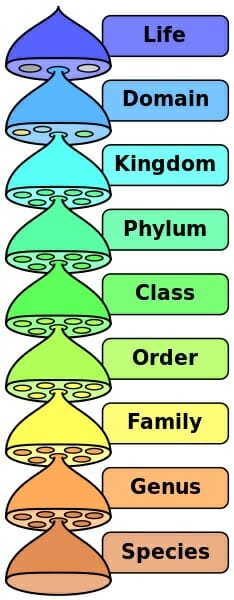
In the study of taxonomy, the rank of kingdom is just below domain, as seen on the image below. All of life, thought to come from a single origin, can be broken down into lower levels of classification, such as a kingdom or phylum. Each consecutive level represents a more related group of organisms. This structure has evolved from only a few kingdom taxon with 3 or 4 lower divisions, to kingdom being the second highest division and having 6 divisions within that structure. This is to accommodate the growing number of recognized species and our understanding of how they are related.


Biological classification


The four commonly recognized Kingdoms are Protista, Animalia, Plantae, and Fungi. The bacteria and archaea are sometimes grouped into one kingdom, the Monera, and sometimes given their own separate kingdom. Under the view that they belong to separate domains, they should be given separate kingdoms to reflect the structure of the taxonomical heirarchy. However, some scientists have argued against the taxonomical heirarchy, saying it does not accurately reflect the relationships between organisms.


History of Kingdom in Taxonomy


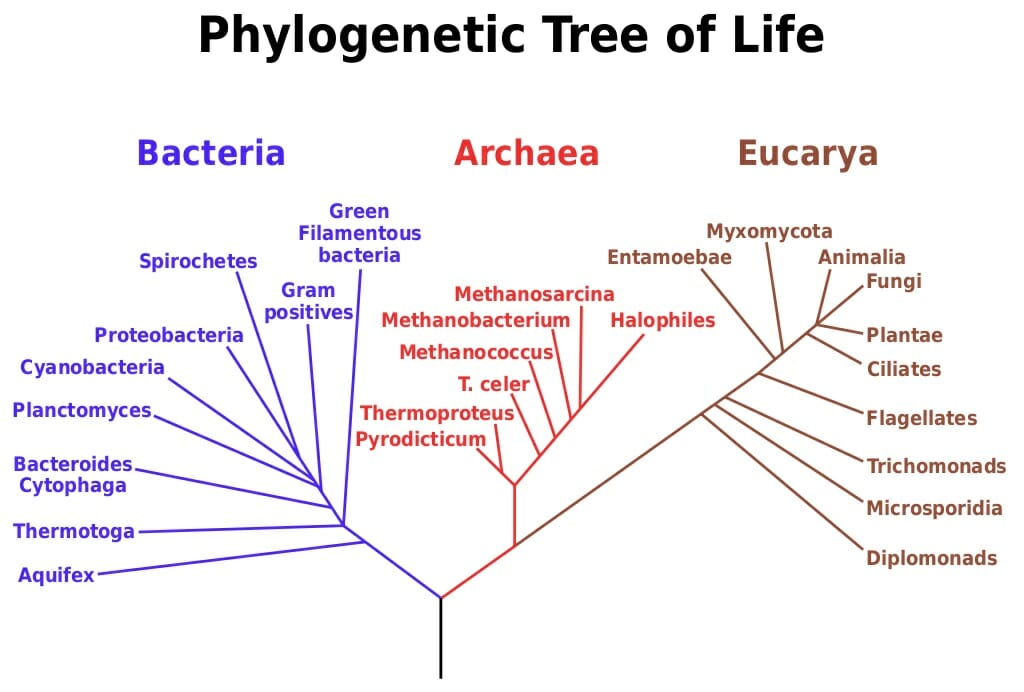
Carl Linnaeus first used the term in the 1700’s to describe the highest orders of life. The two main groups of life, as he saw it, were the kingdom Plantae and the kingdom Animalia. Modern microbiology and genetics have revealed a much different picture. By the 1990’s it was generally accepted that all of life should first be broken into three domains. These domains, Bacteria, Archaea and Eukaryota, represent basic differences in cell structure, formation, and survival. As seen below, each major kingdom can fit within the domains, all of which are thought to have a common ancestor.


Phylogenetic tree scientific names


Some of the taxon represented here are actually phylum, and don’t represent an entire kingdom. Advances in cladistics and genetics revealed some individual phylum to be closer to a kingdom. As discussed below, this lead to changes in the way we describe and view a kingdom. Over time, many different versions have evolved from Linnaeus’ first taxonomy. Scientists in the 1800s finally recognized protists and other single celled organisms in their own kingdom, and separated the fungi kingdom from the plant kingdom. More recently, genetic evidence has revealed the bacteria and protists to contain a huge variety of genetics and adaptations.


This spurred the 3 domain system, which is typically accepted today. However, studies are continually being done on the legitimacy of the kingdoms and their organization. Some of this stems from new developments and studies which add to the picture. This constant addition of information is continually reforming taxonomy, and as such the definition and scope of ‘kingdom’ is constantly changing.


Problems with Kingdom


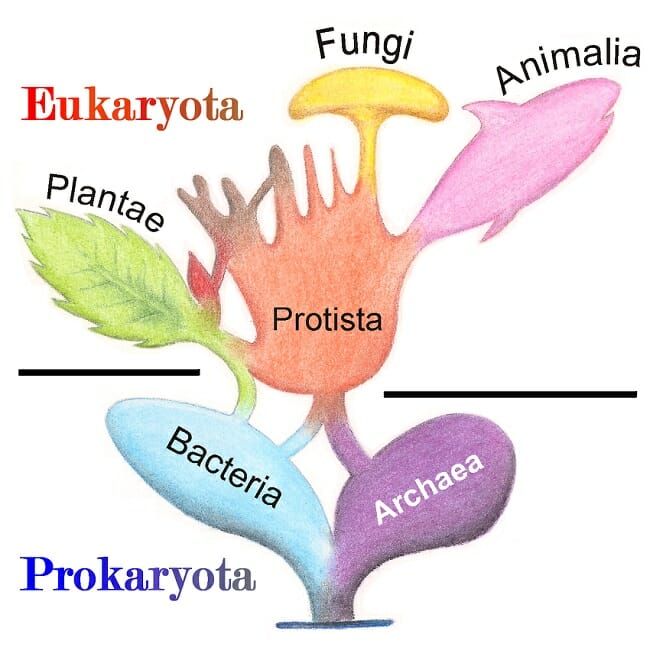
Ideally, each kingdom would be a monophyletic group, consisting of a common ancestor and all the descendants, both extant and extinct. First off, it is impossible to know if all the extinct organisms have been found, and in all likeliness, they have not been. This creates large areas of doubt when constructing phylogenies, or trees of life. Consider the diagram below, which probably presents a fairly accurate representation of life as we know it.


Tree of Living Organisms


You will see that the various branches are well defined, but that all branches have roots in each other. Defining a kingdom, with this in mind, becomes very difficult. Without direct knowledge of the common ancestors, where do you draw the line between Protista and Fungi, for example? Further, since kingdom is more-or-less an arbitrary description, where does one draw the line between a domain and a kingdom? Bacteria and Archaea are both considered domains, while the rest of the branches belong to the Eukarya. It is up to taxonomists and phylogeny experts to try to understand the fundamental and at times hidden relationships between these kingdoms and domains.


Many scientists have argued that the terms themselves have become arbitrary and burdensome. With the technological revolution, computers have been able to make more and more accurate phylogenies. Some argue that we should essentially scrap the old system and create a new definition of kingdom and other taxonomic terms which represent only monophyletic groupings as we currently accept them.


Quiz


1. What is the difference between a kingdom and a phylum?
A. A kingdom includes more organisms
B. Kingdom is on a higher taxonomic level
C. There is no difference between the two terms

Answer to Question #1
B is correct. A kingdom is simply a description of relatedness between species which describes how related they are to other kingdoms. For example, there could be a kingdom of protists which is so different from other protists that it deserves its own unique kingdom designation. However, there could be only a single species in that kingdom.

2. Why do some scientists argue against the classic heirarchy structure of taxonomy?
A. It is based historically on visual observation only, leaving many animals poorly classified
B. Based on genetic evidence, some kingdoms do not represent all descendants and a common ancestor
C. All of the above

Answer to Question #2
C is correct. Carl Linnaeus, while he was a visionary at the time, had no knowledge of genetics, microbiology, or developmental biology. Using these sciences, we have come to understand a much different picture of the organization of life. While it used to be very centered on vertebrates, we now understand that they are a small fraction of life on Earth.

3. While walking through your backyard, you discover a small mouse. Which kingdom does the mouse belong to?
A. Mammalia
B. Animalia
C. Mus

Answer to Question #3
B is correct. The kingdom Animalia is easy to recognize, as it basically contains all non-photosynthesizing multicellular life. While the kingdom does have everything from worms to bears, like plants the boundaries are fairly clear. Within the bacteria and protists, however, there is almost no clear lines between organisms. Mus is the genus, while Mammalia is the class of the mouse.

References


  • Brusca, R. C., & Brusca, G. J. (2003). Invertebrates. Sunderland, MA: Sinauer Associates, Inc.

  • McMahon, M. J., Kofranek, A. M., & Rubatzky, V. E. (2011). Plant Science: Growth, Development, and Utilization of Cultivated Plants (5th ed.). Boston: Prentince Hall.

  • Pough, F. H., Janis, C. M., & Heiser, J. B. (2009). Vertebrate Life. Boston: Pearson Benjamin Cummings.


Kingdom

Nonvascular Plant

Nonvascular Plant Definition


A nonvascular plant is any species of plant which does not have specialized vascular tissues. This includes everything from higher structured forms of green algae, which have plant-like characteristics, to mosses (Bryophyta), liverworts (Marchantiophyta) and hornworts (Anthocerotophyta). Members of these groups, which live in both marine environments and on land, are considered a nonvascular plant.


Lifecycle of a Nonvascular Plant


All plants and some algae exhibit an alternation of generations life cycle. In this cycle, a gametophyte gives rise to gametes. The gametophyte is a haploid organism, containing only one set of DNA. The gametes, therefore, are produced via mitosis. When these gametes fuse, they create a zygote, which is a new diploid organism. This zygote will grow up into the sporophyte generation.


The sporophyte generation is responsible for producing spores. To do this, a mature sporophyte will produce cells capable of undergoing meiosis, a cell division which divides the double set of DNA. The spores, therefore, are again haploid. Spores, unlike gametes, develop directly into new organisms, the gametophyte generation. Thus, each generation alters between a haploid and diploid state.


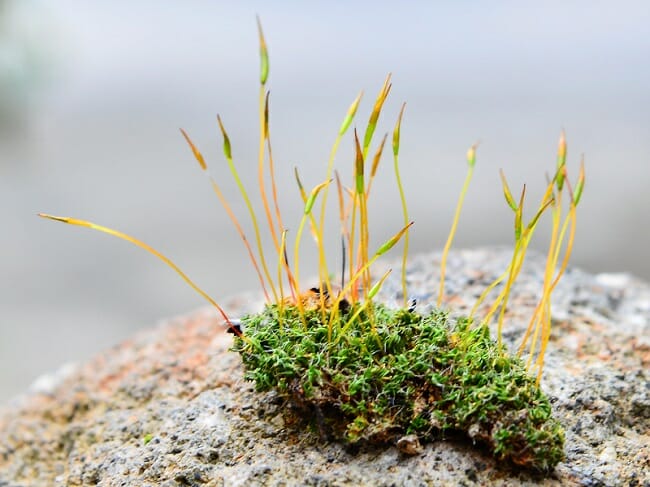
In nonvascular plants, the sporophyte generation is usually smaller, and dependent on the gametophyte. Mosses, for example, exist almost entirely as gametophytes until the proper conditions arise, in which the sporophyte generation is created. While the gametophytes form a large mat or bundle with cells capable of photosynthesis, the sporophyte consists of a tiny stalk upon which spores are created and released.


This is directly opposite of what vascular plants do. While a nonvascular plant shows a dominant gametophyte generation, vascular plants show a dominant sporophyte generation. While having vascular tissues does help a vascular plant distribute water, vascular plants are not necessarily more successful than a nonvascular plant. Using other evolved techniques, a nonvascular plant can be found in areas which few vascular plants could colonize. Because nonvascular plants do not need to grow roots or have an excess of nutrients, a nonvascular plant is often a pioneer species, colonizing barren soil and providing a basis for other plants to colonize on.


Examples of a Nonvascular Plant


Moss


Moss is a nonvascular plant found worldwide. Moss is often one of the only plant types to colonize certain areas, including areas with poor soil. Moss typically grows in wet, damp areas. This is not always the case. Moss has colonized most environments, from the cold Artic to the dry desert. There are approximately 12,000 species of moss. Some moss species are nearly microscopic, while others can grow over a foot tall. Mosses, being a nonvascular plant, are mostly limited in height beyond this. Peat is a type of fuel created from the dense sheets of Sphagnum moss which grows in peat bogs. Moss can be seen in the image below.


Moss Gametophytes Sporophytes


Liverwort


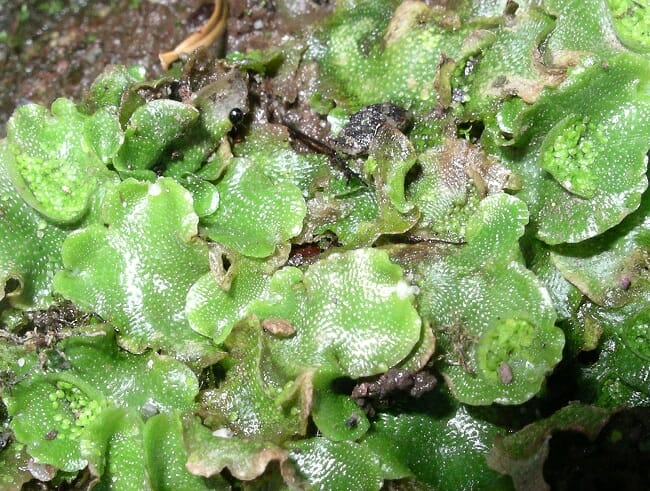
Where moss grows in small branching structures, and many organisms get packed in a larger mat or bundle, liverwort grows as small, individual leaf-like structure. The thallus, as it is called, is the dominant gametophyte. The thallus will produce specialized organs, to house the sporophyte. Liverwort and hornwort are almost indistinguishable, besides some differences in their thallus and the structure of their sporophytes. However, genetic evidence has revealed that liverwort and hornwort, while both a nonvascular plant group, are unrelated enough to deserve two separate divisions. A typical liverwort can be seen below.


Lunularia cruciata


Hornwort


Commonly mistaken as liverwort, hornwort is a closely related group of nonvascular plant species. Like mosses and liverworts, hornworts exist as a dominant gametophyte form. Hornworts, because of the way that they combine their chloroplasts with other organelles, are thought to be more closely related to certain species of algae than other land plants. While hornwort, liverwort, and mosses used to all belong to the Bryophyta, the hornworts and liverworts have been given their own divisions. This reflects the finding that the groups are not closely related enough to be considered the same group. In the picture below you can see a hornwort. Note that while it looks like liverwort, you can easily see the horn-like structures. These structures house the sporophyte generation, creating spores.


Algae


Not all algae is considered a nonvascular plant. Typically, only those algae found in the clade Viridiplantae are considered nonvascular plants. However, the evolutionary relationships between algae and land plants are not entirely clear. It is sometimes assumed that nonvascular algae led to nonvascular land plants, which led to vascular land plants. This theory, however, is not necessarily supported by the genetic and paleological evidence. However, some algae do have specific tissues, some of which are even specialized for water transport. An alternate theory supposes that some algae developed into vascular plants, where other algae became the modern nonvascular plant.


Quiz


1. A scientist is trying to grow a nonvascular plant which is 20 feet tall. Why is this unlikely?
A. Sounds reasonable enough!
B. Water pressure
C. A nonvascular plant cannot retain water

Answer to Question #1
B is correct. Water is heavy. Around 8 pounds per gallon, to be exact. The higher a plant grows, the more gravity the plant must overcome to deliver water to its cells. A nonvascular plant is at a huge disadvantage because it cannot use the forces of adhesion and cohesion, which help water stick to the sides of vascular tissue and itself. This allows transpiration in the leaves and absorption in the roots to move water and counteract gravity.

2. The following is a list of features of vascular plants. Which of the features is shared by a nonvascular plant?
A. Organized, multicellular structure and the ability to photosynthesize
B. An organized internal system for transporting water
C. Specialized corridors of cells for transporting sugar

Answer to Question #2
A is correct. While nonvascular plants do transport water and sugar between their cells, there is no organized structure for doing so. These vascular tissues allow a vascular plant to grow much larger and distribute nutrients to the root. Nonvascular plants are typically simpler in construction, and cells are less specialized in their actions.

3. Is a nonvascular plant species LESS EVOLVED than a vascular plant species?
A. No
B. Yes
C. It depends…

Answer to Question #3
A is correct. No, all species living today are the same level of evolved. While vascular plants have certainly added some adaptations, it does not make nonvascular plants less successful. In fact, nonvascular plants have colonized more regions than vascular plants. However, due to their lack of vascular tissues, a nonvascular plant species may grow more slowly due to the amount of nutrients and sunlight it can access.

References


  • Kaiser, M. J., Attrill, M. J., Jennings, S., Thomas, D. N., Barnes, D. K., Brierley, A. S., & Hiddink, J. G. (2011). Marine Ecology: Processes, Systems, and Impacts. New York: Oxford University Press.

  • McMahon, M. J., Kofranek, A. M., & Rubatzky, V. E. (2011). Plant Science: Growth, Development, and Utilization of Cultivated Plants (5th ed.). Boston: Prentince Hall.

  • Rubinstein, C. V., Gerrienne, P., de la Puente, G., Astini, R. A., & Steemans, P. (2010). Early Middle Ordovician evidence for land plants in Argentina (eastern Gondwana). New Phytologist, 188(2).


Nonvascular Plant

Vascular Plant

Vascular Plant Definition


A vascular plant is any one of a number of plants with specialized vascular tissue. The two types of vascular tissue, xylem and phloem, are responsible for moving water, minerals, and the products of photosynthesis throughout the plant. As opposed to a non-vascular plant, a vascular plant can grow much larger. The vascular tissue within provides a means of transporting water to great heights, allowing a vascular plant to grow upward to catch the sun.


Structure of Vascular Plants


Inside of a vascular plant, the structure is much different from that of a non-vascular plant. In non-vascular plants, there is little to no differentiation between the different cells. In vascular plants, the specialized vascular tissues are arranged in unique patterns, depending on the division and species the vascular plant belongs to.


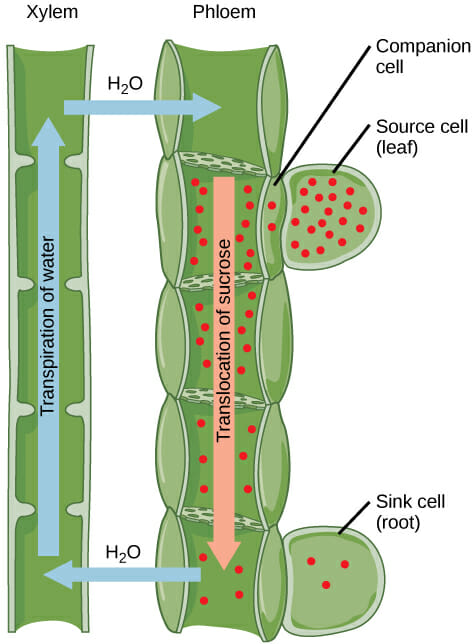
The xylem, made mostly of the structural protein lignin and dead cells, specializes in transporting water and minerals from the roots to the leaves. A vascular plant does this by creating a pressure on the water on multiple fronts. In the roots, water is absorbed into the tissues. The water flows into the xylem, and creates an upward pressure. At the leaves, water is being used and evaporates out of the stoma. These small pores are said to transpire, which pulls upward on the column of water in the xylem. Through the actions of adhesion and cohesion, the water moves upward through the xylem like a drink through a straw. This process can be seen below.


xylem


In the leaves, photosynthesis is taking place. A vascular plant, like the lower plants and algae, use the same process to extract energy from the sun, and store it in the bonds of glucose. This sugar is modified into other forms, and must be transported to parts of the plant with cannot photosynthesize, such as the stem and roots. The phloem is specially designed for this purpose. Unlike the xylem, the phloem is made of partially living cells, which help facilitate the transport of sugars via transport proteins found in the cell membranes. The phloem is also connected to the xylem, and can add water to help dilute and move the sugar. Commercially harvested, this is known as sap or syrup, such as Maple syrup.


Vascular Plant Lifecycle


Vascular plants exhibit, like all plants, an alternation of generations. This means that there are two forms of the plant, the sporophyte and the gametophyte. The sporophyte, a diploid organism, goes through meiosis to produce the haploid spore. The spore grows into a new organism, the gametophyte. The gametophyte is responsible for producing gametes, capable of fusing together during sexual reproduction.


These gametes, the sperm and egg, fuse together to form a zygote, which is the new diploid sporophyte generation. In some plants, this zygote will develop directly into a new organism. In others, the zygote develops into a seed, which is dispersed and must have a period of dormancy or some activation signal to begin growing. A vascular plant which is closer in relation to the mosses and non-vascular plants is more likely to have independent alternating generations. Seeding plants tend to have a highly reduced gametophyte, which is typically entirely dependent on and lives within the sporophyte. The distinction is hardly noticeable between the two organisms, besides the amount of DNA they carry within their cells (haploid vs. diploid) and the cellular division processes they use.


Classification of Vascular Plants


The vascular plants are embryophytes, which is a large clade or related group, consisting of both non-vascular and vascular plants. The embryophytes are further broken down into the Bryophytes including mosses, liverworts, and non-vascular plants, and Tracheophyta. As the trachea in humans is a passageway for air, the term tracheophyte refers to the vascular tissue in vascular plants.


The tracheophytes are further divided into divisions. The divisions are distinguished mostly on how their spores and gametophytes function. In ferns and club-mosses, the gametophyte becomes a free-living generation. In gymnosperms (conifers) and angiosperms (flowering plants), the gametophyte is dependent on the sporophyte. The gametes developed within become a seed, forming the next sporophyte generation. While every vascular plant shows an alternation of generations with a dominant sporophyte, they differ on how they go about distributing spores and seeds.


Examples of a Vascular Plant


Annual Vs. Perennial


Some plants, the annuals, complete their lifecycle within one year. If you were to buy an annual at the store, plant it in your garden, and collect all the seeds it dropped, the plant would not come back the next year. Annuals are typically herbaceous, meaning their stems and roots and not highly structured and rigid. While the plants may stand tall, this is mostly due to the effects of turgor pressure on the cell walls of the plant.


A perennial plant is slightly different. While it may also be herbaceous, the plant will return for multiple years, even if you collect all the seeds. The vascular plant, during the winter, is able to store sugar in the roots and avoid freezing entirely. In the spring, the plant can resume growing and try once more to produce offspring. While the methods of reproduction reflect millions of years of evolution, they do not reflect vascular plants compared to non-vascular.


Monocot Vs. Dicot


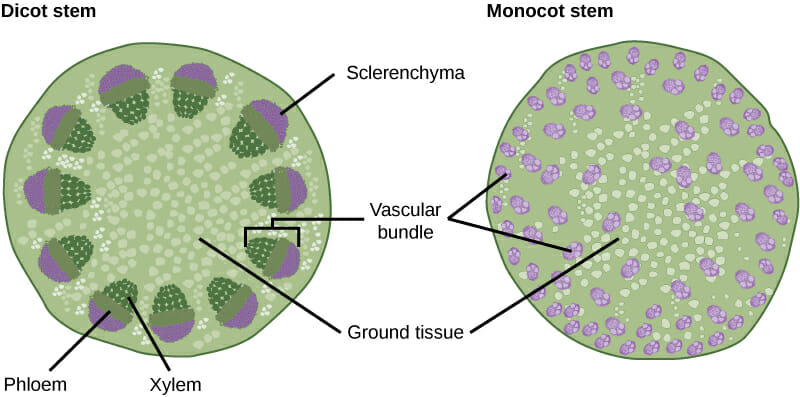
Within the angiosperms, or flowering plants, there is a huge division. While monocots and dicots are both vascular plants, they differ in the way that their seeds form, and the way that they grow. In a monocot, grow occurs below the soil, as individual leaves are started from near the roots and grow upward. Corn is a monocot, as well as many types of grasses including wheat and barley. In other seeding plants, like beans and peas, there are two cotyledon leaves making them dicots. The vascular tissue of the monocot can be seen on the right in the image below.


Dicot stem vs Monocot stem


In a dicot, the growth point is above the soil, and this cause the plants to branch out in several directions. As such, the vascular tissue in a dicot is branched where in a monocot it runs parallel. Notice how the vascular tissue in these plants creates organized bundles. This pattern creates easy branching opportunities. These changes in vascular tissue represent the various methods of forming leaves to collect light seen in the two types of vascular plant.


Quiz


1. Which of the following is NOT a vascular plant?
A. Red Wood Tree
B. Moss
C. Peace Lilly

Answer to Question #1
B is correct. Moss is a non-vascular plant, meaning it does not have differentiated vascular tissues. Mosses can be perennial, as they can go dormant during the winter months to survive. They cannot, however, grow very tall because they are limited in water distribution and usage.

2. What is the purpose of the xylem in a vascular plant?
A. The xylem carries sugar around the plant
B. The xylem moves water from the roots to the shoots
C. The xylem transports the products of photosynthesis

Answer to Question #2
B is correct. The first and third answers are the same, because the products of photosynthesis are sugars. The phloem carries these products around the plant, while the xylem moves water from the ground into and out of the leaves. This supplies water, turgor pressure, and a source of nutrients.

3. Club-mosses are a unique organism. Like mosses, they do not create a seed and use spores to reproduce. Unlike mosses, they have distinguishable tissues which transport water throughout the plant. Club-mosses can grow considerably taller than normal moss. Which of the following is true?
A. Club-moss is a vascular plant
B. Club-moss is a non-vascular plant
C. Club-moss is neither vascular, nor non-vascular

Answer to Question #3
A is correct. A vascular plant, regardless of lifecycle, is defined by the distinguishable vascular tissues found within. This allows the club-moss to move water to much greater heights than regular moss, increasing their potential to absorb sunlight.

References


  • Hartwell, L. H., Hood, L., Goldberg, M. L., Reynolds, A. E., & Silver, L. M. (2011). Genetics: From Genes to Genomes. Boston: McGraw Hill.

  • Kaiser, M. J., Attrill, M. J., Jennings, S., Thomas, D. N., Barnes, D. K., Brierley, A. S., & Hiddink, J. G. (2011). Marine Ecology: Processes, Systems, and Impacts. New York: Oxford University Press.

  • McMahon, M. J., Kofranek, A. M., & Rubatzky, V. E. (2011). Plant Science: Growth, Development, and Utilization of Cultivated Plants (5th ed.). Boston: Prentince Hall.


Vascular Plant