Showing posts with label 1k. Show all posts

Monday, October 8, 2018

Paraphyletic

Paraphyletic Definition


Paraphyletic is a term used in evolutionary biology to describe a group of animals which contains a common ancestor and some, but not all, of the descendants. Describing a group of organisms as a paraphyletic group implies that for some reason, some members of the natural group have been placed into another group. There are many reasons this could happen.


Reasons a Group is Paraphyletic


New Understanding


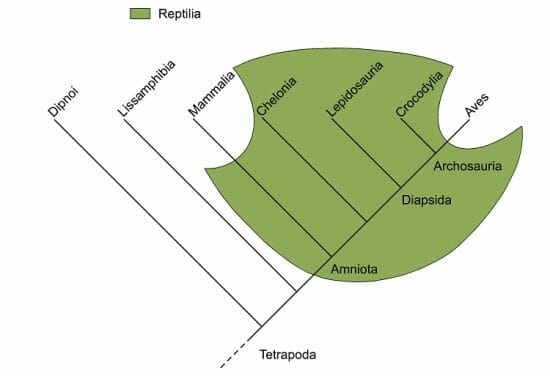
Sometimes, organisms which look incredibly different are actually closely related. Look at the graph below, describing the phylogenetic relationships between different groups of animals.

Traditional Reptilia

Traditional Reptilia


This cladogram shows different groups of animals, with the green shaded area representing reptiles, or the taxonomic group “Reptilia”. As is made clear by the picture, reptiles include a group of animals which is paraphyletic. This is a paraphyletic group because it excludes the mammals (“Mammalia”) and the birds (“Aves”). Both of these groups are descendants of the first animals with amniotic development, the “Amniota”. The Amniota, as a group, would include both the birds and the mammals, and would be monophyletic.


Many groups which we consider natural groups, like the reptiles, are actually paraphyletic. While they include many related animals and their ancestors, these paraphyletic groups fail to take into account the whole picture and the diversity of life. While many of these classifications were made in the days when animals were judged solely by their looks. When modern techniques like DNA analysis were able to inform the relationships between animals, new patterns were observed.


Undiscovered Species


Often, we don’t even know that a group we are discussing is paraphyletic. Many species in the world remain undiscovered, which makes them unable to be placed in a phylogeny. If a group doesn’t include all of the existent species, it is a paraphyletic group. A paraphyletic group is not necessarily wrong, as it does show the relationship between organisms and their descendants. However, in analyzing paraphyletic groups, scientists cannot get a full view of the relationships between animals.


Language


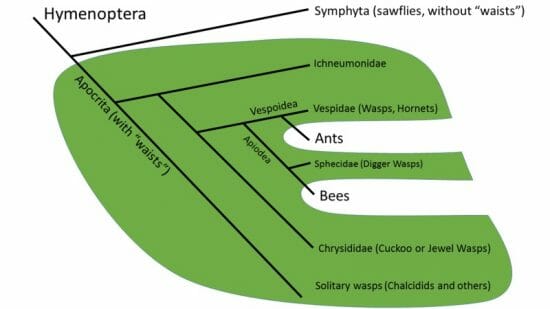
Often, the common language for animals outweighs any scientific names ascribed to them. While this is extremely beneficial for average people trying to communicate about various animals, it is often a pain for scientists trying to describe the complex relationships between animals. Consider the word “wasp”. What does that mean to you? It probably means an insect, with wings, a thin abdominal section, and a sharp stinger. While that definition is enough to understand what someone means when they say the word “wasp”, it doesn’t tell you nearly enough if you are an entomologist. Consider the paraphyletic phylogenetic tree below.

Wasps are Paraphyletic

Wasps are Paraphyletic


Here, you can clearly see that what laypeople call “wasps” are actually a paraphyletic group which excludes the ants and the bees. When you think about it, it is easy to see how these insects are related to wasps, but it is still wrong to call an ant or a bee a wasp. Yet, according to genetic relationships between the animals, they should all be a part of the same phylogenetic grouping.


Language is a common barrier for evolutionary biologists, and creates many paraphyletic groupings. This is often done unconsciously, as we simply inherit our language from our parents and have to learn how to use it best. For example, while it is now recognized that ants and bees are actually a subset of the paraphyletic wasp grouping, we will always call them ants and bees. Ants will not be called “wingless wasps”, nor will bees become “hairy wasps”. Language has a tendency to stick, making paraphyletic groups more or less a requirement when discussing evolution and the relationships between species.


Quiz


1. A researcher studying the evolution of flying animals groups a bat and a butterfly, and labels them “Things which fly”. What kind of group is this?
A. Paraphyletic
B. Polyphyletic
C. Monophyletic

Answer to Question #1
B is correct. This group, while its members can all fly, did not inherit the trait from a common ancestor. Therefore, instead of sharing a homology, the animals share a homoplasy. This makes the grouping invalid, in terms of the animals actually being related.

2. The advent of modern DNA analysis techniques revealed many paraphyletic groups within the classification schemes backed by science. Why is DNA more revealing than other traits animals have?
A. DNA is unlikely to have a homoplasy.
B. DNA cannot produce mistaken phylogenies.
C. DNA is not more revealing than other methods.

Answer to Question #2
A is correct. A homoplasy, or “false homology”, is a trait which looks the same in two species, but was actually inherited through convergent evolution. When similar environment put similar pressures on different species, they tend to evolve similar adaptations. While DNA analysis can be mistaken, a similar strand of DNA is much more likely to arise through a common ancestor, than through the actual DNA being identical. This is because two proteins which have the same function can have very different amino acids, and come from different DNA. The resulting effect is that DNA shows clearly which animals evolved traits through descent, and which traits simply arose through convergent evolution.

3. In the lab, a scientist goes through pain-staking efforts to create an entirely synthetic species of bacteria. Although the synthetic bacteria looks and functions like a regular bacteria, it is composed of entirely synthetic, non-natural parts. Even the DNA is composed of unique nucleotides, not found in the animal kingdom. The scientist claims that the new bacteria is in a monophyletic group of its own. Is the scientist correct?
A. No, the group is paraphyletic
B. Yes
C. No, there could be other species

Answer to Question #3
B is correct. Yes, in this case the scientist is absolutely correct. The new species, having no ancestors, represents a descendant and all of its ancestors. Unlike other groups of natural animals, it is unrelated to anything else. While it looks like bacteria, it is simply a product of convergent evolution. The group cannot be paraphyletic because there are no more species which could possibly add to the group.

References


  • Brusca, R. C., & Brusca, G. J. (2003). Invertebrates. Sunderland, MA: Sinauer Associates, Inc.

  • Feldhamer, G. A., Drickamer, L. C., Vessey, S. H., Merritt, J. F., & Krajewski, C. (2007). Mammology: Adaptation, Diversity, Ecology (3rd ed.). Baltimore: The Johns Hopkins University Press.

  • Hartwell, L. H., Hood, L., Goldberg, M. L., Reynolds, A. E., & Silver, L. M. (2011). Genetics: From Genes to Genomes. Boston: McGraw Hill.


Paraphyletic

Density Dependent Factors

Density Dependent Factors Definition


Density dependent factors affect a population through increasing or decreasing birth and death rates, in a way that is directly related to the density of the population. Unlike density independent factors, which are not tied to the population density, density dependent factors change how they affect the population as the population changes in size. Like density independent factors, density dependent factors are unique for every population, and density dependent factors for one species or population may not be the same for all populations.


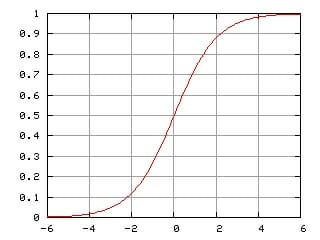
Typically, density dependent factors are biological factors used by the population as a resource. These can be things like food, shelter, or other limited resources. Density dependent factors cause variable changes in the population as its density changes. When the population is small, these factors typically favor increased birth rates and lower death rates, allowing the population to expand. When the population is large and dense, these factors become limited and decrease the birth rate while raising the death rate. This tends to make populations experiencing density dependent factors to show logistic growth, like in the graph below.


Logistic curve

Logistic curve


As the graph shows, the population increases rapidly for a time. But, as the density dependent factors change their effects on the population, the growth slows and the population size tends to level off. The various factors which cause this leveling off in the population are density dependent factors. There are usually many density dependent factors involved for a given population. Below are some good examples.


Examples of Density Dependent Factors


Watching Grass Grow


While the saying “watch the grass grow” is often used as a euphemism for boredom, scientists have actually done just that. What they found was a perfect example of density dependent factors affecting the growth rates of an organism.


At first, the scientists had and empty field, freshly tilled with no plants in it. They seeded the field carefully, placing seeds far apart to simulate a low population density. At first, the plants grow exponentially. For several generations, they had all the space and nutrients they needed to grow as fast as they could. Over time, the spaces between the plants filled in, until the field represented a high population density.


At this point, various density dependent factors in the environment switched from positively affecting the plants to negatively affecting them. While nothing changed in the factors themselves, the population became to dense and the resources became source. Consider the resources a plant needs: sunlight, moisture and nutrients. For a plant, all of these resources are tied to the area a plant has access to. If a plant has sole access to a large area, it will receive more nutrients, water and sunlight. As the plants start to crowd in on each other, each plant will have limited access to these valuable resources. At this point, the growth and reproduction of all plants in the population is slowed, and the population gets close to the point of equilibrium, all other things remaining equal.


Fish in a Tank


Likewise, a fish tank is no different than a patch of grass. There are certain density dependent factors which will limit and affect the population size of the organisms in the tank. In a fish tank, the factors are slightly different. Fish need food, oxygen, and a way to detoxify water of their own wastes. These factors are density dependent because they will become drastically more limiting as more fish are added to the fish tank.


In a tank with a low density of fish, each fish has its own space, and has plenty of oxygen. The filter and aerator add oxygen to the water as fast as the fish can consume it, so there is plenty. Likewise, the fish require little food as a collective group, and produce little waste. Their waste can easily be filtered out by the filter, and the owner of the tank can easily distribute food to all the fish. Because there is plenty of room and food, the fish can all get some.


Now consider a tank with an extremely high density of fish, and you can see how these density dependent factors now negatively affect the population growth. In this case, each fish will barely have any space. The amount of oxygen in the water will be depleted, as the filter and aerator cannot keep up with the number of gills in the tank. This reduces the energy and vigor each fish has, reducing their chances of surviving and reproducing. Further, as the fish are so crowded, it doesn’t matter how much the owner feeds them, some fish simply do not get fed. The waste produced by the fish, along with the fish which die from starvation, are too much for the filter to handle and the tank will soon become a stinky mess. The density dependent factors in this case ensure that the population cannot exceed certain limits.


Parasites and Hosts


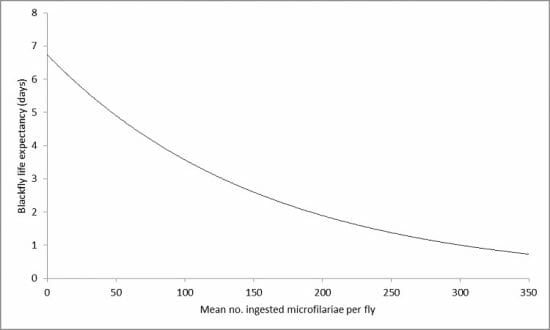
A well-studied example of density dependent factors comes in the form of parasites and their hosts. When a parasite infects a host, it uses the host’s resources and injures the host. With one parasite, most host’s are fine. It is in the parasite’s best interest to not kill the host, as it can live longer and reproduce more. However, it is also in other parasites’ interest to invade the host. As more and more parasites invade a single host, the host has less and less of a chance of survival. Thus, the parasites are limited by the density dependent factors which keep their host alive. This can be seen in the graph below.


Blackfly life expectancy

Blackfly life expectancy


This graph shows the life expectancy of a certain species of fly after it ingests different amounts of parasites. As the graph clearly shows, the flies which ingest the fewest parasites live the longest, with a steep drop-off as more parasites enter the system. The flies have a certain amount of energy, nutrients, and damage tolerance. As more parasites enter the system, these density dependent factors don’t necessarily curtail the population density of the parasites. Rather, they kill the host destroy the entire population of parasites. Parasites are opportunistic organisms, and tend to push the limits of their environment in favor of breeding the most.


Quiz


1. Which of the following is a density dependent factor for humans?
A. Food
B. Hurricanes
C. Solar Flare

Answer to Question #1
A is correct. For many organisms, food is a density dependent factor. At low densities, food is almost always readily available. At high densities, it becomes scarce. As humans become denser on this planet, we will need to develop ways to generate more food in less area to overcome this density dependent factor.

2. A volcano erupts on the island of Hawaii, killing off many local organisms in the path of the lava flow. Which category can the volcano go into?
A. Density Independent Factors
B. Density Dependent Factors
C. Neither

Answer to Question #2
A is correct. Unlike density dependent factors, a volcano affects any organism in its path, regardless of density. The organism could have been the last of its kind, or one of many, but it will still be negatively impacted by the volcano.

3. Many people have forecasted that because of the exponential growth of humans over the last several decades, that the trend will continue and we will overshoot our carrying capacity. Why is this unlikely?
A. It is VERY likely. We’re DOOMED!
B. Density dependent factors drive logistic growth.
C. We will get hit by an asteroid before that time.

Answer to Question #3
B is correct. As the first graph in this section shows, most populations are subject to logistic growth, which levels off as it reaches a certain height. In fact, human statisticians have shown that as populations get denser and people attain greater wealth, they tend to have less babies. This trend is happening world-wide, and most experts agree that the human population is leveling off.

References


  • Cain, M. L., Bowman, W. D., & Hacker, S. D. (2008). Ecology. Sunderland, MA: Sinauer Associates, Inc.

  • Feldhamer, G. A., Drickamer, L. C., Vessey, S. H., Merritt, J. F., & Krajewski, C. (2007). Mammology: Adaptation, Diversity, Ecology (3rd ed.). Baltimore: The Johns Hopkins University Press.

  • Kaiser, M. J., Attrill, M. J., Jennings, S., Thomas, D. N., Barnes, D. K., Brierley, A. S., & Hiddink, J. G. (2011). Marine Ecology: Processes, Systems, and Impacts. New York: Oxford University Press.


Density Dependent Factors

Density Independent Factors

Density Independent Factors Definition


Density independent factors, in ecology, refer to any influences on a population’s birth or death rates, regardless of the population density. Density independent factors are typically a physical factor of the environment, unrelated to the size of the population in question. Density independent factors vary depending on the population, but always affect the population the same regardless of its size. There are many common density independent factors, such as temperature, natural disasters, and the level of oxygen in the atmosphere. These factors apply to all individuals in a population, regardless of the density.


However, density independent factors are often confused density dependent factors for a number of reasons. First, density independent factors for one population of organisms is not the same for every organism on the planet. While oxygen is a density independent factor for most oxygen breathing organisms, it may be a density dependent factor for some. Image an obligate anaerobe bacteria, for instance. Oxygen is toxic to these organisms. As they grow in density, the bacteria furthest from the nearest source of oxygen is protected. If these bacteria where to grow thick, oxygen would not affect each bacteria, and the effect on the death rate would be lessened. This would make oxygen a density dependent factor for these particular bacteria.


Analyzing each population specifically allows scientists to identify their unique density independent factors. Below are several examples of common density independent factors and how they affect various species.


Examples of Density Independent Factors


Natural Disaster


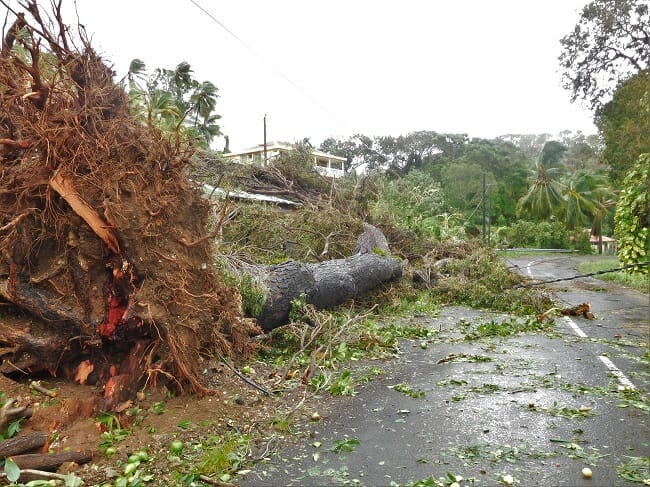
Natural disaster is a perfect example of a density independent factor. Consider a hurricane, slamming into the coastline. While we often see the devastation of these storms on the news, we rarely consider the impacts of such a storm on wildlife and vegetation in the area. The fact is, hurricanes increase the death rate for many species, while some species see a highly increased birthrate after the destruction.


During a hurricane, winds increase to dangerous speeds, tearing large trees out of the ground. Trees like the one in the image above would survive any regular storm. For many species, a hurricane drastically increases the death rate, as the trees simply cannot withstand the wind and waves. Many animals, such as fish and amphibians, succumb to rapidly rising and falling tides. Many news images show pictures of fish washed up into roadways. These animals and plants die, regardless of how dense their population was. They could have been the last of their species, or one in a billion.


Yet, hurricanes do not only bring death. Consider the area unearthed by the tree in the above image. New, smaller plants will be given an opportunity to grow where they were previously restricted by the shade cast by the large tree. Fungi and insects living on dead plant matter will be able to feast and reproduce on the dead wood. The standing water left from the hurricane provides many insects, such as mosquitos, ample breeding sites. While this is often a nuisance for humans, it increases the food source of birds and bats, possibly increasing their birthrates as well. Yet, the hurricane affects all species and individuals within its path, regardless of how many there were.


Pollution


Like other density independent factors, pollution is a good example of a density independence. While humans are concentrated in cities around the globe, the emissions and chemicals we create are dispersed into the atmosphere. From here, they are carried globally and affect all organisms. Even organisms in the oceans are affected, as pollutants dissolve from the atmosphere into various water sources.


Therefore, whether you are the last pair of endangered clownfish in the ocean or have a huge population like sparrows, your birthrate is still negatively impacted. Density independent factors like these often cause a slow and steady drag on populations over time. Even the human population sees drastic health effects from pollution, from lead poisoning do to drinking water to increased lung diseases.


Honeybees


Instead of looking at density independent factors in general, let’s turn our view to a population of honeybees and the factors that likely affect the size of their population. Density independent factors for honeybees include things like weather and temperature. Regardless of the current size of their population, bees need the temperature and weather to stay within certain ranges. If the weather does not stick to this pattern, many bees will die. For example, if there was suddenly snowstorm in the middle of summer, the bees would be caught off guard and would die in the cold.


However, the bees also face a number of density dependent factors. For instance, their food source and its effects on their population is directly related to the size of their population. If they have a small population, there will be plenty of food for all and the bees will grow. If the population is larger than the amount of food available, bees will starve and the death rate will increase. Food, and other usable biological resources, are density dependent. Density independent factors will affect the bees regardless of how many bees are present.


Quiz


1. In a small garden patch under a small tree, several species of plant are planted in differing numbers. Consider the sunlight as a resource for the plants. Is sunlight one of the density independent factors, or is it density dependent?
A. Density Independent Factor
B. Density Dependent Factor
C. Neither

Answer to Question #1
B is correct. As the plants grow, they will take up a larger and larger area, competing for the sunlight. As the years go by, the tree will get larger, and take up more of the sunlight. If more plants are added to the area, there will be even less sunlight to go around. Density independent factors, such as weather events, will affect the plants regardless of how many are in the garden. Sunlight will be more beneficial to the plants if there are less of them in the garden.

2. Do density independent factors always limit the population? That is, do they always increase the death rate or lower the birth rate?
A. No
B. Yes
C. Only Density dependent factors do that

Answer to Question #2
A is correct. Any factor, density dependent or independent, can be either beneficial or negative. This all depends on the population being affected. Some density independent factors, such as hurricanes, help some species while they hurt other species. Hurricanes are a density independent factor because they generate the same effect regardless of the current population density.

3. A population of field mice increases after a farmer leaves his field unharvested for a season. Which of the following categories does this factor fall into?
A. Density Independent Factors
B. Density Dependent Factors
C. Increased death rate

Answer to Question #3
B is correct. Food is almost always a density dependent factor, because if the population gets too big the food abundance will quickly turn to a food shortage. Density independent factors would be things like temperature and tornadoes, which would affect the mice regardless of their current or future density.

References


  • Cain, M. L., Bowman, W. D., & Hacker, S. D. (2008). Ecology. Sunderland, MA: Sinauer Associates, Inc.

  • Feldhamer, G. A., Drickamer, L. C., Vessey, S. H., Merritt, J. F., & Krajewski, C. (2007). Mammology: Adaptation, Diversity, Ecology (3rd ed.). Baltimore: The Johns Hopkins University Press.

  • Kaiser, M. J., Attrill, M. J., Jennings, S., Thomas, D. N., Barnes, D. K., Brierley, A. S., & Hiddink, J. G. (2011). Marine Ecology: Processes, Systems, and Impacts. New York: Oxford University Press.


Density Independent Factors

Obligate Anaerobes

Obligate Anaerobes Definition


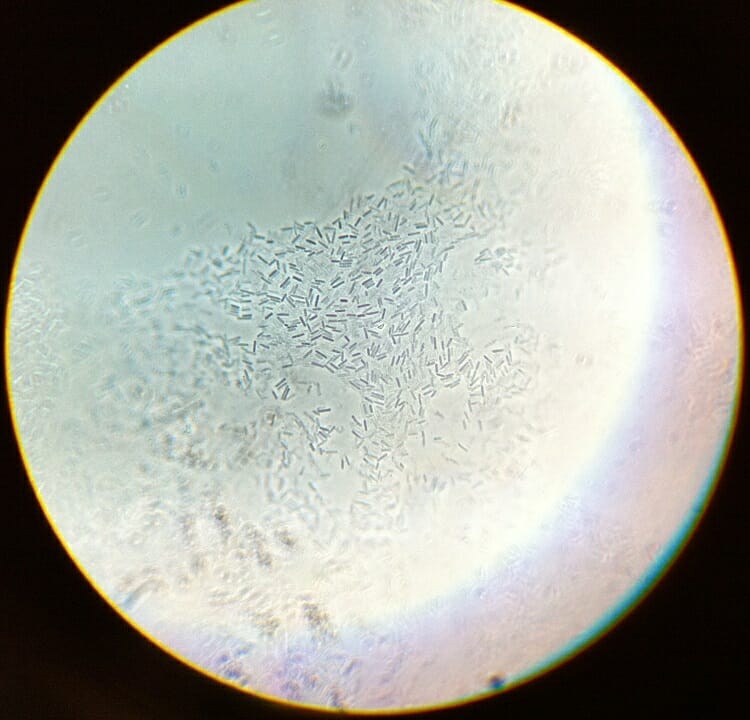
Obligate anaerobes are organism which can only live in environments which lack oxygen. Unlike the majority of organisms in the world, these organisms are poisoned by oxygen. Obligate anaerobes are typically bacteria, and live in a variety of places naturally. Many obligate anaerobes live in the human body, in places like the mouth and gastrointestinal tract where oxygen levels are very low. Sometimes, these bacteria can accidentally be deposited where they are not supposed to be, causing serious infection. Some obligate anaerobes include the bacteria which cause gangrene and a number of other infections. Below is a microscope slide showing the Clostridium genus of bacteria, responsible for gangrene, tetanus, botulism, colitis, and other serious infections.


Clostridium acetobutylicum

Clostridium acetobutylicum


Why are Obligate Anaerobes Killed in Oxygen?


Unlike obligate aerobes, which require oxygen to survive, obligate anaerobes are actually poisoned by it. Unlike many organisms which thrive in oxygenated environments, obligate anaerobes do not have several key enzymes needed to detoxify oxygen in the cell. Oxygen itself, in the presence of water, produces several byproducts including hydrogen peroxide (H2O2). Hydrogen peroxide is a weak acid, and affects a number of enzymes within anaerobic cells. In high levels of oxygen, the cell becomes so acidic that it can no longer function.


This is why obligate anaerobes typically are only found in areas of little to no oxygen. At this level, their metabolic enzymes are not sufficiently hampered by the changes oxygen causes. Aerobic bacteria and eukaryotes have a number of defense mechanisms against oxygen. These include the enzymes superoxide dismutase, catalase, and peroxidase, which help deal with the byproducts of oxygen by keeping them as oxygen gas or making them into harmless water molecules.


Evolutionary Significance of Obligate Anaerobes


The existence of obligate anaerobes is a significant clue in the theory of the origins of life on planet Earth. While our atmosphere has a significant amount of oxygen now, that may not have always been the case. The presence of obligate anaerobes today suggests that the atmosphere once had much less oxygen, allowing bacteria to survive without oxygen facilitating enzymes. The theory suggests that with the rise of photosynthetic organisms, there also came a rise in the level of oxygen in the environment.


Where Obligate Anaerobes Exist


Today, the obligate anaerobes exist in many environments, all which have a defining quality of low oxygen levels. Many obligate anaerobes exist in the soil, away from the top layers which are highly exposed to oxygen. Other obligate anaerobes can be found in the gut, mouth, and reproductive tracts of animals. In these places, they is little to no oxygen because they are not exposed to blood vessels.


Sometimes, a severe infection can be caused when these bacteria get access to the sterile internal areas of the body. This typically happens when an organism is wounded, allowing the bacteria access to the normally closed-off areas. If the wound gets closed quickly and in a sterile manner, the bacteria will die in the presence of the oxygenated blood that gets to the area. If the wound does not have blood flow and is exposed to obligate anaerobes, it gives them a place to breed and grow. Many of these obligate anaerobes release toxins which destroy regular tissue. This caused the infection to get worse, and allows the bacteria to spread. Many infections caused by obligate anaerobes can be deadly if left untreated.


Finding Obligate Anaerobes


Obligate anaerobes can only be found in environments with low oxygen levels. In a world saturated by oxygen, this may seem like obligate anaerobes may be hard to find. But in fact, the opposite is true. Obligate anaerobes can be found in almost every environment, hidden away from expose to oxygen. To find the obligate anaerobes in any sample a simple experiment like the one below can be conducted.


Anaerobic

Anaerobic


The five images shown above represent where different types of bacteria can be found in a sample grown in a loosely capped test tube. The loose cap allows oxygen to saturate the top layer of the growth solution in the tube. Thus, image 1 represents the obligate aerobes, or the organisms which need oxygen. The obligate anaerobes, seen in image 2, are at the complete other side of the test tube.


At this end of the test tube, the oxygen concentration is the lowest. For one, it has to diffuse through the entire column of water to reach the bottom of the test tube. Without being disturbed or aerated in any way, the oxygen level will naturally be the lowest here. Further, the organisms in the tube which use oxygen will tend to congregate towards the top. These organisms will tend to deplete the oxygen within the test tube at all levels. This helps drive the oxygen gradient towards the top of the tube. Therefore, scientists searching for obligate anaerobes simply need to look in the most oxygen deprived portion of any sample. The other images (3-5) represent other kinds of bacteria, such as facultative anaerobes, which can survive in various conditions and may or may not need or use oxygen.


Quiz


1. The following is a list of bacteria and their main metabolic functions. Which of these are obligate anaerobes?


  1. A bacterium which uses oxygen to facilitate glucose metabolism

  2. A bacterium which tolerates oxygen, but does not use it in metabolism

  3. A bacterium which does not tolerate oxygen, and does not use it in metabolism

A. All of the above
B. 2 and 3 only
C. 3 only

Answer to Question #1
C is correct. Obligate anaerobes are obligated to stay in an anaerobic environment. This means they cannot survive oxygen. A bacterium which tolerates oxygen, but doesn’t use it is known as a aerotolerant bacteria.

2. A scientist takes a sample from the bottom of a nearby lake. He divides the sample into three test tubes. In the first test tube, he adds an air pump. In the second test tube, he seals the cap and removes the oxygen. The third tube he leaves unsealed, and undisturbed. Which tubes will NOT grow obligate anaerobes?
A. Tubes 1 and 3
B. Tube 1 only
C. Tube 2 only
D. Tube 3 only

Answer to Question #2
B is correct. Only tube 1 will be saturated with oxygen, making it nearly impossible for anaerobic bacteria to survive. Without the ability to process the byproducts of oxygen metabolism, the bacteria would quickly die due to exposure to oxygen-based toxins.

3. Obligate anaerobes are often spore-forming, meaning that in times of stress the bacteria will store their DNA in a secured package which can whether environmental conditions. Why is it important that obligate anaerobes create spores capable of surviving conditions of high oxygen?
A. It is not important
B. These spores must survive oxygenated environments to colonize low-oxygen areas
C. These spores can use oxygen to help reproduce the bacteria

Answer to Question #3
B is correct. The modern atmosphere consists of mainly of nitrogen, but has around 21% oxygen. This is an extremely high amount for obligate anaerobes, and would typically kill them. The spore secures the DNA from oxygen degradation, and allows it to travel to a favorable environment before growing into a functioning bacteria.

References


  • Lodish, H., Berk, A., Kaiser, C. A., Krieger, M., Scott, M. P., Bretscher, A., . . . Matsudaira, P. (2008). Molecular Cell Biology (6th ed.). New York: W.H. Freeman and Company.

  • University of Comenius. (2018, October 3). Anaerobic Bacteria. Retrieved from Jfmed.uniba.sk: https://www.jfmed.uniba.sk/fileadmin/jlf/Pracoviska/ustav-mikrobiologie-a-imunologie/ANAEROBIC_BACTERIA.pdf

  • Widmaier, E. P., Raff, H., & Strang, K. T. (2008). Vander’s Human Physiology: The Mechanisms of Body Function (11th ed.). Boston: McGraw-Hill Higher Education.


Obligate Anaerobes

Sunday, October 7, 2018

Competition

Competition Definition in Biology


Competition is a relationship between organisms in which one is harmed when both are trying to use the same resource related to growth, reproduction, or survivability. Competition stems from the fact that resources are limited. There are simply not enough of some resources for all individuals to have equal access and supply. Competition can occur between organisms of the same species, or between members of different species.


Competition between species can either lead to the extinction of one of the species, or a decline in both of the species. However, this process can often be interrupted by environmental disturbances or evolution, which can change the rules of the game. Competition is often involved when species are limited in their range, often by direct competition from other organisms.


Examples of Competition


Intraspecific Competition


Intraspecific competition is a density-dependent form of competition. “Intra” refers to within a species, as opposed to “inter” which means between. Intraspecific competition can be summed up in the image below.


Intraspecific competition

Intraspecific competition


In this image, two wild dogs known as Dholes fight over a carcass. The carcass is a resource, something both organisms need to survive. Intraspecific competition is density dependent for one reason. The more dholes you have, the less food each one gets. To the individual dhole, food is everything. With very few predators of their own, the most successful dholes (the ones who survive and reproduce the most) often are simply the ones who eat the most.


Thus, while these dholes may have coordinated to take down this deer, they are now competing to see which one will get to eat first. The one that eats first will get more, and be more likely to survive and reproduce. The other one (or the last one if there are many) will not get as much. This will lower its survivability and the chances it will get to reproduce. Since evolution relies mainly on which organisms reproduce, this form of competition can quickly lead to changes in a population if only a few of the individuals are surviving and reproducing.


Interspecific Competition


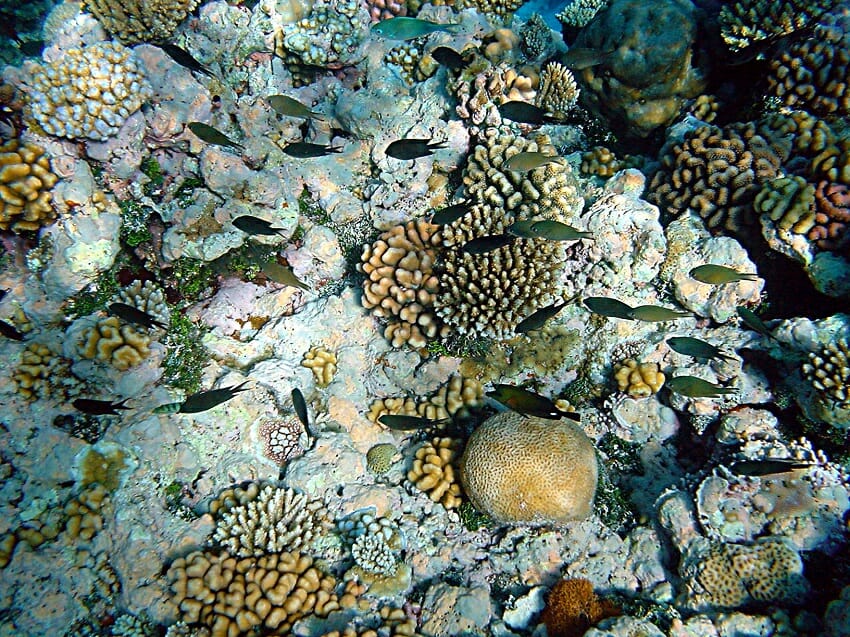
Interspecific competition is between individuals which are different species. This could be between any two species, as long as they are competing over a resource. An interesting example of interspecific competition is found in coastal marine environments, like the coral reef in the picture below.


Coral reefs with fishes


In this picture, there are dozens of species. There are several species of fish. Behind them, as a backdrop many people would ignore, is a canvas of dozens of species of coral. Coral, while it may look like some sort of rock or plant, is actually a colony of tiny animals. These tiny animals filter organic material from the water, and use stored bacteria to photosynthesize sunlight for additional energy. Thus, each coral species is competing with not only the other corals, but also with the fish for available nutrients and sunlight.


While corals might not seem like a competitive bunch, they are actually directly competitive with other corals. When an enemy coral is encroaching on their space, they can deploy chemical warfare to counter their rival. Often, coral fights end in one of the corals being killed by the other. While the corals are not predators of each other, the competition still ends in the death of one of the corals. The victorious coral was simply fighting for the resources it needs.


Direct and Indirect Competition


There is also another aspect of competition that can be applied to scenarios of limited resources, and that is the idea of direct vs indirect competition. Direct competition is like both of the scenarios above, and there are many more examples of it. Any time two or more animals fight or have a symbolized confrontation, this is probably some sort of competition for a resource.


However, indirect competition is when the two animals do not interact, but the presence of both animals in the same territory causes the competition. Think of the fish in the example above. If those fish feed on the same resources used by the corals, then the fish are in competition for the limited resources. Coral, being more or less anchored to the ocean floor, have little chance of directly attacking the fish. Instead, this would be referred to as an asymmetrical indirect competition. The fish eat as much of the food as they want, and the coral are limited to scraps. The coral have no way of competing. Luckily for most coral reef systems around the world, the ocean has plenty of food for most.


Outcomes of Competition


Competition is not a static process. Once set in motion, it can go a number of different ways. While the models may show that it will eventually drive one species to extinction, in reality a number of things can happen. First, an environmental disturbance, such as a fire or large wave, can upset the ecosystem and destroy the advantage the best competitor had. Typically, a pinewood forest is made mostly of pine trees because they are the best competitors in the environment. However, after a forest fire the most populous plants are small, opportunistic plants that grow quickly. The fire causes a change in the environment, which completely changes the dynamics of competition.


Further, most competition is also an evolutionary pressure on both parties. Animals from both sides that compete the best are able to survive and reproduce. Thus, over time the competition tends to resolve itself. More often than not, the competition can devolve as the species adapt to use different resources or change the way it uses a resource. This is known as character displacement. It is most well-documented in finches. When two different species of finch live on separate islands, their beaks are the same size because they prefer similar seeds. When they occupy the same island, one of their beaks gets smaller while the other gets larger. This separates the resources they consume and alleviates the competition.


Quiz


1. Which of the following represents competition?
A. Two swans (male and female) doing a mating dance
B. A lion defends its kill from a pack of hyenas
C. A lion stalks a buffalo, ready to pounce

Answer to Question #1
B is correct. In this case, the lion’s kill represents the resource. It needs the food to survive and reproduce. But so do the hyenas. Because they are fighting for it, it makes it direct competition. When the lion was stalking the buffalo that would be predation, which is different than competing for a resource. Two swans doing a ritualistic dance would be a form of intraspecies communication.

2. What is the difference between intra- and interspecific competition?
A. Intraspecific is between members of the same species
B. Interspecific is between members of the same species
C. They are the same

Answer to Question #2
A is correct. While the different forms of competition can be about similar resources, they are often carried out in different ways. Intraspecific competition often occurs when the resource is within the species, such as access to females. Interspecific competition is easiest remembered as different predators fighting over the same piece of meat.

3. A bald eagle is flying over a field, and sees a smaller hawk. The hawk has a fresh kill, but the bald eagle swoops in, threatens the hawk, and steals it. Which term best describes this scenario?
A. Predation
B. Intraspecific, indirect competition
C. Interspecific, direct competition

Answer to Question #3
C is correct. In this case, the bald eagle directly attacks and steals a resource from another species. If the species of hawk could no longer compete, because the eagles had already eaten all of the prey, that would be indirect competition. There are many other forms of indirect competition, but in this case the animals compete for the food directly.

References


  • Cain, M. L., Bowman, W. D., & Hacker, S. D. (2008). Ecology. Sunderland, MA: Sinauer Associates, Inc.

  • Feldhamer, G. A., Drickamer, L. C., Vessey, S. H., Merritt, J. F., & Krajewski, C. (2007). Mammology: Adaptation, Diversity, Ecology (3rd ed.). Baltimore: The Johns Hopkins University Press.

  • Kaiser, M. J., Attrill, M. J., Jennings, S., Thomas, D. N., Barnes, D. K., Brierley, A. S., & Hiddink, J. G. (2011). Marine Ecology: Processes, Systems, and Impacts. New York: Oxford University Press.


Competition

Lytic Cycle

Lytic Cycle Definition


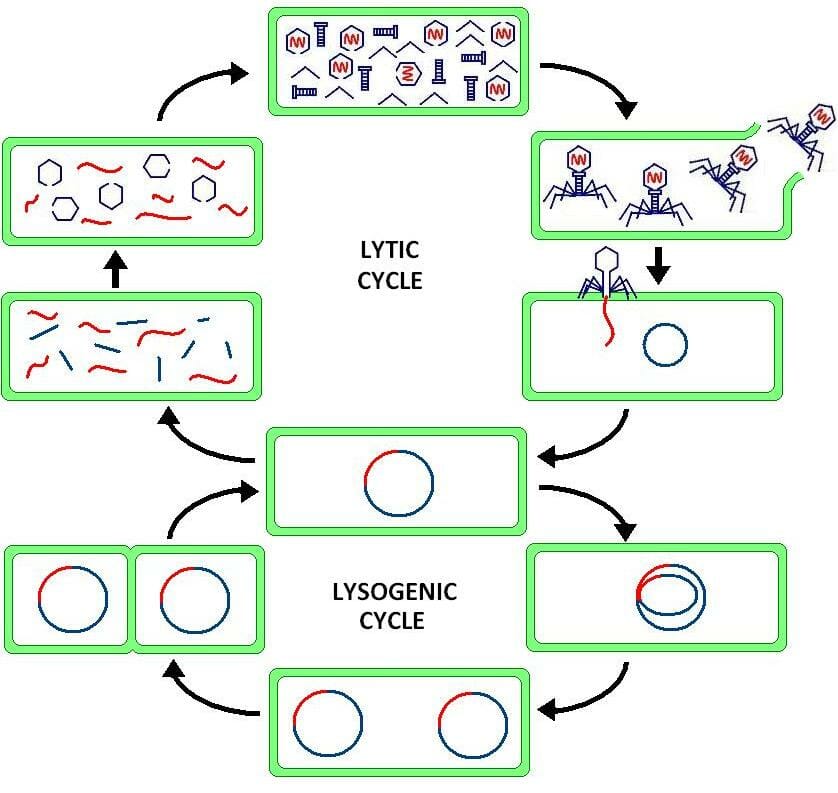
The lytic cycle is named for the process of lysis, which occurs when a virus has infected a cell, replicated new virus particles, and bursts through the cell membrane. This releases the new virions, or virus complexes, so they can infect more cells.


Lytic cycle


As seen in the graphic above, the lytic cycle is often accompanied by the lysogenic cycle in many bacteria viruses, known as bacteriophages. After the virus injects its DNA or RNA into the host bacteria, the genetic material can enter either the lytic cycle or the lysogenic cycle.


In the lysogenic cycle, the bacteriophage DNA lies practically dormant. However, whenever the bacteria divides, the DNA of the virus is inadvertently copied. In this way, the virus can continue replicating within its host. As long as the bacteria are successful, the virus may remain dormant. At a certain point, conditions may change, and the virus will enter the lytic cycle.


In this cycle, the viral DNA or RNA is expressed by the host organism’s cellular mechanisms. In other words, the viral genes use the proteins within the cell to replicate themselves and produce viral proteins. These proteins and copies of the DNA will become new virions. The cell, helpless to its viral hijacker, simply waits until the pressure of these new virions is too high. Then, the cell membrane breaks. This lysis of the cell releases the virions created in the lytic cycle. Their final destination is a new cell, in which the lytic cycle can take place again. If conditions are favorable and the cell is dividing, the virus may stay in the lysogenic cycle for a time. Ultimately, to infect a greater number of cells, more virus genomes will enter the lytic cycle and produce thousands or millions of copies of themselves in a shorter amount of time.


Steps of the Lytic Cycle


Bacteriophage lysogenic and lytic cycle

Bacteriophage lysogenic and lytic cycle


Adsorption and Penetration


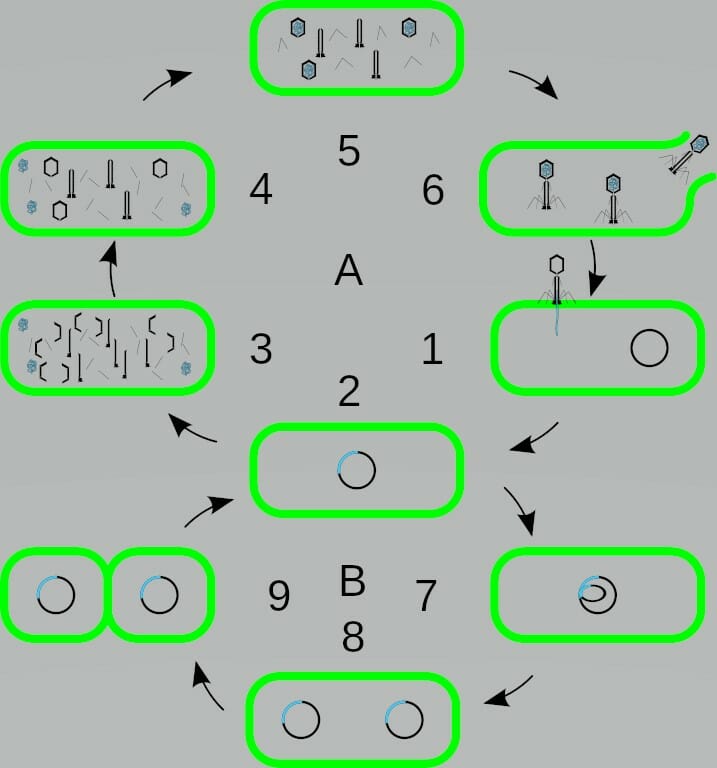
Adsorption is the process through which a bacteria gets its DNA or RNA into the host cell. This is labeled as 1 in the image above. The capsid, or protein coat around the viral genome, consists of very specific proteins. This sheild of proteins not only comes together to protect the viral genes, it serves as a sort of “key” to unlock a cell. The surface of the proteins are shaped to interact with proteins on the surface of the host cell.


When the “lock and key” align, the virion is bound to the cell membrane. When this happens, it also changes the shape of the capsid. This tears a hole or injects the viral DNA into the host cell. Here, it may travel into the nucleus or replicate in the cytoplasm. This depends on the virus itself, what type of genome it has, and the conditions of the cell.


Replication


During the lytic cycle, the replication of viral genes is carried out a number of times by a hijacked cellular system. Remember that the virus itself has imported few, if any, supporting proteins. Thus, the viral DNA must produce these in order to hijack the cell’s processes. The first proteins created are often created as the cell reads its own DNA and produces proteins. The viral genes simply sneak into the process. This creates what are called viral early proteins.


These early proteins have important functions (to the virus) of commandeering the cell’s machinery. They clear the cell’s normal metabolic agenda, and turn many of its activities toward the replication of viral genes and the production of viral proteins. The virus uses the raw products the cell has assembled (amino acids and nucleic acids) as building blocks for the parts it needs.


While this may seem like an overly complex process for such a small virus genome, consider first that there are really only a handful of proteins. Most viruses produce and code for only a handful of proteins. Unlike cells, a virus doesn’t need the complex proteins required to metabolize energy. As obligate parasites, a virus is dependent upon its host cell’s ability to provide raw materials. This makes it one of the most efficient forms of DNA replication that we know of.


Assembly and Release


As these parts are built, their natural evolutionary shapes help them come together in the proper way. Since most of the components are proteins, they have formed over evolutionary time to be able to come together with very little outside influence. The assembly of new virions is a hallmark of the lytic cycle. The other viral life cycle does not include producing and assembling new virions.


In this way, the lytic cycle resembles a small virus factory. All of the parts of the virus are produced independently, then assembled, and finally released into the environment. While the image above shows only 3 assembled virions at stage 6, in reality there would be millions. Compare the lytic cycle to the lysogenic cycle below it, in which an accurate 2 copies are shown after 1 bacterial division.


Quiz


1. Which of the following represents the lytic cycle?
A. Viral DNA is replicated as the host cell divides.
B. The viral genome takes over the host cell, and creates a virus factory.
C. The viral genome is mostly dormant.

Answer to Question #1
B is correct. Remember that the lytic cycle is like a factory. It takes over the cell and tries to make as many virions as fast as possible. Eventually, this overwhelms the cell and causes it to lyse, or break open. This is the reason it is called the lytic cycle. The lysogenic cycle is a much more dormant version of the viral life cycle. It is a passive state in which the viral genes get replicated as a byproduct of cell division.

2. Which life cycle, the lytic cycle or the lysogenic cycle, produces the most virions?
A. It depends
B. The lytic cycle
C. The lysogenic cycle

Answer to Question #2
A is correct. While the lytic cycle is a factory for new virions and is a clear answer, the question did not specify a time frame. If a virion infects a cell, instantly enters the lytic cycle and kills the cell, then it has only produced a million virions and now needs a new host. A bacteriophage genome which enters the lysogenic cycle may be inadvertently copied into millions of cells itself. Then, if even only a few of these enter the lytic cycle, that bacteriophage will far outnumber the previous example. In other words, it depends entirely on how long the lysogenic cycle is allowed to continue.

3. Based on what you now know about the lytic cycle, why is it so hard to eradicate the common cold?
A. It shouldn’t be!
B. The virus changes too much.
C. In targeting the mechanisms viruses use, you target the mechanisms every cell uses.

Answer to Question #3
C is correct. In most forms of medicine, a basic treatment to a disease is to take away the underlying cause. However, because viruses use the same machinery your healthy cells use, there is no way to target them specifically. If we did, we might accidently destroy all the cells in our body. I would rather get a cold.

References


  • Brusca, R. C., & Brusca, G. J. (2003). Invertebrates. Sunderland, MA: Sinauer Associates, Inc.

  • Lodish, H., Berk, A., Kaiser, C. A., Krieger, M., Scott, M. P., Bretscher, A., . . . Matsudaira, P. (2008). Molecular Cell Biology (6th ed.). New York: W.H. Freeman and Company.

  • McMahon, M. J., Kofranek, A. M., & Rubatzky, V. E. (2011). Plant Science: Growth, Development, and Utilization of Cultivated Plants (5th ed.). Boston: Prentince Hall.


Lytic Cycle

Lytic Cycle

Lytic Cycle Definition


The lytic cycle is named for the process of lysis, which occurs when a virus has infected a cell, replicated new virus particles, and bursts through the cell membrane. This releases the new virions, or virus complexes, so they can infect more cells.


Lytic cycle


As seen in the graphic above, the lytic cycle is often accompanied by the lysogenic cycle in many bacteria viruses, known as bacteriophages. After the virus injects its DNA or RNA into the host bacteria, the genetic material can enter either the lytic cycle or the lysogenic cycle.


In the lysogenic cycle, the bacteriophage DNA lies practically dormant. However, whenever the bacteria divides, the DNA of the virus is inadvertently copied. In this way, the virus can continue replicating within its host. As long as the bacteria are successful, the virus may remain dormant. At a certain point, conditions may change, and the virus will enter the lytic cycle.


In this cycle, the viral DNA or RNA is expressed by the host organism’s cellular mechanisms. In other words, the viral genes use the proteins within the cell to replicate themselves and produce viral proteins. These proteins and copies of the DNA will become new virions. The cell, helpless to its viral hijacker, simply waits until the pressure of these new virions is too high. Then, the cell membrane breaks. This lysis of the cell releases the virions created in the lytic cycle. Their final destination is a new cell, in which the lytic cycle can take place again. If conditions are favorable and the cell is dividing, the virus may stay in the lysogenic cycle for a time. Ultimately, to infect a greater number of cells, more virus genomes will enter the lytic cycle and produce thousands or millions of copies of themselves in a shorter amount of time.


Steps of the Lytic Cycle


Bacteriophage lysogenic and lytic cycle

Bacteriophage lysogenic and lytic cycle


Adsorption and Penetration


Adsorption is the process through which a bacteria gets its DNA or RNA into the host cell. This is labeled as 1 in the image above. The capsid, or protein coat around the viral genome, consists of very specific proteins. This sheild of proteins not only comes together to protect the viral genes, it serves as a sort of “key” to unlock a cell. The surface of the proteins are shaped to interact with proteins on the surface of the host cell.


When the “lock and key” align, the virion is bound to the cell membrane. When this happens, it also changes the shape of the capsid. This tears a hole or injects the viral DNA into the host cell. Here, it may travel into the nucleus or replicate in the cytoplasm. This depends on the virus itself, what type of genome it has, and the conditions of the cell.


Replication


During the lytic cycle, the replication of viral genes is carried out a number of times by a hijacked cellular system. Remember that the virus itself has imported few, if any, supporting proteins. Thus, the viral DNA must produce these in order to hijack the cell’s processes. The first proteins created are often created as the cell reads its own DNA and produces proteins. The viral genes simply sneak into the process. This creates what are called viral early proteins.


These early proteins have important functions (to the virus) of commandeering the cell’s machinery. They clear the cell’s normal metabolic agenda, and turn many of its activities toward the replication of viral genes and the production of viral proteins. The virus uses the raw products the cell has assembled (amino acids and nucleic acids) as building blocks for the parts it needs.


While this may seem like an overly complex process for such a small virus genome, consider first that there are really only a handful of proteins. Most viruses produce and code for only a handful of proteins. Unlike cells, a virus doesn’t need the complex proteins required to metabolize energy. As obligate parasites, a virus is dependent upon its host cell’s ability to provide raw materials. This makes it one of the most efficient forms of DNA replication that we know of.


Assembly and Release


As these parts are built, their natural evolutionary shapes help them come together in the proper way. Since most of the components are proteins, they have formed over evolutionary time to be able to come together with very little outside influence. The assembly of new virions is a hallmark of the lytic cycle. The other viral life cycle does not include producing and assembling new virions.


In this way, the lytic cycle resembles a small virus factory. All of the parts of the virus are produced independently, then assembled, and finally released into the environment. While the image above shows only 3 assembled virions at stage 6, in reality there would be millions. Compare the lytic cycle to the lysogenic cycle below it, in which an accurate 2 copies are shown after 1 bacterial division.


Quiz


1. Which of the following represents the lytic cycle?
A. Viral DNA is replicated as the host cell divides.
B. The viral genome takes over the host cell, and creates a virus factory.
C. The viral genome is mostly dormant.

Answer to Question #1
B is correct. Remember that the lytic cycle is like a factory. It takes over the cell and tries to make as many virions as fast as possible. Eventually, this overwhelms the cell and causes it to lyse, or break open. This is the reason it is called the lytic cycle. The lysogenic cycle is a much more dormant version of the viral life cycle. It is a passive state in which the viral genes get replicated as a byproduct of cell division.

2. Which life cycle, the lytic cycle or the lysogenic cycle, produces the most virions?
A. It depends
B. The lytic cycle
C. The lysogenic cycle

Answer to Question #2
A is correct. While the lytic cycle is a factory for new virions and is a clear answer, the question did not specify a time frame. If a virion infects a cell, instantly enters the lytic cycle and kills the cell, then it has only produced a million virions and now needs a new host. A bacteriophage genome which enters the lysogenic cycle may be inadvertently copied into millions of cells itself. Then, if even only a few of these enter the lytic cycle, that bacteriophage will far outnumber the previous example. In other words, it depends entirely on how long the lysogenic cycle is allowed to continue.

3. Based on what you now know about the lytic cycle, why is it so hard to eradicate the common cold?
A. It shouldn’t be!
B. The virus changes too much.
C. In targeting the mechanisms viruses use, you target the mechanisms every cell uses.

Answer to Question #3
C is correct. In most forms of medicine, a basic treatment to a disease is to take away the underlying cause. However, because viruses use the same machinery your healthy cells use, there is no way to target them specifically. If we did, we might accidently destroy all the cells in our body. I would rather get a cold.

References


  • Brusca, R. C., & Brusca, G. J. (2003). Invertebrates. Sunderland, MA: Sinauer Associates, Inc.

  • Lodish, H., Berk, A., Kaiser, C. A., Krieger, M., Scott, M. P., Bretscher, A., . . . Matsudaira, P. (2008). Molecular Cell Biology (6th ed.). New York: W.H. Freeman and Company.

  • McMahon, M. J., Kofranek, A. M., & Rubatzky, V. E. (2011). Plant Science: Growth, Development, and Utilization of Cultivated Plants (5th ed.). Boston: Prentince Hall.


Lytic Cycle

Tuesday, September 18, 2018

Transferrin

Transferrin Definition


Transferrin is a crucial glycoprotein that shuttles iron in the blood. It would be an understatement to say that iron is vital for most life-sustaining processes. Transferrin has become an important biomarker for good health in the clinical setting, as it can reveal if a patient has functional iron depletion. This bio-marker, of course, will give a physician insight into a patient’s pathology, as well as which treatment plan will be most suitable moving forward.


Transferrin Structure


Transferrin

Transferrin


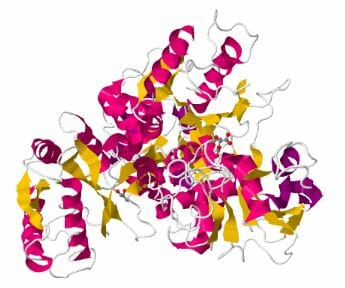
The image above is a 3-D depiction of human transferrin protein.


Structurally speaking, Transferrin is a polypeptide chain consisting of two carbohydrate chains and almost seven hundred amino acids. Transferrin has two homologous globular lobes, the N- and C- terminals comprised of alpha helices and beta sheets, with an iron binding site in between. The site itself is a six iron coordinate site occupied by a carbonate anion and four residues.


Each lobe is further divided into two clefts, or domains. Importantly, this structure lends transferrin the ability to undergo large conformational changes upon needing iron to be taken up or released. This is made possible by the rotating domains that rotate around a screw axis. Through x-ray crystallography, scientists have uncovered the mechanism for iron-release. This lies in how two of the basic residues from two of the domains will create a special hydrogen bond under neutral pH; however, this bond will break and thus release iron in the acidic pH of the endosome at its delivery site. Each transferrin molecule is able to carry two iron molecules in the bloodstream, and we will discuss in more detail the importance of sheltering iron until it is needed.


Transferrin Function


Iron is found everywhere on earth, and so it is no surprise that it also vital to sustaining life. Humans use iron for many cellular processes but perhaps the most important is iron’s ability to bind oxygen. As we know, oxygen is fundamental to cellular respiration and it is therefore necessary to transport oxygen from our lungs to each individual aerobic cell – without letting radical oxygen roam freely and ravage our cell’s membranes! Safe shuttling through our circulatory system is the answer. While humans contain about 3.7 grams of iron in our bodies, much of which comes from our diets, 2.5 grams will be “locked” inside hemoglobin with iron. Hemoglobin can then assume its role in transporting oxygen through the blood. However, just as importantly, we have evolved a way of recycling and storing this iron for future use. This is where transferrin comes in.


Plasma transferrin is a crucial player in iron metabolism. Transferrin essentially limits the levels of free iron in the blood. Free iron is dangerous in that it carries the risk of triggering free radical reactions, which sets off lipid oxidation and the destruction of thousands of molecules. Free radicals are defined as having at least one unpaired electron and they will thus be driven to steal electrons from every cell tissue including the heart, pancreas, brain, etc. Iron-triggered free radical damage can thus contribute to heart and liver disease, neurological issues, and more. Thankfully, transferrin binds essentially all circulating plasma iron. This chelation makes iron soluble and non-toxic as it is being delivered to tissues, accordingly serving the functions of rendering iron soluble, preventing iron-triggered free radical damage, and transporting iron. Transferrin, in fact, is the most valuable source of iron for red blood cells, with the highest turnover. The transferrin that circulates the blood is made and secreted by the liver. As previously mentioned, Transferrin can bind two iron ions. This is accomplished thanks its built-in iron (Fe3+) binding sites which have an extremely high affinity for iron. Lending to this affinity is an anion cofactor (preferably carbonate anion), that in its absence will make iron and transferrin binding negligible. The remaining four coordination sites are those from the transferrin molecule including an aspartic carboxylate oxygen, two tyrosine phenolate oxygens, and a histidine nitrogen. At any given time, about one third of the transferrin’s binding sites are filled. Upon radioactively labeling transferrin, it was found that about eighty percent of its iron was delivered to the bone marrow and then integrated into newly formed red blood cells. Other sites of delivery included the liver and spleen, which are major storage sites. It is said that of the 3 grams of iron found in adult human males, only about 0.1 percent of it ends up circulating in the plasma.


Clinical Significance of Transferrin


Tests measuring the levels of transferrin saturation are ordered when a healthcare provider suspects a patient has anemia. Symptoms may include pale coloration, fatigue, irritability, and shortness of breath. Anemia is defined as having low numbers of red blood cells, however one type is categorized by iron-deficiency. When iron levels run low in our bodies’ stores, our livers will upregulate transferrin synthesis in the healthy individual. Iron is necessary for hemoglobin synthesis, and thus having low levels of accessible iron will impede this process. Of course, there are multiple causes for anemia, which brings us to the Transferrin Saturation or Total Iron-Binding Capacity (TIBC) blood test. This test will determine if the underlying problem lies at the level of transferrin. This test checks how many of the possible transferrin binding sites end up “saturated,” or filled. In healthy individuals, transferrin levels range between 170 to 370 mg/dl and the percent saturated should lie between twenty and fifty percent. However, in severe iron-deficient cases this percentage may fall to under ten percent. Transferrin-iron saturation percentage will be low in patients with iron deficiency, and treatment options may include iron supplements or even blood transfusions.


Quiz


1. Which of the following best describes a main role of transferrin?
A. Systemic transportation of oxygen
B. Initiating radical pathways
C. Reducing levels of free iron
D. Preventing all anemia types

Answer to Question #1
C is correct. Like its name indicates, Transferrin transports and transfers iron. In doing so, this chelation will reduce levels of free iron which has the essential function of preventing secondary radical oxidative stress. While iron does help red blood cells carry oxygen, hemoglobin is the molecule that transports oxygen.

2. Which of the following was discussed as being necessary for transferrin-iron binding?
A. Oxygen
B. Carbonate
C. Calcium
D. Copper

Answer to Question #2
B is correct. While transferrin and iron can bind without assistance, the presence of a carbonate anion will lend transferrin its impactful fullest high affinity binding and is thus necessary.

References


  • Mizutani, Kimihiko et al. “X-ray structures of transferrins and related proteins, Biochimica et Biophysica Acta (BBA) – General Subjects, Volume 1820, Issue 3, 2012, Pages 203-211, ISSN 0304-4165. https://doi.org/10.1016/j.bbagen.2011.08.003.

  • Goodsell, David (2002). “Ferritin and Transferrin: molecule of the month.” PDB-101. Accessed 1 May 2018 from <http://pdb101.rcsb.org/motm/35>

  • Harvard BWH (2001). “Iron Transport and Cellular Uptake.” Accessed 1 May 2018 from <http://sickle.bwh.harvard.edu/iron_transport.html>

  • Iron Disorders Institute (2009). “How Iron Triggers Free Radical Activity.” Last accessed 2 May 2018 from <http://www.irondisorders.org/iron-tiggers-free-radical-activity>

  • University of Rochester Medical Center (2018). “Transferrin.” URMC Health Encyclopedia. Last accessed 2 May 2018 from <https://www.urmc.rochester.edu/encyclopedia/content.aspx?contenttypeid=167&contentid=transferrin>


Transferrin

Lipolysis

Lipolysis Definition


Lipolysis is the process by which fats are broken down in our bodies through enzymes and water, or hydrolysis. Lipolysis occurs in our adipose tissue stores, which are the fatty tissues that cushion and line our bodies and organs. In fact, fats can be thought of simply as stored energy. Fats are ready and available for when our glucose stores run low between meals, and it makes sense for lipolysis to occur as it will facilitate the movement of these stored fats through our bloodstream. Breaking down this “potential energy” into free moving fatty acids can then allow them to be repurposed or expended as fuel!


Lipolysis actually has links to various processes within our bodies. Free fatty acids are vital cell-to-cell communicators, are a staple ingredient of gluconeogenesis and cellular respiration, and can upregulate the transcription of proteins like the uncoupling proton channels that line our mitochondrial membrane – which will inhibit ATP synthesis without disrupting the respiratory chain. In sum, lipolysis is a key life-sustaining biological process; although, as of late, it’s taken on new meaning at cosmetic clinics around the world for its promise to zap unwanted fat! While for their namesake, both processes technically “lyse” or break fats, the way in which they accomplish this is obviously different – the latter utilizing cool lasers or heat to reduce fat cells.


Lipolysis Mechanism


Triglycerides are undoubtedly the main energy molecule in eukaryotic cells. Triglyceride is a glycerol derivative that is stored as lipid droplets within our fatty tissues, and herein lipolysis takes place. Let’s begin by describing lipolysis in big picture scope. These lipid droplets are first targeted by lipolytic enzymes that are highly regulated and will access these droplets in the event of phosphorylation.


These lipases will ensue to sequentially hydrolyze our triglycerides into their glycerol and fatty acid components until we are left with sole glycerols, and this takes place with three enzyme reactions. The breakdown of fats is termed beta-oxidation, or “fatty acid” oxidation because the triglycerides are being oxidized into their most basic functional parts. We are thus left with free fatty acids and glycerol that can enter other metabolic pathways or find new purpose. Let’s dive into specifics.


Lipolysis Mechanism

Figure 1


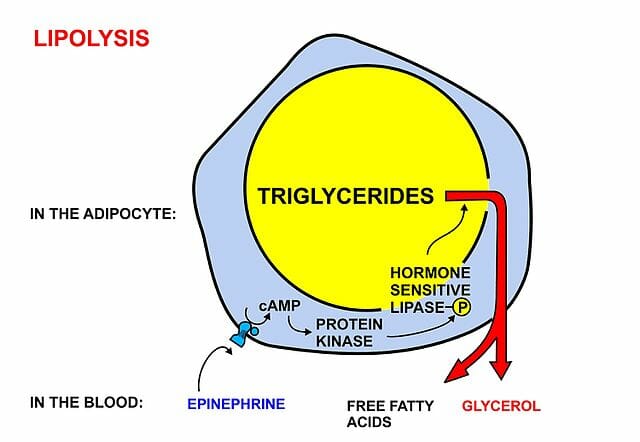
The image depicts the Lipolysis mechanism, breakdown of triglycerides into fatty acids and glycerol.


The first and rate-limiting step of lipolysis involves the enzyme, adipose triglyceride lipase (or ATGL), which is sensitive to hormones. The ATGL will hydrolyze our triacylglycerol into a diacylglycerol, losing a free fatty acid that will be free to mobilize in our bloodstream. The resultant diacylglycerol will then be acted upon by hormone-sensitive lipase (HSL), which will remove another fatty acid to give a monoacylglycerol molecule. Finally, monoacylglycerol lipase (MGL) will break the monacylglycerol further down to a single glycerol molecule.


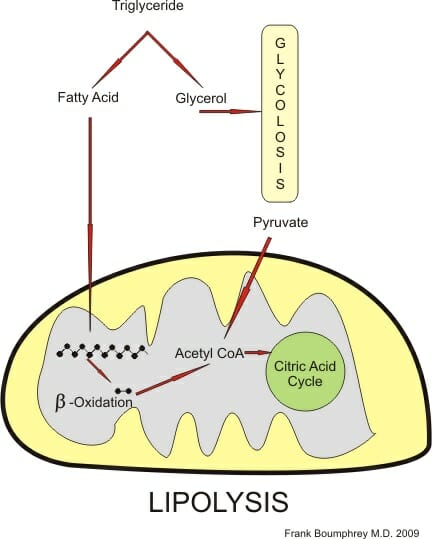
The figure below illustrates the main “destinies,” if you will, of the resulting fatty acids and glycerol. Fatty acids can undergo beta-oxidation and repurpose to create Acetyl-CoA. Of course, Acetyl-CoA is best known as a vital starting molecule that initiates the Krebs’s cycle in cellular respiration. This repurposing is vital when glucose stores are low in times of starvation, or even between meals, as cellular respiration can continue to run and sustain life. Similarly, the free glycerol can enter glycolysis. Normally glucose is converted to G6P at the first step of glycolysis. In the event that glucose levels are low, glycerol will be converted to dihydroxyacetone phosphate and will enter glycolysis at the second control point to keep glycolysis running. Thus, fats make the best energy store as they will ensure that cellular respiration continues to run and ATP is produced.


Lypolosis

Figure 2


The figure illustrates Lipolysis and the pathways the fatty acids and glycerol components take.


Lipolysis Regulation


Like every vital biological process, lipolysis is regulated to meet our needs. At any given time, it would be extremely harmful to have tons of free fatty acids flowing through our bloodstream. Anyone with high cholesterol or arterial plaques will attest to that. Thus, lipolysis – and its inverse process, lipogenesis – need to be counter-regulated and highly sensitive to the levels of specific hormones and proteins. For example, stimulatory hormones like, epinephrine, norepinephrine, cortisol, glucagon, and growth hormone induce lipolysis. Key hormones glucagon and epinephrine will use the same pathways to induce lipolysis with minor differences.


Both glucagon and epinephrine will serve as ligands that will bind to G-protein coupled receptors on the surface of fat cells. The G proteins will then activate adenylate cyclase and upregulate their conversion of ATP to cAMP. We might recognize cAMP as the famously ubiquitous secondary messenger of so many other biological pathways. Likewise, here the cAMP will activate protein kinase A (PKA), which will expend an ATP molecule in phosphorylating and upregulating the hydrolysis activity of our HSL enzyme – otherwise known as our second enzyme in the lipolysis pathway. As a result, we are left with free fatty acids and glycerol that can then enter metabolic pathways to counter the low sugars in our blood, for instance. Understandably, HSL was thought to be the rate-determining enzyme of lipolysis for some time before TAG lipase (or ATG, our first enzyme) was uncovered to be the key initiative lipolytic step. Let’s quickly take a look at why it makes sense for glucagon and epinephrine to trigger lipolysis.


Glucagon-induced Lipolysis


Glucagon is a peptide hormone that is synthesized by pancreatic cells in the event that glucose and thus insulin levels drop. Glucagon will then trigger our liver to break down its glycogen stores and release much needed glucose into our blood. Conversely, when our glucose and insulin levels are high, insulin in healthy individuals will allow glucose to exit the bloodstream and be taken up by insulin-dependent tissues. Of course, in diabetics, the tissues will no longer respond well to insulin and this sugar will not reach the tissues and instead cause havoc in the bloodstream.


Shifting back our focus to lipolysis, glucagon stores are small and will be expended quickly. Fat stores, on the other hand, are vast and ready to use. Here, glucagon serves its key role. Glucagon will bind to Glucagon G-protein coupled receptors on fat cell membranes, and trigger the HSL-activating pathway described earlier. The glycerol that is released can then travel to the liver or kidney where it will be eventually converted to GA3P and enter glycolysis and our gluconeogenesis pathway to synthesis badly needed glucose (refer to figure 2).


Epinephrine-induced Lipolysis


Metabolism

Figure 3


The diagram specifically illustrates epinephrine-induced Lipolysis through a G-protein mediated pathway.


Epinephrine will also bind G-protein receptors on fat cell membranes, however they will specifically bind beta-adrenergic receptors. This binding will likewise lead to the cAMP/PKA-led phosphorylation of hormone sensitive lipase, that will ultimately drive the release of free fatty acids and glycerol. Epinephrine is known for its connection to our instinctual “fight or flight” response. This hyperarousal occurs when we perceive an attack or threat to our survival. Thus, it makes sense that epinephrine would trigger lipolysis and its resulting up-drive of metabolic processes. If we are ever starving, our body will certainly react to this threat and use our fatty energy stores to respond and sustain life at all costs.


Lipolysis in Popular Culture


As briefly mentioned above, a fun fact is that lipolysis has become a popular term in the cosmetic world. Not to be confused with the adipose lipolysis pathways detailed in this article, laser lipolysis and even injection lipolysis are clinically proven methods of reducing the number of fat cells without liposuction surgery. Noninvasive fat reduction has become a new cosmetic staple, and promises to target fat cells through the use of heat, cooling (via lasers or radiofrequencies), or less commonly deoxycholic acid injections without disrupting surrounding tissues.


Quiz


1. Which of the following enzymes is the rate determining enzyme in lipolysis?
A. HSL
B. ATGL
C. MGL
D. None of the above

Answer to Question #1
B is correct. As mentioned above, researchers uncovered that the first lipolysis step, mediated by ATGL, is coincidentally the rate determining step of lipolysis. It was previously thought to be HSL as it undergoes phosphorylation.

2. Which of the following will induce lipolysis?
A. High insulin/Low epinephrine
B. High insulin/High epinephrine
C. Low insulin/High epinephrine
D. Low insulin/Low epinephrine

Answer to Question #2
C is correct. Low insulin and high epinephrine will trigger lipolysis. This makes sense if our body is constantly responding to feedback. When glucose and insulin levels are low, we will need fats to sustain gluconeogenesis and cellular respiration. High epinephrine will occur in the face of a life threat that will require the orchestration of fat energy expenditure.

References


  • Binienda, Z et al. “Role of Free Fatty Acids in Physiological Conditions and Mitochondrial Dysfunction.” SCIRP: Food and Nutrition Sciences, Vol. 4 No. 9A, 2013. Retrieved <http://www.scirp.org/journal/PaperInformation.aspx?PaperID=36092>

  • American Society of Plastic Surgeons (2018). “Nonsurgical Fat Reduction: Minimally Invasive Procedures.” Plasticsurgery.org. Accessed 2018, May 29 from <https://www.plasticsurgery.org/cosmetic-procedures/nonsurgical-fat-reduction/laser-lipolysis>

  • Ward, Colin (2015). “Lipolysis and Lipogenesis.” Diapedia: 51040851148 rev. no. 17. Accessed 29 May 2018 from <https://www.diapedia.org/metabolism-insulin-and-other-hormones/51040851148/lipolysis-and-lipogenesis>

  • Engelking, Larry R. (2014). “Chapter 70 – Lipolysis.” Textbook of Veterinary Physiological Chemistry (3rd Edition), Pages 444-449. Accessed 30 May 2018 from <https://www.sciencedirect.com/topics/neuroscience/lipolysis>

  • Fruhbeck, G et al. “Regulation of Adipocyte Lipolysis.” Nutr Res Rev. 2014 Jun; 27(1): 63-93. Doi: 10.1017/S095442241400002X


Lipolysis

Spindle Fibers

Spindle Fibers Definition


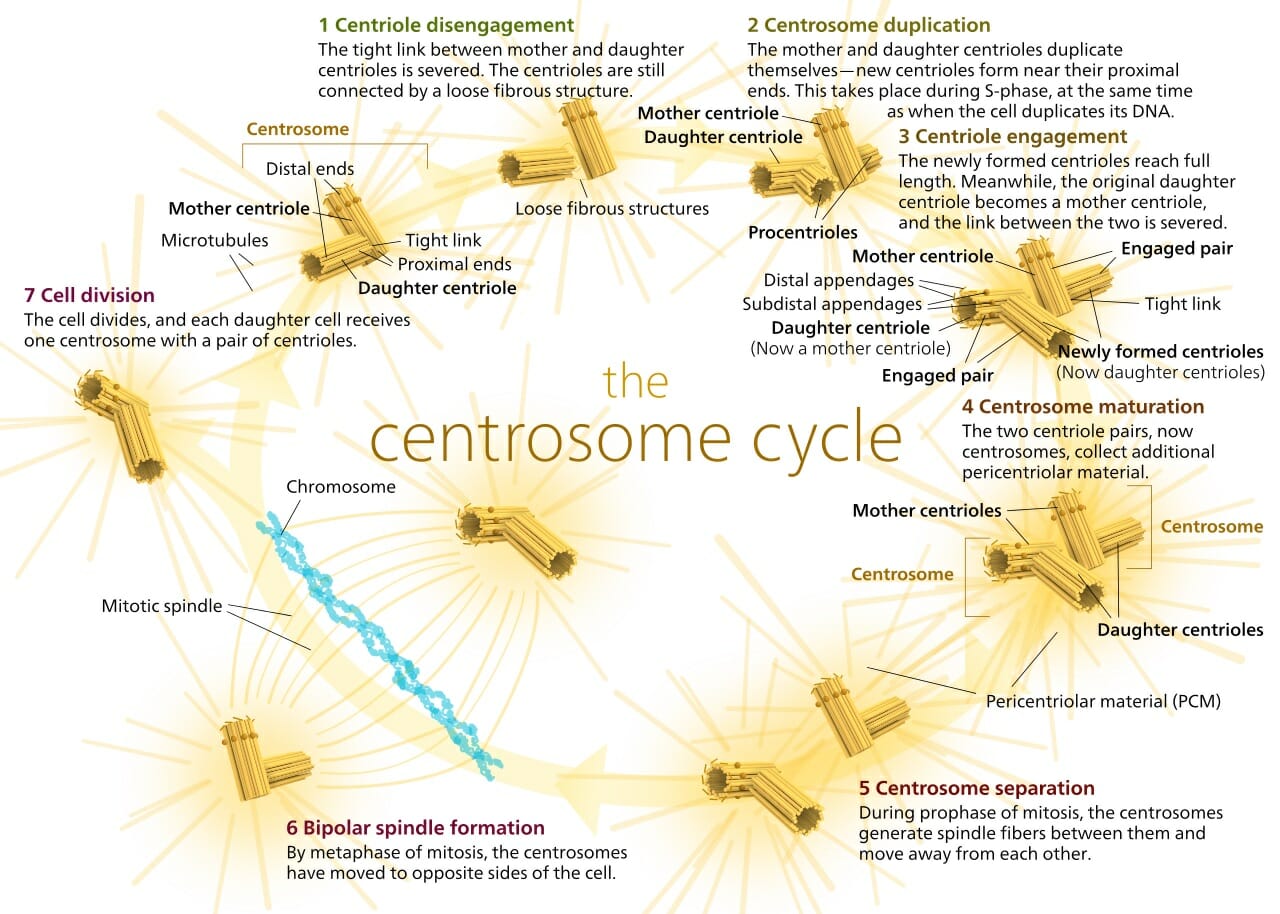
Spindle fibers are microscopic protein structures which help divide genetic material during cell division. The spindle fibers form out of the centrosome, also known as the microtubule-organizing center, or MTOC. Spindle fibers are formed from microtubules with many accessory proteins which help guide the process of genetic division. The spindle fibers form during cellular division near the poles of the dividing cell. As they extend across the cell, the search for the centromere of each chromosome.


Centrosome Cycle

Centrosome Cycle


Once attached, the spindle fiber is pulled back. With each fiber comes the chromosomes, which separates them along the poles. This process can be seen in the image above. The spindle fibers can be seen extending in all directions from the centrosomes. These spindle fibers are formed from several microtubules. The spindle fibers act like small machines during cell division. They carefully assemble and divide the chromosomes, and have been doing so for billions of year. But how does this complex process take place?


Structure of Spindle Fibers


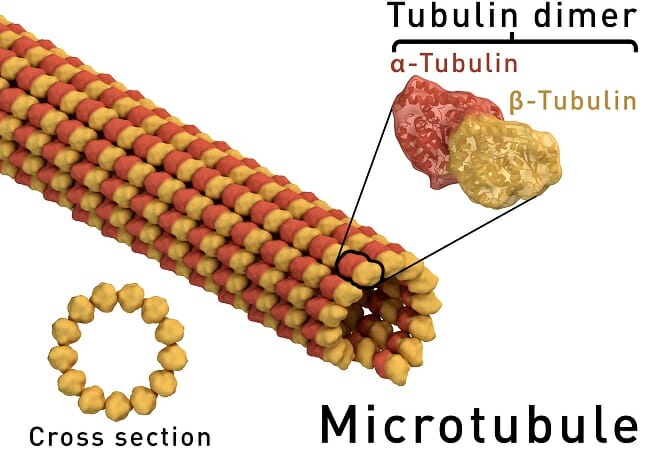
The centrosome, or MTOC, always has some microtubules preassembled. On the surface of the MTOC are small proteins, responsible for lengthening or shortening the microtubules. These proteins respond to signals from the cell, and when it is time for cell division, the begin lengthening the spindle fibers. To do this, they must add subunits of alpha-tubulin and beta-tubulin. Together, these two small proteins form the structure of a microtubule. Many individual microtubules together are called spindle fibers. A single microtubule can be seen in the graphic below.


Microtubule structure

Microtubule structure


Functions of Spindle Fibers


Shrinkage and Growth


The main feature of microtubules, and therefore of spindle fibers, is that the proteins which control them can extend or contract the microtubule by adding or removing tubulin dimers. At first the MTOCs must add many of these dimers to the microtubule, to extend it across the cell. As the microtubule travels, it eventually reaches a chromosome. Special proteins within the centromere of the chromosome can attach to the microtubule. Here, there are also proteins which can shorten and extend the spindle fibers.


This is one of the main ways that the chromosomes get aligned on the metaphase plate, a hypothetical middle of the cell. It is also the main way they are separated during anaphase. While the addition and subtraction of dimers is one of the main ways that spindle fibers help carry chromosomes about the cell, there are two other primary methods.


Sliding


When spindle fibers from opposite poles of the cell meet, they are bound together by a special protein. Instead of grabbing onto a chromosome, they more or less attach to each other via the protein. This protein is a specialized motor protein, which reacts to signals from the cell. At the appropriate time during cell division, the motor protein will begin crawling along each microtubule it is attached to. This “sliding action” causes pressure to be exerted against the poles, and helps drive the poles apart. This action of the spindle fibers is what forces the cell apart and allows for it to be divided in half during telophase.


Microtubule anchors


The final action carried out by some spindle fibers is that of anchoring to the cell surface. On the inside surface of the cell membrane, specialized proteins are placed to anchor the microtubules. While these anchors cannot assemble dimers into the microtubule, they can bind onto it. Then, when the MTOC starts removing microtubule dimers, the whole spindle fiber shortens. In this way it pulls the cell membrane toward the MTOC, and starts to define the area of the newly forming cell.


Quiz


1. Which of the following is NOT caused by the actions of spindle fibers?
A. The movement of chromosomes
B. The change in shape of the cell
C. The structure of the cell when not dividing

Answer to Question #1
C is correct. Spindle fibers form during cell division and are disassembled afterwards. While there are many different kinds of microtubules, they only act as spindle fibers during cell division. After cell division, the function of structure is carried out by more interspersed microtubules and other small structures. By using a completely different set of proteins, cell division and the organization of spindle fibers which is required can be completely regulated.

2. Microtubules form in a peculiar fashion. While the entire structure is just repeated units of the small tubulin dimer, the structure has polarity to it. That is, each side of the microtubule is different. On one side the beta-tubulin is more exposed, while on the other side the alpha-tubulin is more exposed. How must the proteins in the MTOC and the proteins on chromosomes be different in order to work?
A. They must be the same
B. They must be able to add dimers from opposite sides
C. They are completely different processes, therefore they are completely different proteins

Answer to Question #2
B is correct. The different sides of the microtubule (often referred to as + and –), have slightly different shapes which are just the opposite of each other. On one side, the protein must add or remove dimers with the alpha-tubulin facing in, while the others must do it with the beta-tubulin facing in. These two dimers are almost identical, so the change is small. But, it is still present and affects the way the cell’s machinery works.

3. Often, when products of an organelle are exported, they are contained within vesicles. These small compartments of cell membrane are then attached to a microtubule via a small motor protein. The protein works its way down the microtubule, like in the sliding example above. It carries the vesicle to another organelle or the cell surface. Here it can be expelled or absorbed. Are these microtubules considered spindle fibers?
A. No
B. Yes
C. Maybe

Answer to Question #3
A is correct. These are definitely not spindle fibers. Remember that spindle fibers are formed only during cell division and that their main purpose is dividing the genetic components of the cell. These are microtubules, but there are many uses for microtubules within the cell.

References


  • Lodish, H., Berk, A., Kaiser, C. A., Krieger, M., Scott, M. P., Bretscher, A., . . . Matsudaira, P. (2008). Molecular Cell Biology (6th ed.). New York: W.H. Freeman and Company.

  • McMahon, M. J., Kofranek, A. M., & Rubatzky, V. E. (2011). Plant Science: Growth, Development, and Utilization of Cultivated Plants (5th ed.). Boston: Prentince Hall.

  • Nelson, D. L., & Cox, M. M. (2008). Principles of Biochemistry. New York: W.H. Freeman and Company.


Spindle Fibers