Showing posts with label 8k. Show all posts

Sunday, July 30, 2017

Pineal Gland

Pineal Gland Definition


The pineal gland, also known as the “pineal body,” is lightheartedly known as the “third eye” of the human body. This name stems from the pineal gland’s role in secreting melatonin. This hormone, in turn, modulates our sleep and waking patterns. Melatonin was first described by American physician, Dr. Aaron Lerner in 1958. Research has shown melatonin to play an instrumental role in establishing our circadian rhythm, which is the twenty-four-hour cycle of our bioactivity that matches the solar cycle of the day.


Melatonin is one of the most ubiquitous and versatile hormones found in animals and some plants. It is highly lipophilic, which allows it to reach our cells in record time. If its name sounds familiar, it is because melatonin was named after “melanin” after displaying skin lightening effects in frogs. Melatonin derives from the amino acid, tryptophan. This amino acid can be found in humans and other species of mammals, reptiles, birds and amphibians. Tryptophan-rich foods have been linked to calming effects and reduced anxiety. In humans, specifically, melatonin helps control our daily sleep cycle. The body produces melatonin in response to light hitting the retina of the eye. This inhibits the release of melatonin. In contrast, the absence of light at nighttime will be read as a signal to produce more melatonin. The ability to modulate melatonin levels is lent by the presence of special photoreceptor cells in the human retina that emit a signal to the suprachiasmatic nucleus, or SCN, of the hypothalamus. The hypothalamus, in turn, is a part of the brain that supports the body’s homeostatic functions. The light or dark signals are then sent to the pineal gland, which will begin to modulate melatonin levels.


Melatonin Properties


The largest amount of melatonin is expelled by the pineal gland during the night. At this time, the body will undergo several changes closely tied to the concentrations of melatonin. The body’s internal temperature will drop, as will our breathing rate. These experiences are the ones we most associate with falling asleep. In the daytime, however, our retinas will be exposed to a lot of light that will inhibit melatonin expression. This is essential for making us alert and awake during the daytime.


Melatonin has special antioxidant properties. It is known to neutralize radicals, or elements with an unstable electron configuration, that would otherwise cause harmful oxidative damage to tissue. Melatonin can also activate other antioxidant enzymes that will perform restorative functions. Naturally, melatonin is an antiaging substance that declines as we get older. The loss of melatonin is thus associated with various age-related illnesses. Melatonin also retains a role in buffering the immune system in light of seasonal adjustments. Its roles are still being studied, but the consensus lies in melatonin acting as a stimulant under suppressive conditions and as an anti-inflammatory agent when the immune system experiences acute inflammation.


Pineal Gland Location


The pineal gland is roughly located in the center of the brain, sandwiched between the left and right hemispheres. It is about seven by six by three millimeters in dimensions, and is the only midline brain part that is not paired. The pineal body is tucked in the divot or groove where the two thalamic bodies meet. It takes on the shape of a pinecone, which explains its naming! Nearly all existing vertebrates contain a pineal gland. Pineal glands are found in even the primitive lamprey. It makes sense that the pineal gland is a primitive organ, as it is made with the simple intention of acting as a kind of photoreceptor that responds to rays of light. However, not all species have conserved the pineal gland. The exception to the rule is the hagfish, which lacks a perceptible pineal gland. Likewise, a few other more advanced vertebrates have lost theirs sometime in their evolution. Regardless, this light-sensing organ has earned an interesting place in philosophy classes across the world. In its romanticized interpretation, the pineal gland has been described to embody metaphysical properties in the realm of pseudoscience. Like most subjects, this idea was hotly contested by early philosophers. But what remains uncontested is that its secretion, melatonin, serves a vital role in the physical body.


Unlike the remaining mass of the mammalian brain, the pineal gland is not separated from the body by the blood-brain barrier. Instead, it receives the second most profuse supply of blood in the body, next to the kidney. The pineal gland’s main blood supply come from the choroidal branches of the posterior cerebral artery. Its sympathetic (or excitable) innervation, on the other hand, comes from the superior cervical ganglion. The otic ganglia will supply the inhibitory, parasympathetic innervation.


Melatonin receptors are found scattered in various areas of the body. Most notably, they are found in high concentrations in the SCN and the brain’s pituitary gland. This is the main site of action as melatonin directly plays into the circadian rhythm here. But melatonin receptors are also present in the ovaries. The levels of melatonin affect several facets of the menstrual cycle, such as the timing of its onset, the duration, and the frequency. In other animal species, it even acts as a mating cue. For instance, greater levels of melatonin in horses are found during the spring, which coincides with the ideal season for mating. This is a direct example of the solar cycle’s impact on the reproductive cycle via pineal gland activity. Other melatonin receptors lie in the blood vessel walls and in our intestinal tracts. In the gut, melatonin protects the mucosal layers from lesions and irritation via its eradication of free radicals. Gut lesions can lead to painful esophagitis, gastritis, and peptic cancer among other illnesses.


Pineal Gland Disorders


Since the pineal gland is primarily involved in sleep-wake rhythms, it is also takes root in mood disorders. Recent studies have linked chronic stress and poor diet as possible causes of reduced levels of melatonin in the system. This is often found in patients with abnormal circadian cycles of cortisol (or “stress”) hormone. In fact, depression and sexual dysfunction are conditions that are further aggravated by low melatonin output. These of course impact our quality of life. Milder mood alterations, like insomnia and the jetlag that is felt after boarding a long flight, have also been linked to the pineal gland. These feelings are often short-lived, albeit disruptive. Furthermore, peptic ulcers are also linked to melatonin levels when they are too low to prevent oxidative damage.


Pineal cysts, or cysts of the pineal gland, are a relatively common occurrence that happens in about ten percent of people undergoing a CT or MRI scan. The cause of pineal cysts is not known. In fact, most patients with pineal cysts will not display any visible symptoms. But very rarely will patients experience headaches and eye movement abnormalities because of it. In some patients, the cyst can even lead to emotional disturbances, sleep issues, and seizures. Only when the pineal gland cyst is symptomatic will a physician recommend surgical removal. But the overall prognosis for patients with pineal cysts is very good.


Pineal tumors, on the other hand, are a more serious complication that represent about one percent of all brain tumors. At least seventeen types of tumors arise in the area of the pineal gland but many are benign. The most common tumors are gliomas, pineal cell tumors, and germ cell tumors. The pineal gland is located next to a duct called the aqueduct of Sylvius. It acts as a passage through which cerebrospinal fluid (CSF) leaves the center of the brain. Pineal tumors often block this duct, causing a buildup of pressure that expands the ventricles within the skull. This blockage will present complications most often linked to the symptoms of pineal gland tumors:


  • Headaches

  • Seizures

  • Nausea

  • Visual changes

  • Problems with memory recall


These visual changes include double vision, an inability to properly focus on the objects in front of us, and abnormal eye movements. These issues may improve or resolve once the tumor is either resected or treated. Treatment of the tumor can vary depending on the diagnosis. This diagnosis must be informed with a precise histological analysis from a biopsied sample. A benign, or non-cancerous, pineal tumor can be resected surgically at the hands of a skilled surgeon. However, malignant pineal tumors may be treated with either surgery or radiation therapy. For example, pinealocytomas obtain no benefit from radiation therapy alone. So, they will require surgical resection. The most common cancer in this area is germinoma. Germinoma tumors, in contrast, are both very sensitive to chemotherapy and radiation and will be cured in most cases. The same applies to other malignant germ cell tumors near the pineal gland. Non-germ cell tumors can benefit from newer stereotactic types of radiation therapy. Like any other tissue that has undergone intensive cancer therapy, there may be long term effects on the pineal tissue’s ability to perform its endocrine functions. Therefore, the patient will need to work alongside an endocrinologist to address certain hormone deficiencies that may have arisen. Most of these issues can be managed with medical therapies. This has led the prognosis for pineal tumor survivors – both in children and adults – to improve.


Quiz


1. How will light affect melatonin secretion? Choose best answer.
A. Increase
B. Decrease
C. No effect
D. Modulate

Answer to Question #1

2. How will darkness affect melatonin secretion? Choose best answer.
A. Increase
B. Decrease
C. No effect
D. Modulate

Answer to Question #2

3. Which of the following is indicated for malignant pineal tumors, per the article?
A. Surgical resection
B. Radiation therapy
C. Surgery or radiation
D. Chemotherapy

Answer to Question #3

References


  • Encyclopedia Britannica (2017). “Melatonin: Hormone.” Encyclopedia Britannica. Retrieved on 2017-07-07 from https://www.britannica.com/science/melatonin

  • Emerson, Charles H (2017). “Pineal Gland.” Encyclopedia Britannica. Retrieved on 2017-07-08 from https://www.britannica.com/science/pineal-gland

  • Carillo-Vico, A. et al. (2013). “Melatonin: Buffering the Immune System.” Int J Mol Sci.. 14(4): 8638-8683. Doi: 10.3390/ijms14048638

  • Maurizi CP (1984). “Disorder of the pineal gland associated with depression, peptic ulcers, and sexual dysfunction.” South Med J.. Dec; 77(12): 1516-8.

  • NIH (2014). “Pineal Cyst.” Genetic and Rare Diseases Information Center.. Retrieved on 2017-07-07 from https://rarediseases.info.nih.gov/diseases/10723/pineal-cyst

  • Ferry, Robert MD (2016). “Pineal Tumor.” E Medicine Health. Retrieved on 2017-07-08 from 2http://www.emedicinehealth.com/script/main/mobileart-emh.asp?articlekey=88561#when_to_seek_medical_care_for_a_pineal_tumor


Pineal Gland

Wednesday, July 5, 2017

Labia

Labia Definition


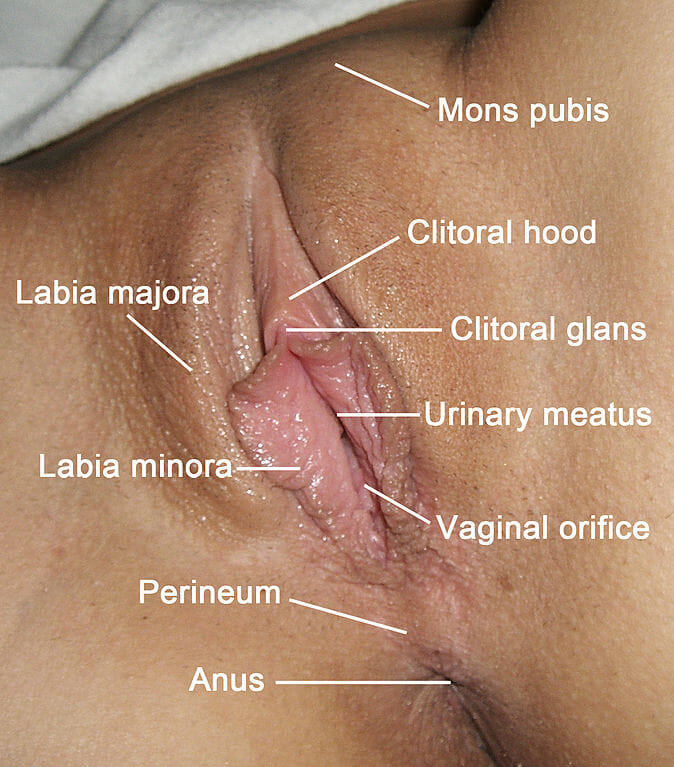
Labia refers to a part of the female genital anatomy that comprises the external region of the vulva (shown below). There are two pairs of labia in human women, termed the labia minora and the labia majora. The labia minora are the inner folds of skin residing under the labia majora. The labia majora are larger than the labia minora, flat in shape, and are often visible. The function of the labia is to provide protection for the vagina, clitoris, and urethra.


Vulva


Labia Minora


The labia minora are two folds of skin situated under the labia majora that are devoid of hair. These folds protect the openings of the vagina and urethra, and the top portion connects with the clitoral glands and clitoral hood. At the posterior end of the labia minora, the folds meet under the opening of the vagina, at a location termed the frenulum of the labia minor. The surface of the labia minora contains sebaceous glands, sweat glands, erectile tissue, and an array of nerve endings. The labia minor are typically moist and only visible when the labia majora are pulled apart.


Labia Majora


The labia majora comprise the outer folds of skin, which are comprised of adipose tissue that results in a thickened appearance. The labia minora each cover one side of the vulva, meeting at the center, known as the pudendal cleft. The lower portion of the labia majora join below the frenulum of the labia minora and above the perineum, at a location known as the posterior commissure. The upper portion of the labia majora meet between the clitoris and the mons pubis, at a location known as the anterior commissure. Since the function of the labia majora is to protect the vulva, they typically cover all or the majority of the vulva. The outer surface is covered with pubic hair after the onset of puberty, whereas the inner surface is devoid of hair and contains sebaceous glands and sweat glands, as well as some nerve endings. In general, the labia majora are highly vascularized, and become engorged with blood during sexual stimulation.


Labia Growth and Development


Prenatal Development


At conception, the sex of an individual is determined by the presence or absence of the male and female sex chromosomes. In humans, the presence of the Y chromosome results in a male, whereas the X chromosome results in a female. During embryonic development, the Y chromosome will influence the development of the testis, which stimulate the production of the male sex hormones (i.e., androgens). In the absence of male sex hormones, female genitals will form. Such genital development typically commences at approximately four to six weeks of gestation and is known as the sexually indifferent stage because the genitals of both males and females develop in the same manner, forming two urogenital folds, a genital tubercle, and two labioscrotal swellings. Between eight and nine weeks of gestation, the urogenital folds become the labia minora and the labioscrotal swellings form the labia minora. Such changes are typically complete by 12 weeks of gestation.


Childhood


At birth, both the labia minora and majora are fully developed, exhibit a thick appearance the same colour as the rest of the body. However, during the first two years of life, the labia begin to flatten and smoothen, becoming less prominent. Since the labia are highly influenced by hormones, the thick appearance at birth is due to the presence of maternal hormones during fetal development, and the thinning appearance is due to the absence of such strong sexual hormones during early childhood.


After Puberty


During puberty, there is an increase in the secretion of female hormones (e.g., estrogen) which leads to changes in the appearance of the labia. The labia majora typically begin to thicken once again due to the accumulation of adipose tissue in this region. In addition, hair begins to grow on the outer surface of the labia majora, spreading and becoming thicker as it radiates outwards towards the mons pubis. The pubic hair covering the labia majora becomes increasingly thicker, coarser, and curlier as puberty progresses. After puberty, the outer surface of the labia majora darkens and wrinkles. Changes in hormones, such as during pregnancy, can also cause the labia majora to darken in color.


Old Age


Since the labia are highly responsive to changes in hormone levels, and in the absence of strong hormonal secretion following menopause, the labia change once again. After menopause, the labia begin to flatten due to the loss of adipose tissue, and become wrinkled. In addition, the thick hair that once covered the labia majora thins and turns gray. The elasticity of the skin comprising the labia diminishes and overall, the labia begin to atrophy.


Quiz


1. The purpose of the labia is to:
A. Protect the urethra
B. Protect the vaginal opening
C. Secretion of fluids
D. All of the above

Answer to Question #1

2. During embryological development, the labia form:
A. In the absence of testosterone
B. In the absence of estrogen
C. In the absence of luteinizing hormone
D. In the absence of progesterone

Answer to Question #2

References


  • Clerico C, Lari A, Mojallal A, and Boucher F. (2017). Anatomy and Aesthetics of the Labia Minora: The Ideal Vulva? Aesthetic Plast Surg. 41(3):714-719.

  • Gilbert SF. (2000). Developmental Biology Sixth Edition Sinauer Associates; Sunderland (MA).

  • Marnach ML and Torgerson RR. (2017). Vulvovaginal Issues in Mature Women. Mayo Clin Proc. 92(3):449-454.

  • Netter F. (2014). Atlas of Human Anatomy sixth edition Elsevier; New York (NY).


Labia

Friday, June 23, 2017

Oncology

Oncology Definition


Oncology is the study of cancer. Cancer is a disease in which cells reproduce uncontrollably, forming lumps called tumors that may grow and spread to other parts of the body. The word oncology comes from the Greek words onkos, meaning “tumor”, and logos, meaning “study”. An oncologist is a doctor that treats cancer.


History of Oncology


The Ancient Egyptians were one of the first known cultures to describe what we now know to be cancer. The Edwin Smith Papyrus, a remnant of part of an ancient Egyptian medical textbook dating back to 3000 B.C., describes treating tumors by cauterization with a tool known as a “fire drill”. The papyrus also mentioned that there was no cure. In addition, some Ancient Egyptian mummies show signs of having had cancer, such as fossilized bone tumors and bone destruction from cancer in the head and neck.


The Greek physician and “Father of Medicine”, Hippocrates, was the first to use the term carcinoma to describe tumors in the 4th Century B.C. Carcinoma came from the words karkinos, meaning “crab”, and –oma, meaning “swelling”. Hippocrates may have chosen this word because because the thin projections of cells spreading out from a tumor made it look like a crab, or because tumors are hard like a crab shell. The Roman philosopher Celsus was the first to use the term cancer. Cancer is the Roman word for crab, translated from the Greek.


At that time, and for centuries afterward, little was known about cancer or how to treat it. It wasn’t until the Scientific Revolution in the 16th Century that people began to understand more about the human body and its workings, thus paving the way for studying cancer. John Hunter, a Scottish surgeon who lived during the 18th Century, was the first to suggest that some cancers could be cured by surgery. Hunter was referring to cancers that had not yet spread to other parts of the body. In addition, the development and widespread use of the microscope in the 19th Century provided scientists with tools to study cancer at the cellular level. In fact, it was not known until the 19th Century that cancer was actually made up of cells. Hippocrates believed cancer resulted from an excess of black bile, and later on, biologists believed that cancer formed from lymph, the body fluid that contains white blood cells. Even after cancer had been shown to be made up of cells, scientists believed that cancer spread like a liquid. The German surgeon Karl Thiersch showed that cancer is spread through cells via metastasis. When a cancer metastasizes, cells break away from it and travel through the blood or lymph to other parts of the body, forming new tumors.


Cancer screening tests such as the Pap smear, which tests for cervical cancer, and the mammogram, which tests for breast cancer, were developed and put into widespread use in the 20th Century. The American Cancer Society recommends that all individuals be tested for cancer based on their age and sex. Also in the 20th Century, radiation therapy, chemotherapy, hormone therapy, and immunotherapy began to be developed and are now widely used to treat cancer. Another type of cancer treatment was developed in the late 1990s in the form of monoclonal antibodies. Monoclonal antibodies mimic a person’s immune system and are targeted to specific cancer cells to induce an immune response. Which each passing year, our knowledge of cancer and its treatment increases.


Types of Oncologists


The three main types of oncologists are medical, surgical, and radiation oncologists. These types are quite self-explanatory. Medical oncologists use therapies such as chemotherapy and immunotherapy to treat cancer. Surgical oncologists perform surgical operations in order to remove tumors. Radiation oncologists use radiation to treat cancer. In addition, an oncologist may specialize in treating a certain type of cancer. For example, hematologists specialize in treating blood cancers like leukemia. Others may specialize based on age group; a pediatric oncologist, for example, treats cancer in children.


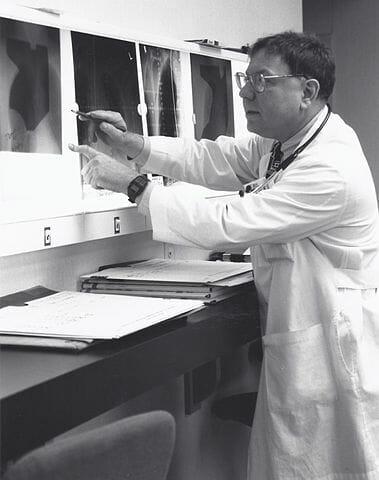
Examining X-Rays of a Cancer Patient

This oncologist is looking at a patient’s x-rays.


Oncology Careers


Oncologists are physicians. To become an oncologist, one must attend medical school following the completion of a bachelor’s degree with a premed track. Often, undergraduates who want to go on to medical school major in biology in college. However, one may major in virtually any subject as long as the prerequisites for medical school are met; this usually involves courses in biology, organic chemistry, physical chemistry, physics, and calculus, among others. Taking advanced cell biology courses would also be helpful for someone who wants to become an oncologist. Radiologists, who specialize in using medical imaging techniques to treat diseases such as cancer, are also physicians. Like oncologists, radiologists must go to medical school and then complete a residency.


Other oncology careers that do not require medical school, but do require specialized training include being an oncology nurse, a clinical nurse specialist, an oncology social worker, or a medical physicist (who administers chemotherapy). In addition, there are also careers available in oncology for those with bachelor’s degrees. Most radiation therapists, who perform the work of administering radiation treatments to patients, have bachelor’s degrees or even two-year associate’s degrees in radiation therapy.


Oncologists may work closely with cancer researchers, but cancer researchers are not considered oncologists (unless they are both a doctor and a researcher, which requires the completion of both MD and PhD degrees). Oncologists diagnose, treat, and help prevent cancer, and interact directly with patients, while cancer researchers perform research in a laboratory setting. The interaction of all of these medical professionals is needed to treat a cancer patient, from developing chemotherapy drugs to diagnosing cancer to administering treatment.


References


  • n.a. (n.d.). “History of Oncology.” Massachusetts Medical Society. Retrieved 2017-06-16 from https://resident360.nejm.org/content_items/283#content-top.

  • n.a. (n.d.) “NCI Dictionary of Cancer Terms: Metastasize.” National Cancer Institute. Retrieved 2017-06-17 from https://www.cancer.gov/publications/dictionaries/cancer-terms?cdrid=46283.

  • Cancer.net Editorial Board (2015-11). “Types of Oncologists.” American Society of Clinical Oncology. Retrieved 2017-06-16 from http://www.cancer.net/navigating-cancer-care/cancer-basics/cancer-care-team/types-oncologists.

  • Markel, Howard (2010-10-22). “Science Diction: The Origin of the Word ‘Cancer’”. Interviewed by Ira Flatow. NPR. Retrieved 2017-06-17 from http://www.npr.org/templates/story/story.php?storyId=130754101.

  • Santiago, Andrea Clement (2016-11-22). “Medical Careers in Oncology.” Verywell. Retrieved 2017-06-17 from https://www.verywell.com/medical-careers-in-oncology-3970197.


Oncology

Tuesday, May 16, 2017

Physiology

Physiology Definition


Physiology is the study of all the physical and chemical processes that take place in organisms in order for them to perform all the functions and activities associated with living. Physiology can be studied at the molecular level all the way up to the level of entire organisms, and includes everything in between like cells, tissues, organs, and body systems. It involves studying how the different parts of the body work, separately and together, to allow an organism to function properly.


History of Physiology


The modern-day field of physiology has its roots in ancient cultures such as those of India, Egypt, and Greece. The Ancient Greek philosopher Hippocrates believed that the body contained four important fluids called the “four humors”: phlegm, blood, yellow bile, and black bile. He believed that if there was any disturbance in the amounts of these fluids in the body and their ratios to each other, a person would suffer from ill health. For example, too much yellow bile was thought to cause anger, irritability, and jealousy, while too much black bile was associated with being depressed, pessimistic, and withdrawn. These ideas were used in medicine from around 420 B.C. all the way until the 1800s.


In 1838, there was a paradigm shift when Matthias Schleiden and Theodor Schwann developed cell theory, which hypothesized that the body was made up of billions of individual cells. This theory was developed through the use of the compound microscope, a tool that became widespread in the 19th century and allowed for the advancement of many types of scientific knowledge. From that point on, scientists began to study physiology mainly in the context of cells, tissues, organs, and body systems. Specialized branches such as gastric physiology and cell physiology arose.


The importance of physiology was reflected in Nobel Prize, which began to be offered in the category of Physiology or Medicine in 1901. The first Nobel Prize in Physiology or Medicine was awarded to Emil von Behring, who performed pioneering research on treating diphtheria and tetanus. He injected healthy animals with weakened forms of the bacteria that caused these diseases, and their immune responses made the bacterial toxins harmless. He then transferred this blood serum into infected animals. The infected animals’ symptoms were treated, and it prevented them from dying of the diseases. Eventually, this was performed in humans and saved thousands of lives. This is just one example of the groundbreaking physiology advances that took place during the past 200 years. Today, a main focus of physiology is on the pathology and treatment of diseases at the cellular and molecular level, including diseases such as cardiovascular disease, diabetes, and cancers, along with immune responses. Research is carried out on a wide range of organisms, from bacteria to plants and fungi to animals including humans.


Types of Physiology


There are many different types of physiology; the following is a small subset to show the diversity of the field.


  • Cell physiology: researchers study how cells carry out their processes and interact with each other. Two areas of interest include how molecules are transported across the cell membrane and how neurons transmit electrical impulses.

  • Developmental physiology: looks at how physiology changes during embryonic development and also across the lifespan of an organism.

  • Evolutionary physiology: looks at how physiology has changed over many generations through evolution. It can incorporate behavior, sexual selection, and changes based on geographic range, among other factors.

  • Systems physiology (also known as systems biology): this subfield emerged in the 1990s. It is the mathematical modeling of biological systems, and often focuses on components such as metabolism and cell-to-cell signaling. Researchers use computational models to better understand biological processes.

  • Exercise physiology: the study of the processes that occur in the body during physical exercise. It also looks at the effects of exercise, some of which are long-term.


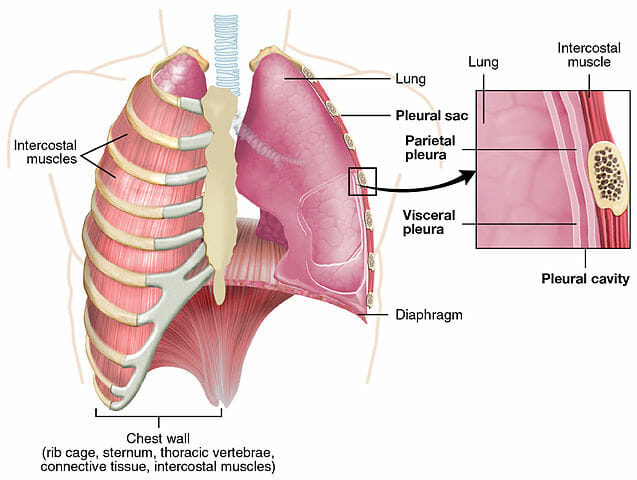
The Lung Pleurea

Physiology is closely related to anatomy because it is necessary to understand anatomy in order to study the physiology of specific body parts. This is a diagram of the human lung and its surrounding muscles.


Physiology Major


People that are interested in physiology can major specifically in physiology when they are undergraduates at certain universities. However, relatively few schools offer physiology Bachelor’s degrees. Many people instead major in biology or chemistry and then go on for further schooling in physiology. Those who receive a Bachelor’s degree in any of these subjects and want to be involved in the field of physiology often go on for additional schooling. They may go to graduate school, where they will do research, teach physiology to undergraduates, complete a thesis, and ultimately get a PhD or Master’s degree. A PhD is necessary in order to be a professor at a university. Many professors teach and carry out research. Other students may go on to further schooling for a career in healthcare. For example, they may go to medical school, dental school, or veterinary school. Still others may go on to become a pharmacist, physical therapist, or physician assistant, all of which require additional training.


As for the physiology major itself, the courses are similar to courses in the biology major, but with a special emphasis on physiology. Physiology majors start their undergraduate career by taking general biology classes and laboratories, and then move on to take more specific classes focusing on anatomy and physiology of bodily systems like the cardiovascular, respiratory, or immune systems. They also take classes in chemistry, mathematics, and physics, which are often taken by biology majors (and are required for medical school). Other courses taken may include endocrinology, biochemistry, genetics, cell biology, and neurobiology.


References


  • n.a. (2010-09-06). “The Nobel Prize in Physiology or Medicine 1901 – Speed Read.” NobelPrize.org. Retrieved 2017-05-08 from https://www.nobelprize.org/nobel_prizes/medicine/laureates/1901/speedread.html.

  • Newman, Tim (2016-08-12). “Introduction to Physiology: History And Scope.” Medical News Today. Retrieved 2017-05-07 from http://www.medicalnewstoday.com/articles/248791.php.

  • Osborn, David K. (n.d.). “The Four Humors.” GreekMedicine.net. Retrieved 2017-05-07 from http://www.greekmedicine.net/b_p/Four_Humors.html.

  • Thompson, Van. (n.d.). “What Are the Branches of Physiology?” Seattle Post-Intelligencer. Retrieved 2017-05-08 from http://education.seattlepi.com/branches-physiology-7043.html.

  • Westerhof, N. (2011-07-01). A” short history of physiology.” Acta Physiologica 202(4): 601-603. Retrieved 2017-05-08 from http://onlinelibrary.wiley.com/doi/10.1111/j.1748-1716.2011.02286.x/full.


Physiology