Showing posts with label 7k. Show all posts

Thursday, September 7, 2017

Formaldehyde

Formaldehyde Definition


Formaldehyde is a simple organic compound with the formula CH2O. It is of interest to doctors and scientists, as well as to many other industries, because of its unique chemical properties.


Formaldehyde is produced naturally by living things and some inorganic chemical reactions. It has been found via spectroscopy in interstellar space, and is produced in small quantities by our own bodies. However, like many of our body’s own waste products, it is toxic to us in high concentrations! Our bodies produce just enough formaldehyde to be handled safely by the liver and kidneys.


Breathing formaldehyde fumes can cause lung and sinus irritation, sometimes severe. Long-term formaldehyde exposure is correlated to an increased risk of certain cancers. Ingesting formaldehyde (drinking it) can be fatal.


However, as humans have found more and more uses for formaldehyde, we have begun artificially producing it in large quantities. The formaldehyde industry is booming due to the chemical’s vital role in industries such as car manufacture and the manufacture of building materials.


It is thought that long-term exposure to formaldehyde may increase the risk of cancer, and many regulatory agencies enforce rules about the legally allowable amount of formaldehyde in living and workspaces. The European Union has banned some products that are made with, or contain, formaldehyde.


Formaldehyde Structure


Formaldehyde consists of one carbon atom that shares a double bond with an oxygen atom. The carbon’s remaining electron-sharing slots are occupied by two hydrogen atoms.
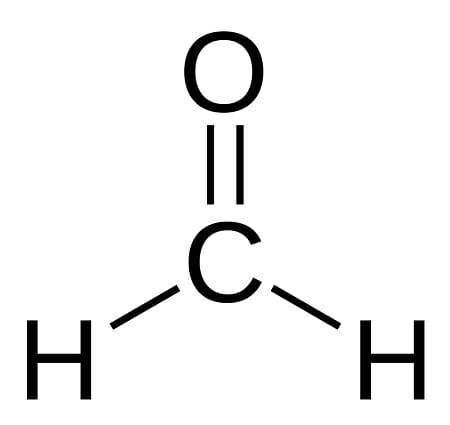

Structure of formaldehyde (methanal)

Structure of formaldehyde (methanal)


The polar nature of its carbon-oxygen bond makes this a highly reactive compound. The oxygen atom attracts electrons more strongly than the carbon atom, resulting in a partial negative charge at one end of the compound and a partial positive charge at the other. This causes it to “stick” to other polar molecules and gives it some ability to accept and donate electrons.


Its small molecular size enables it to penetrate tissues and other substances easily, while the polar nature of its carbon-oxygen bond makes it an excellent solvent. This ability to dissolve and react with many compounds is the reason it is used for many industrial and medical applications.


In its pure state at room temperature, formaldehyde is a gas. It is most useful to science and industry in solution as a liquid. This is one reason why formaldehyde fumes are common where formaldehyde is used; it is quick to come out of solution and return to its gaseous state when exposed to air.


Formaldehyde Uses


Because it is highly chemically reactive, formaldehyde has many uses in science and industry. These uses include:


Formaldehyde Uses in Biology


Formaldehyde is often used in biology to preserve tissue specimens. Formaldehyde is useful for this purpose as it kills all bacteria and fungi, and can preserve the shape of a specimen by bonding with proteins and DNA.


For the same reason, formaldehyde it is often used in embalming fluids intended to delay decay in human corpses, as well as in the preservation of animal specimens for dissection.


Formaldehyde delays, but does not permanently prevent decay of tissue. For long-term preservation of samples, scientists must use processes like plasticization, which replace the specimen’s tissues with durable polymers.


In today’s era of genomic analysis, scientists also sometimes prefer methods of tissue preservation that preserve nucleic acids. Formaldehyde does not preserve nucleic acids and so is not ideal for preserving tissue samples that will undergo DNA or RNA analysis. These often require special treatments to de-activate enzymes which break down DNA and RNA within cells.


Formaldehyde Uses in Medicine


  • Used as an antiseptic, as it kills most bacteria and fungi.

  • Used in the treatment of warts and some parasites.

  • Used in the production and sterilization of some vaccines.

  • A formaldehyde precursor is sometimes used as an alternative to antibiotics in the treatment of urinary tract infections. The kidneys turn this precursor into formaldehyde, which is then excreted into the urinary tract instead of circulating in the blood.

  • Used in some personal hygiene products to prevent bacterial growth.


Formaldehyde Uses in Industry


  • Used as a reactant to produce many artificial materials such as resins, plastics, and other industrial chemicals.

  • Used to treat clothes to make fabrics crease-resistant.

  • Used to produce materials used in numerous parts of car manufacture.

  • Used in the production of plywood, carpeting, and building insulation.

  • Used in the production of sanitary paper products such as napkins, paper towels, and tissues.

  • Used to make chemicals used in paints and explosives.

  • Used to prevent bacterial and fungal growth in animal feed for commercial farming.

  • Used in the development of some types of photography film.


Formaldehyde Safety


Unfortunately, the same properties of formaldehyde that make it an excellent solvent, antiseptic, and preservative can also make it dangerous to human health. It is toxic to the human body if ingested, and can cause irritation of the skin, lungs, and sinuses which can sometimes lead to long-term problems.


The U.S. government lists formaldehyde as a “known carcinogen,” meaning it has is known to increase the risk of cancer with repeated exposure. People whose jobs require regular work with formaldehyde are recommended to use safety gear to limit exposure.


Exposure to formaldehyde fumes may also make the development of asthma more likely, and can result in temporary or permanent sensitivity of the sinus passages and skin. In the United States, buildings are monitored to ensure that their air does not contain high levels of formaldehyde, which can sometimes be a risk for newly constructed buildings as formaldehyde is used in producing and finishing many building materials.


The European Union has banned the import of some formaldehyde-containing and formaldehyde-treated products due to safety concerns.


Quiz


1. Which of the following is NOT a risk of formaldehyde exposure?
A. Long-term exposure can increase the risk of cancer.
B. Ingesting formaldehyde can be fatal.
C. Inhaling formaldehyde fumes for long periods of time can lead to asthma and other lung and sinus ailments.
D. None of the above.

Answer to Question #1

2. Which of the following industries does NOT use formaldehyde?
A. Construction and building materials
B. Car manufacture
C. Science & medicine
D. None of the above

Answer to Question #2

3. Which of the following is NOT a useful attribute of the formaldehyde molecule?
A. Its carbon-oxygen bond is polar, allowing it to bond with and dissolve many substances.
B. It is small, allowing it to penetrate other substances quickly and easily.
C. It is a complex molecule with long, branching arms.
D. None of the above.

Answer to Question #3

References


  • OECD SIDS FORMALDEHYDE – INCHEM. (n.d.). Retrieved July 28, 2017, from http://www.inchem.org/documents/sids/sids/FORMALDEHYDE.pdf

  • Haynes, W. M. (2014). CRC handbook of chemistry and physics. Boca Raton, FL: CRC Press.

  • Harder, J. (2015, June 29). What if you drank embalming fluid? Retrieved July 28, 2017, from http://science.howstuffworks.com/science-vs-myth/what-if/what-if-drank-embalming-fluid.htm


Formaldehyde

Sunday, July 30, 2017

Adrenal Gland

Adrenal Gland Definition


The adrenal gland has several metabolic roles in the human body. Our two adrenal glands can be found lying on top of each of our kidneys. Together, they release the hormones that help us metabolize, undergo sexual maturation as we grow, as well as respond to stress. The latter may be known to us as the primal “fight or flight” response. It is the knee-jerk reaction we get upon seeing a life-endangering stimulus. Cortisol is the key to coordinating the processes that allow us to fight or run from this perceived danger. There is an obvious evolutionary value in being able to do this. Anything that shortens the time in which we can engage our muscles and run will likely increase our chance of survival. But even more low key scenarios trigger the release of cortisol. A feeling we may be familiar with is the intense focus we feel when studying for an exam the night before we have it. Cortisol is largely responsible for this newfound focus. In spite of all of the negative connotations associated with stress, in normal amounts the stress hormones allow us to focus better to perform the tasks at hand.


Thus, the adrenal glands play a functional role in our alertness, growth, and more. The main products released by the adrenal glands are cortisol, epinephrine, aldosterone, and adrenal androgens, or sex hormones. We will discuss each in more detail.


Adrenal gland


The image depicts a simple illustration of the adrenal glands and surrounding structures.


Adrenal Gland Structure


Our adrenal glands are two organs shaped in the form of a triangle that spans three inches in length. When a biopsy is taken of the adrenal gland, two sections are immediately visualized. The outermost layer of the adrenal gland is called the adrenal cortex, while the inner layer is named the adrenal medulla. Besides having physical differences that give them a distinct appearance, they release hormones independently of each other. In fact, the cortex contains zones of different cell types starting with the outermost “shell” or capsule, followed by “zones” named the zona glomerulosa, zona fasciculate, and the zona reticularis. This division facilitates some versatility. The medulla will secrete epinephrine in response to emotional or physical stress, while the outer adrenal cortex will make steroids and metabolic hormones like aldosterone and cortisol. However, it is safe to say that there is a lot of overlap between their functions.


Adrenal Cortex Zones:


  • Zona Glomerulosa: Secretes Mineralcorticoids (i.e. cortisol)

  • Zona Fasiculata: Secretes Glucocorticoids

  • Zona Reticularis: Secretes Androgens


The adrenal gland is supplied by three arteries: the superior suprarenal artery, a branch of the inferior phrenic artery, and the middle suprarenal artery which directly branches off of the abdominal aorta. As for the nerve supply, the adrenal glands are innervated by the sympathetic thoracic spinal cord fibers.


Adrenal Gland Function


The most unique function of the adrenal glands is their ability to orchestrate responses in light of stress. This has the most primal purpose of helping us evade danger and, therefore, of prolonging our lifespan. However, the adrenal gland is also involved in more mundane, but equally important, aspects of our everyday life.


Everyday roles of the adrenal glands:


  • Via aldosterone, which we will discuss in more detail below, the adrenal gland allows our kidneys to regulate blood pressure via salt and water exchange between the kidneys and our surrounding blood vessels. In the absence of aldosterone, the kidney will lose lots of salt to urine which will draw water from our vessels and remove it from our system. This will most certainly lead to dehydration.

  • Via cortisol, the body is not only able to respond to stress in potentially life-saving circumstances, but it will also help us regulate our body’s metabolism by initiating glucose production and by circulating fatty acids and amino acids to our cells.

  • Via adrenal androgens, the adrenal gland helps create differences between the sexes by initiating the development of our sex organs and secondary traits.


Adrenal Gland Hormones


Like any endocrine gland, the beauty of the adrenal glands lies in its secretions. In general, the endocrine gland will produce several types of hormone: androgens, cortisol, aldosterone, and norepinephrine. Let us begin with a discussion of androgens. The zona reticularis of the adrenal cortex is responsible for releasing androgen hormones that help give rise to secondary sex traits in human males. “Secondary” traits can be thought of as the changes that occur once puberty starts, including bodily changes like pubic hair growth, the Adam’s apple, and muscle and hair growth. Females also use androgens but they are instead secreted by the ovaries and repurposed into estrogen hormone.


Aldosterone, which is released by the zona glomerulosa of the cortex, plays a huge role in our kidneys. Our kidneys can be thought of as big filters that will help us excrete waste and excess fluid from our cells and blood vessels, while allowing us to reabsorb the ions that we need to maintain an ionic balance and a good blood pressure. One of these important components is salt, or Na+Cl. Salt is able to modulate the levels of fluid in our vessels, otherwise known as our blood pressure! Based on simple rules of diffusion, having more salt reabsorbed will lead water to be reabsorbed into our vessels in greater amounts, as well, since “water follows salt.” Aldosterone is thus able to directly modulate the excretion of salt by either increasing or decreasing the number of salt (Na/Cl) channels in the walls of our nephrons (kidneys). The presence of aldosterone will encourage our blood vessels to retain more salt via numerous salt channels, which in turn encourages the reabsorption of water. This results in concentrated urine, and a healthy blood pressure. When this process is compromised, as with Addison’s disease, insufficient amounts of cortisol and aldosterone are made when the body is under stress – such as when fighting off an infection. Its symptoms vary from fatigue, to dizziness and chronic nausea secondary to low blood pressure and low salt levels.


The zona fasciculata, in turn, creates the stress hormones we have discussed before: cortisol and its derivatives. Cortisol is inherently a steroid hormone that responds to stressful situations and when our blood sugar drops too low. In effect, it will stimulate gluconeogenesis, or glucose creation, to counter the low blood sugar and will aid in the metabolic breakdown of food. It also suppresses the immune system and decreases bone formation. Healthy amounts of cortisol increase our focus; however, chronic overexpression of cortisol has many scientists worried for fear of memory interference, bone density loss, and heart disease in affected patients.


We have discussed plenty about the adrenal cortex, but it is important to note that the adrenal medulla uniquely makes epinephrine and norepinephrine. These water-soluble compounds are the ones responsible for giving us a “rush” whenever we are confronted with a stressful situation. Its effects are characterized by a fastened breathing and heart rate, and a constriction of blood vessels that redirects blood flow to our muscles. This allows our muscles to immediately engage for quick movement.


Adrenal Gland Tumor


Since the adrenal gland is constantly producing hormones that are vital and well-circulated in the body, there is a chance of risking an imbalance. For example, an overactive gland or even a benign tumor on the adrenal gland will cause it to make too much cortisol. This will disrupt our blood pressure, our heart health, and even our body’s response to stress. Adrenal gland tumors can be benign or malignant.


There are various kinds of malignant, or “cancerous,” gland tumors.


  • Adrenocortical cancer will originate in the adrenal cortex. There are two types. The functioning tumor is the most common and will continue to produce cortisol, aldosterone, and androgens. Non-functioning tumors will, on the other hand, not produce hormones which will result in other deficiencies.

  • Adrenal Pheochromocytomas originate in the adrenal medulla and are very rare.

  • Adrenal Paragangliomas begin within or outside the adrenal gland.


A well-studied benign adrenal gland tumor is commonly known as Cushing’s Syndrome. This syndrome will overproduce cortisol, and thus disrupt heart function and the processes that the body engages in when responding to a stressful stimulus. Cushing’s syndrome is quite rare, with only two-to-four new cases per one million Americans each year. Other causes for an overproduction of cortisol may be an adenoma, or benign tumor anywhere on the adrenal gland, or long-term use of corticosteroid medications like prednisone.


Quiz


1. In which of the following way does Aldosterone perform its roles in the human body?
A. It acts directly on water channels to stimulate water retention
B. It works via calcium ions that increase water absorption
C. It acts on salt by increasing the number of sodium channels in our nephrons to facilitate water retention
D. It acts on salt by decreasing the number of sodium channels in our nephrons to facilitate water retention

Answer to Question #1

2. A lack of Aldosterone will result in which of the following conditions?
A. Too much water retention
B. A dehydrated state
C. Heightened blood pressure
D. Stimulates overproduction of glucose

Answer to Question #2

3. Correctly identify the zone of the adrenal cortex that releases cortisol:
A. Zona reticularis
B. Zona fasciculata
C. Zona glomerulosa
D. Does not apply, zones are found in adrenal medulla

Answer to Question #3

References


  • Medline Plus (2017). “Adrenal Gland Disorders.” US National Library of Medicine NIH. Retrieved on 2017-07-23 from https://medlineplus.gov/adrenalglanddisorders.html

  • Sargis, Rober MD, PhD. “An Overview of the Adrenal Glands.” Endocrine Web. Retrieved on 2017-07-22 from https://www.endocrineweb.com/endocrinology/overview-adrenal-glands

  • MD Anderson Cancer Center. “Adrenal Tumors.” The University of Texas. Retrieved on 2017-07-22 from https://www.mdanderson.org/cancer-types/adrenal-tumors.html

  • Cancer.net Editorial Board (2016). “Adrenal Gland Tumor: Introduction.” Cancer.Net. Retrieved on 2017-07-23 from http://www.cancer.net/cancer-types/adrenal-gland-tumor/introduction

  • Aviva (2017). “Structure and Function: Adrenal Glands.” Aviva. Retrieved on 2017-07-23 from https://www.aviva.co.uk/health-insurance/home-of-health/medical-centre/medical-encyclopedia/entry/structure-and-function-adrenal-glands/

  • You and your hormones (2017). “Adrenal Glands.” Your Hormones Info.. Retrieved on 2017-07-24 from http://www.yourhormones.info/glands/adrenal-glands/


Adrenal Gland

Tuesday, July 4, 2017

Metamorphosis

Metamorphosis Definition


Metamorphosis is a process by which animals undergo extreme, rapid physical changes some time after birth. The result of metamorphosis may be change to the organism’s entire body plan, such as a change in the animal’s number of legs, its means of eating, or its means of breathing.


In species that use metamorphosis, metamorphosis is also typically required for sexual maturity. Pre-metamorphic members of these species are typically unable to mate or reproduce.


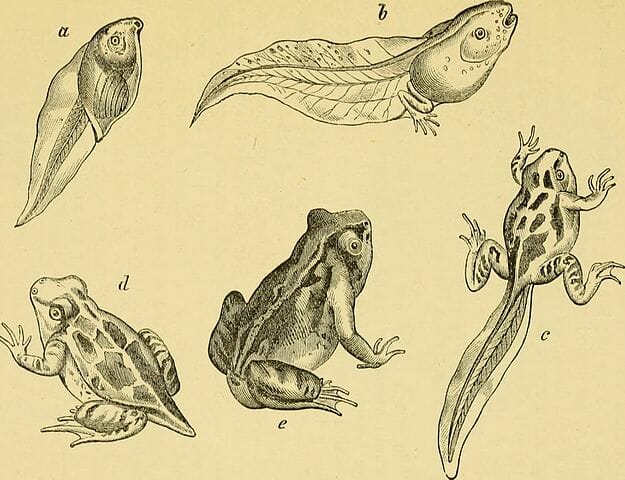
Commonly known examples of metamorphosis include the process undergone by most insects, and the transformation of tadpoles into frogs. The diagram below shows the stages of this change, wherein the small fish-like tadpoles transform into what seems a completely different animal:
British reptiles and batrachians (1888)


Animals that you may not know undergo metamorphosis include fish, mollusks, and many other types of sea creatures which are related to insects, mollusks, or fish. Lobsters, for example, which are closely related to insects, do undergo metamorphosis as part of their life cycle.


Metamorphosis is a remarkable process. The speed and extent of cell growth and differentiation is astonishing. In most species, such rapid growth and such sweeping changes to cell type only happen during embryonic development. Indeed, some scientists believe that the process of metamorphosis involves a sort of re-activating of genes that allow animal cells to change from one cell type to another.


The changes leading to metamorphosis are triggered by hormones, which the animal’s body releases as the right conditions for metamorphosis approach. In some animals a hormone cascade follows, with the trigger hormone causing the release of several other hormones that act on different parts of the animal’s body.


The hormones cause drastic changes to the functioning of cells, and even behavioral changes such as the caterpillar spinning its cocoon.


The effects of hormones on metamorphosis can be studied by artificially administering these hormones to pre-metamorphic animals. Tadpoles, for example, can be triggered to begin losing their tails and growing limbs early by the addition of thyroid hormones to their water supply. Unfortunately this has a detrimental effect on the animal’s health.


Function of Metamorphosis


Scientists remain uncertain why metamorphosis evolved. For the animals of today, its purpose is obvious: if metamorphosis did not occur, tadpoles could not become frogs and larvae could not become full-grown adults capable of reproduction. Without reproductively mature members, these species would quickly die off.


But why would these species evolve to need this extra step in the first place? Why not just hatch full-grown butterflies or frogs from eggs?


At least some metamorphosing species did not start out that way: the earliest insects basically did hatch as full-grown adults. But a few hundred million years ago, some species stumbled upon the trick of metamorphosis. It was apparently wildly successful; it is thought that almost two-thirds of species alive today use metamorphosis to accomplish large changes between their adult and juvenile forms.


The benefit of metamorphosis may lie in its ability to reduce competition. Pre-metamorphic animals typically consume completely different resources from their adult forms. Tadpoles live in water, eating algae and plants. Frogs live on land, breathing air and eating insects. Caterpillars eat leaves; butterflies live off of nectar. Etc..


This effectively prevents older members of the species from competing with younger members. This may lead more members of the species to successfully reach sexual maturity, without the risk of being out-competed by older members of their species.


Types of Metamorphosis


Complete Metamorphosis


In complete metamorphosis, a larva completely changes its body plan to become an adult. The most famous example is that of the butterfly, which starts out as a worm-like, leaf-eating caterpillar and transforms into a flying, nectar-drinking creature with an exoskeleton.


Organisms that undergo complete metamorphosis are called “holometabolous,” from the Greek words “holo” for “complete” or “whole,” “meta” for “change,” and the noun “bole” for “to throw.” “Holometabolous,” then, means “completely changing,” or “wholly changing.”


This transformation is so swift and complete that the caterpillar must spin a cocoon and lie dormant for weeks while its body undergoes these radical changes.


Other animals which transform from a worm-like larval stage into an animal that looks completely different include beetles, flies, moths, ants, and bees.


Some scientists believe that the larval stage of complete metamorphosis may have evolved from insects which hatched from their eggs without developing properly. Some of these embryos may have survived long enough to find food in the outside world; and this may have ended up giving them an advantage, as they would be able to feed longer and gain more strength than their peers before metamorphosing into the adult stage.


Incomplete Metamorphosis


In incomplete metamorphosis, only some parts of the animal’s body change during metamorphosis. Animals that only partially change their bodies as they mature are called “hemimetabolous,” from the Greek words “hemi” for “half,” “meta,” for “change,” and the verb “bole” for “to throw.”


“Hemimetabolous,” then, is a word meaning “half-changing.”


Cockroaches, grasshoppers, and dragonflies, for example, hatch from eggs looking a lot like their adult selves. They do acquire wings and functioning reproductive organs as they grow, but they do not completely remake their bodies like their completely metamorphosing cousins do.


Examples of Metamorphosis


Butterflies


Many of us may have witnessed the process of metamorphosis first hand, by raising caterpillars into butterflies in school. The idea of a worm-like caterpillar wrapping itself in a cocoon for weeks and then emerging as a beautiful butterfly is certainly strange. But the obvious changes of appearance, such as the growth of wings, don’t do justice to just how strange this process is.


In the cocoon, caterpillars don’t simply gain legs, wings, and an exoskeleton. They also grow new eyes, lose their leaf-eating mouth parts and replace them with nectar-sucking proboscises, and gain mature reproductive organs.


To accomplish this drastic change, a metamorphosing caterpillar basically digests itself.


A great deal of energy and raw materials are required to turn a caterpillar into a butterfly. So to make it possible, caterpillars release enzymes that dissolve most of their bodies! Indeed, the hard shell of the cocoon is required not just to protect the metamorphosing insect from attack: it is required to keep its liquefying body bound together, lest it ooze away!


Not all of the caterpillar’s cells are dissolved by these enzymes. Special tissues called imaginal discs survive – and they use the soup that used to be the rest of the caterpillar’s body for nutrition. By consuming the proteins, vitamins, and minerals – everything you need to build a butterfly – these imaginal discs are able to grow incredibly quickly, developing into the butterfly’s mature body parts.


The new body has almost nothing in common with the old body. It has new legs, new sensory organs, a new exoskeleton, a new reproductive system. Even its digestive system does not work the same way, since it must now digest nectar instead of leaves. That’s all in addition to the beautiful wings.


This radical change allows butterflies to complete their life cycle very efficiently, with no competition between adult butterflies and caterpillars for food.


Many other insects pass through a similar process. They hatch as worm-like larva, eventually encase themselves in hard pupas, and emerge as adults with legs, exoskeletons, and other features that have little in common with the larva they once were. Bees, beetles, ants, and flies all use this strategy.


Frogs


The metamorphosis of a tadpole into a frog is a little less violent than that of a caterpillar into a butterfly, but the processes share some important common features.


Tadpoles do not dissolve their bodies into mush; but they do “digest” them in a less spectacular way. Using the process of apoptosis – or “programmed cell death” – the tadpoles “order” the cells they don’t need anymore to shred their DNA and die. The dead cells are then cannibalized for energy and raw materials to make other cells.


The cells of their tails are broken down and used to make their developing legs; a similar process happens with the gills, which disappear as the tadpole begins to develop air-breathing lungs.


One interesting thing to note is that tadpole metamorphosis and insect metamorphosis likely developed separately; the common ancestor of insects and amphibians diverged long ago, and the ancestors of modern insects are not thought to have used metamorphosis. When the same phenomenon evolves twice in radically different organisms, that’s a sure sign that it is a useful adaptation!


Fish


Some species of fish undergo metamorphoses similar to those of the tadpole. Though those changes are not so dramatic, they can result in changes in the fish’s food source, its body plan, and where it’s able to live. Just like the more drastic forms of evolution, this may function to prevent adults from competing with juveniles for food.


The salmon, for example, is a freshwater fish in its juvenile form. After undergoing a partial metamorphosis, it becomes a saltwater fish.


When thinking about this process it is important to keep in mind that all organisms must regulate their salt/water balance. This is why humans can’t drink seawater without dying: the salt would overwhelm our cellular chemistry, and our cells would not function properly. In just the same way, freshwater fish typically cannot live in saltwater. To become saltwater fish, then, salmon must develop new organs and cellular mechanisms to cope with the salt water.


That’s why salmon must perform their annual migration upstream; adult salmon live in the ocean, but their eggs must hatch in fresh water in order for the juveniles to survive. That means that adult salmon must leave their homes in the ocean for freshwater rivers, and swim as far upstream as possible before laying their eggs!


Flounders, bizarrely, undergo a metamorphosis in which one of their eyes and nostrils move from one side of the head to the other. As juveniles, flounder look much like most fish: they swim vertical relative to the current, with one eye and one nostril on each side of their bladelike body. This body type allows them to swim fast like most other species of fish.


But in adulthood, flounder are flat fish which camouflage themselves by swimming on their bellies, pressed against the sea bed. To accomplish this lifestyle change, juvenile flounder essentially flip over on their sides and make one side of their body into their belly. Through cellular changes, the eye and nostril from the belly side actually migrate to join the other eye and nostril on what is now the “top” side of the fish.


Evolution sure has some creative ways of doing things!


Quiz


1. Why do scientists think that insects evolved metamorphosis?
A. Prior to evolving metamorphosis, insects lived their whole lives as worm-like larvae. The advantages to growing wings are obvious.
B. An accident in embryonic development may have led to some insects hatching from their eggs before they had taken on adult form; this may have allowed them to spend more time growing without competing with adult members of their species.
C. By preventing adults from competing with juveniles for food and other resources, metamorphosis may result in more members of the species surviving to sexual maturity.
D. B & C

Answer to Question #1

2. Is a butterfly holometabolous, or hemimetabolous?
A. Hemimetabolous
B. Holometabolous
C. Both
D. Neither

Answer to Question #2

3. What can we say based on the fact that both insects and frogs undergo metamorphosis?
A. All species originally underwent metamorphosis, but the ability was lost by some.
B. Frogs and insects must have evolved from a common ancestor that underwent metamorphosis.
C. Metamorphosis must have evolved twice independently, since it appeared in insects long after their lineage split off from that of frogs.
D. None of the above.

Answer to Question #3

References


  • Jabr, F. (n.d.). How Did Insect Metamorphosis Evolve? Retrieved July 02, 2017, from https://www.scientificamerican.com/article/insect-metamorphosis-evolution/

  • Gilbert, S. F. (1991). Developmental biology. New York: Plenum Press.

  • Science, C. (n.d.). How hormones control metamorphosis in frogs and toads. Retrieved July 02, 2017, from https://carnegiescience.edu/projects/how-hormones-control-metamorphosis-frogs-and-toads

  • Jabr, F. (n.d.). How Does a Caterpillar Turn into a Butterfly? Retrieved July 02, 2017, from https://www.scientificamerican.com/article/caterpillar-butterfly-metamorphosis-explainer/

  • Laudet, V. (2011). The Origins and Evolution of Vertebrate Metamorphosis. Current Biology, 21(18). doi:10.1016/j.cub.2011.07.030


Metamorphosis

Friday, June 23, 2017

Nephrology

Nephrology Definition


Nephrology is a subfield of medical science dealing with the kidneys; it involves diseases of the kidneys and the study of normal kidney functioning. The kidneys are the two small bean-shaped organs below the rib cage that filter waste products from the blood and produce urine, which is then excreted from the body. Nephrologists are doctors that specialize in nephrology. The word nephrology comes from the Greek words nephros (“kidney”) and -logos “the study of”.


History of Nephrology


The kidneys were known to be vital body organs in ancient times. Mentions of the kidneys are found in Confucius’s writings, the Jewish law book the Talmud, and the Bible and Quran, in which it is implied that the kidneys are important organs that are necessary for well-being. However, the first major development in the field of nephrology is considered to be found in the book Reports of Medical Cases by Richard Bright in 1827. Bright, a physician, described the features of kidney disease in detail in his book. Kidney disease was even called “Bright’s disease” for the next 100 years or so because of Bright’s accomplishment of recognizing it. Though a laboratory diagnostic test for kidney disease was developed, access to it was extremely limited, and there was no treatment or cure. Other developments were made in nephrology in the 19th Century, such as William Howship Dickinson’s description of nephritis (kidney inflammation) and Frederick Akbar Mahomed’s discovery of a correlation between kidney disease and hypertension. However, progress in treating kidney disease slowed until the mid-20th Century. The term “nephrology” itself was not used until the 1960s, having before been called “kidney medicine” instead.


Nephology entered modern medicine in 1954, when Drs. John Merrill and Joseph Murray performed the first successful kidney transplant. This operation was an important milestone because it showed for the first time that chronic kidney disease could be cured by implanting a healthy kidney to replace a failing one. The patient in this transplant received a kidney from their identical twin, so it was not rejected by their body. Later, advances in immunology lead to the development of immunosuppressive drugs, which greatly reduced the chance of organ rejection from unrelated donors and made kidney transplants more feasible. Also in the 20th Century, other forms of treatment for kidney failure began to be used. These forms cannot cure kidney disease, but they can help a patient manage it and prolong their life. One such method is hemodialysis, which filters the blood outside the body when failing kidneys cannot effectively do the job on their own.


In the past century, kidney disease went from what was essentially an untreatable death sentence to a condition that can be manageable and even curable. Now, the focus is on new research and discoveries that may be used to better treat kidney diseases. Although huge advancements were made in the 20th Century and research progress in the field of nephrology has slowed somewhat since then, new discoveries continue to be made and doctors and researchers are working hard to advance scientific knowledge. Scientific discoveries can come from unexpected places, and nephrology is no exception; for example, in 2017, a study found that a compound in the venom of the green mamba snake may be able to be used in treating polycystic kidney disease.


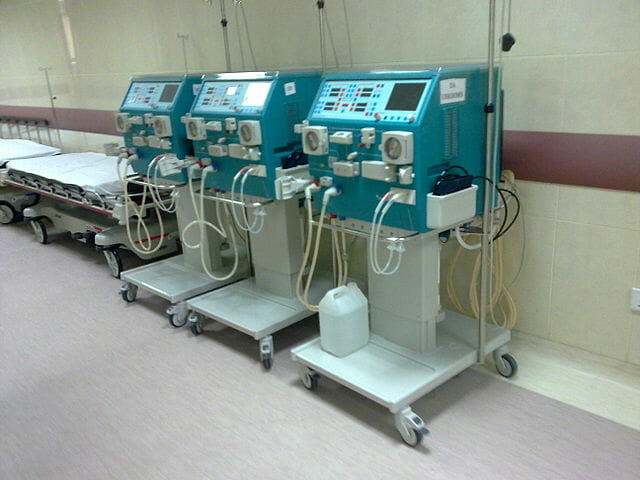
Dialysis machines

These dialysis machines are used to filter the blood of individuals with kidney disease.


Nephrology Diseases


Some of the most common conditions and diseases in nephrology include:


  • Acute Kidney Failure/Injury

  • Alport Syndrome

  • Chronic Kidney Disease (CKD)

  • Diabetic Neuropathy

  • Fabry Syndrome

  • Glomerulonephritis

  • Kidney Stones

  • Nephrotic Syndrome

  • Polycystic Kidney Disease (PKD)


Nephrology Careers


Nephrologists are medical doctors. In order to become a nephrologist, one must first obtain a bachelor’s degree wherein they complete the prerequisites for medical school, including courses in biology, chemistry, physics, and calculus. Just about any major may be chosen as long as the prerequisites are also met, but traditionally, biology is the major of choice for aspiring physicians because all of these courses are included within biology major programs. After obtaining a bachelor’s degree, one can then go on to medical school, which takes about four years, and then complete an additional residency in internal medicine. After schooling is finished, then one must pass a certification exam and obtain a license to become a doctor.


Nephrologists may work in many different settings including hospitals, private practice, health clinics, and universities. They interact directly with patients in order to diagnose and treat them. Many patients with kidney problems are older, chronically ill, and have other medical complications. Those with end-stage kidney failure may be close to death. Nephrologists work long hours in a potentially stressful and emotionally challenging position, but the work of treating patients and even saving their lives is extremely rewarding.


For those who are interested in nephrology but are not interested in becoming doctors, there is a variety of other career options available. Nephrology researchers work in a laboratory setting and often study nephrology diseases using animals such as mice. Nephrology nurses care for patients and assist doctors. With less training—usually a bachelor’s degree or associate’s degree—one can become a dialysis technician. Technicians operate dialysis machines, perform maintenance, and interact directly with patients, including taking measurements and keeping patient records.


References


  • n.a. (n.d.) “History of Nephrology.” Massachusetts Medical Society. Retrieved 2017-06-20 from https://resident360.nejm.org/content_items/419.

  • n.a. (n.d.) “How to Become a Nephrologist.” Doctorly. Retrieved 2017-06-20 from http://doctorly.org/how-to-become-a-nephrologist/.

  • n.a. (n.d.) “What is a Nephrologist?” DaVita. Retrieved 2017-06-21 from https://www.davita.com/kidney-disease/overview/treatment-overview/what-is-a-nephrologist?/e/6884.

  • Ciolek, Justyna, et al. (2017). “Green mamba peptide targets type-2 vasopressin receptor against polycystic kidney disease.” PNAS. Published online before print 2017-06-19.

  • Trachtman, Howard, et al. (2014-09-18). “The grand challenge of nephrology.” Frontiers in Medicine 1:28.


Nephrology

Monday, June 12, 2017

Atrophy

Atrophy Definition


Atrophy is a term that describes the wasting away of cell tissue. On a larger scale, atrophy can see a reduction in the size and function of a muscle or limb. This process if often gradual and chronic, if not permanent. However, atrophy is not exclusively a pathologic state. Atrophy is actually a part of our natural, homeostatic development. The wrinkles that appear on our faces as we age is atrophy, as is our thinning hair and the loss of teeth. There are many reasons for why a tissue may atrophy. It can be caused by age or genetics, such as inheriting a faulty set of genes that signal cell lysing or inhibit a crucial protein from assembling. Another factor is environmental change. Depending on our health or income status, we may experience nutritional deficits. Or a physical injury may pierce our tissues or damage the nerves innervating our muscles. Likewise, chronic illness can impact our tissues permanently.


The inevitable consequence of tissue atrophy is that it diminishes the impacted limb’s ability to perform its functions. However, the actual degree of damage depends on its partial or complete effect and on the subject of atrophy. Atrophy that targets nerves or a wide-spread muscle will systemically affect the body. This kind of effect would result in pronounced deficits (i.e. multiple sclerosis). In fact, sufferers of atrophy often show two clinical signs: shortened limbs and bodily weakness.


Atrophy Types


While atrophy can describe a wide array of conditions, it can arise either naturally or from disease. In fact, some presentations can occur for either reason. For example, Disuse atrophy is a progressive withering of bone and muscle that results from prolonged inactivity. In the event that a patient develops a chronic illness like cancer or HIV, bone density and muscle mass whittle down considerably. Cachexia is a clinical name for a non-intentional muscle loss that follows illness or precedes death. Hence, it’s colloquial name, “muscle wasting.” The same applies to bed-ridden patients with spinal injuries, paraplegia, or sudden disabilities. However, disuse atrophy can also take place in healthy individuals. For instance, a student athlete may experience some disuse atrophy during their off-season from the sport they play in face of a reduced work load.


Symptoms of muscle wasting?


  • General or localized weakness

  • Limb numbness

  • Ataxia

  • Pain

  • Muscle spasms

  • Unintentional weight loss


Pathologic atrophy presents itself in many areas of the body for varied reasons. We will go more in depth into common presentations, but it is notable to mention that not all atrophy affects muscle. Atrophy can target connective tissue fibers, such as tendon, bone, ligaments, and fat tissue. Neural diseases (like multiple sclerosis or Parkinson’s) atrophies brain tissue and neural cells, or severs the connections within. Glandular atrophy can occur with long-term hormonal or steroid excess, or nutritional imbalance. Atrophy, then, is quite involved and relies on an interplay of signaling events that continue to be understood.


Muscle Atrophy


Muscle atrophy typically refers to the weakening of skeletal muscles. These are the muscles that form the framework that moves our limbs. They are also called striated muscles that carry out voluntary movement. There are generally two types of muscular atrophy: disuse and neurogenic atrophy. Disuse atrophy results from muscle inactivity, as discussed before. When muscles themselves are not used enough by a patient who is weak, bed-ridden, or paralyzed, the inactive muscles will whittle down with lack of use. This results in a gradual decline in the total muscle mass. However, disuse atrophy can also benefit from physical therapy. In some instances, exercise of the affected muscles can reverse atrophy completely and better nutrition can aid in the body’s recovery.


Neurogenic atrophy, on the other hand, is a more severe type. Unlike disuse atrophy, neurogenic atrophy will affect the nerves connected to the muscles rather than the muscles themselves. Nerve damage is much harder to treat and will not reverse with exercise. Common causes of nerve damage include alcohol abuse, toxins, and injury. Other examples of diseases that affect the nerves that engage muscle movement are ALS, Polio, carpal tunnel syndrome and spinal cord injury. Diagnosis of muscle atrophy typically occurs at a doctor’s clinic, and includes measuring the muscle size of the affected limb, and taking blood tests, MRI, and nerve studies.


Spinal Muscular Atrophy


Spinal muscular atrophy, or SMA, is an autosomal recessive spinal disorder that is carried by 1 in 40 people. SMA specifically atrophies motor neuron cells in the spinal cord. Our spinal cords are rich in nerve cells that help coordinate our body’s movement. In fact, the majority of the neurons that control our muscles can be found within our spinal cord. But of course, the atrophy eventually affects muscles, as they whittle down in response to not receiving signals from the damaged nerves and are therefore inactive.


Since no two SMA sufferers share the same exact experience with how their disease progresses, SMA is subtyped into four categories.


SMA Types:


  1. Type I: the most common and severe type of SMA that is usually diagnosed before an infant turns 6 months old.

  2. Type II: is diagnosed between the ages of 6 months and 2 years old. It is often first noticed if an infant displays a motor delay or fails to meet these milestones (i.e. the baby may be able to sit up without assistance, but will need help sitting back down. The infant will not be able to walk and will require a wheelchair.)

  3. Type III: also nicknamed juvenile SMA, is diagnosed between 18 months and 3 years of age, or as late as in the teens. Patients will progressively lose mobility until they need a wheelchair.

  4. Type IV: is a very rare type that surfaces in adulthood. Thus, it’s said to have an adult-age onset that will lead to mild motor issues. The age of onset is typically between age 18 and 35.

Vaginal Atrophy


Vaginal atrophy is a disorder that attacks the muscle lining of the vagina and urinary tract. Common symptoms include vaginal soreness and painful intercourse. Low levels of estrogen are to blame for vaginal atrophy. Estrogen loss occurs during peri- or post-menopause, but also during breastfeeding in new mothers. An artificial way that estrogen levels may diminish is with long-term of medication that treats estrogen conditions like endometriosis. Though taboo surrounding vaginal disease prevents many women from treating their symptoms, vaginal atrophy can be ameliorated with vaginally administered estrogen creams and lubricant.


Quiz


1. Which of the following is the atrophy type that gives rise to disease by affecting the nerves connected to muscle tissue?
A. Disuse atrophy
B. Seize atrophy
C. Glandular atrophy
D. Neurogenic atrophy

Answer to Question #1

2. Which cell type does SMA atrophy?
A. Glial cells
B. Motor neurons
C. Interneurons
D. Schwann cells

Answer to Question #2

3. Which type of SMA has an adult age onset?
A. Type I
B. Type II
C. Types III
D. Type IV

Answer to Question #3

References


  • Cure SMA (2017). “Types of SMA.” Cure SMA Org. Retrieved on 2017-06-07 from http://www.curesma.org/sma/about-sma/types-of-sma/?referrer=https://www.google.com/?referrer=http://www.curesma.org/sma/about-sma/types-of-sma/

  • MDA (2017). “Spinal Muscular Atrophy: What is spinal muscular atrophy.” MDA for strength, independence, and life. Retrieved on 2017-06-08 from https://www.mda.org/disease/spinal-muscular-atrophy

  • MDA (2014). “Spinal Muscular Atrophy: An Overview.” Muscular Dystrophy Australia Retrieved on 2017-06-07 from http://old.mda.org.au/Disorders/Atrophies/SMA.asp

  • Medline Plus (2017). “Muscle Atrophy.” Medline Plus: US National Library of Medicine. Retrieved 2017-06-07 from https://medlineplus.gov/ency/article/003188.htm

  • Mac Bride, M et al (2010). “Vulvovaginal Atrophy.” Mayo Clin Proc. 85(1): 87-94.


Atrophy

Saturday, May 6, 2017

Amoeba

Amoeba Definition


An amoeba is a highly motile eukaryotic, unicellular organism. Typically belonging to the kingdom protozoa, it moves in an “amoeboid” fashion. As such, microbiologists often use the term “amoeboid”, to refer to a specific type of movement and amoebae interchangeably. Interestingly, amoebae are not a distinct taxonomic group and are, instead, characterized based on their “amoeboid” movement rather than distinct morphological characteristics. Moreover, even members of the same species can appear dissimilar. Amebae species can be found in all major eukaryotic lineages, including fungi, algae, and even animals.


Amoebae contain an endoplasm that is granular in nature. This granular endoplasm contains the nucleus and various engulfed food vacuoles. In addition, amoebae are eukaryotic by definition and possess a unique nucleus that contains a central karyosome with a thin layer of beaded chromatin coating the inner nuclear membrane; however, unlike many eukaryotes, amoebae are anaerobic. Thus, amoebae contain no mitochondria and generate ATP exclusively via anaerobic means.


Amoebas can be classified as free-living and parasitic. Parasitic amoebas are ubiquitous and often parasitize higher vertebrates and invertebrates alike. Only a limited number of amoeba species are capable of infecting humans, and typically invade the intestine. Specifically, only Entamoebahistolytica represents a true human pathogen, which infects the gastrointestinal tract. A second gut pathogen, Dientamoeba fragilis, is commonly mistaken as an amoeba owing to its similar morphology under a light microscope. Indeed, D. fragilis was originally misclassified as an amoeba; however, modern methods have identified it as a nonflagellate trichomonad parasite. Interestingly, some free-living amoebas can cause opportunistic infections in humans, leading to eye infections, as well as various neurological, and cutaneous (skin) infections.


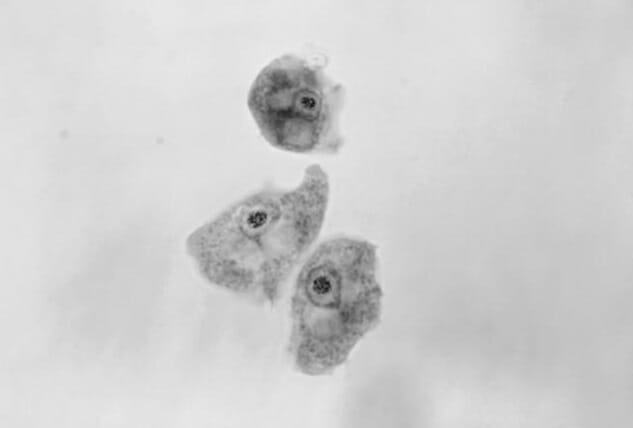
Free-living amoebae

Free-living amoebae


Amoeba Movement


As a class of organism, amoebae are defined by their unique movement patterns. This movement strategy produces forward movement via the following three steps:


  1. “ballooning” the plasma membrane forward. This distinct rearrangement is known as a pseudopodium or “false foot”, which is very similar in nature to that of the lamellipodium generated in higher vertebrates;

  2. the pseudopodium attaches to the substrate, and is filled with cytosol;

  3. the rear portion of the amoeba releases its attachment to the substrate and is propelled forward.

During amoeboid movement, the viscosity of the cytosol cycles between a fluid-like sol, which flows from the central region of the cytoplasm known as the endoplasm into the pseudopodium at the front of the cell. Once this occurs, the endoplasm becomes an ectoplasm containing a gel-like substance that forms the cortex under the plasma membrane. As the amoeba moves forward, the ectoplasmic gel is converted once again into the endoplasmic sol, and the cycle is repeated as the cell continues to move. This transition between the gel and sol states occurs following the collapse and reassembly of networks of actin microfilaments located in the cytosol. In particular, cofinin is responsible for the disassembly of actin filaments to form the sol, whereas profilin leads to actin polymerization and the gel is formed by α-actinin and filamin.


Amoeba Size and Shape


Size


Amoebae differ in both size and shape, and even members of the same species can be highly morphologically distinct. While the earliest identified amoebae were approximately 400 to 600 microns in size, both extremely small (between 2 and 3 microns) as well as exceptionally large amoebae (20 cm; visible to the naked eye) have been documented to date. Therefore, amoeba species exhibit a wide range of sizes. Indeed, when scientists study amoebae, the samples are typically passed through a filter approximately 0.45 microns in size, and the remnants on the filter are used for culturing.


Shape


Since amoebae both move and eat using pseudopods, they are classified based on the morphology and internal structure of their pseudopods. For example, Amoebozoan species (e.g., amoeba) exhibit bulbous pseudopods with a tubular mid-section and rounded ends; Cercozoan amoeboids, (e.g., Euglypha and Gromia) have pseudopods which appear thin and thread-like; Foraminifera produce slender pseudopods that branch and merge with one another to form net-like structures; others are characterized by rigid, needle-like pseudopods with a complex network of microtubules.


Free-living amoebae (which do not require a host) are either “testate” or “naked”. Testate amoebae contain a hard shell, whereas naked amoebae do not. Testate amoebae shells are typically composed of calcium, silica, chitin, or other components (e.g., sand granules). Another component typically found in freshwater amoebae is a contractile vacuole. This vacuole is required to expel excess water from the cell and maintain an osmotic balance. Since the concentration of solutes in freshwater is lower than the amoeba’s internal cytosol, water flows across the cell membrane via osmosis. Therefore, the contractile vacuole pumps this excess water out of the cell to ensure that the cell does not burst. In contrast, most marine amoebae do not possess a contractile vacuole as the cytosol and the water outside of the amoeba are balanced.


Amoeba Reproduction


Due to the extremely diverse nature of amoebae, the various species of amoebae reproduce using a variety of different methods. These methods include spores, binary fission, and even sexually.


Binary Fission


By far the most common form of asexual reproduction employed by amoebae is binary fission. In preparation for reproduction, the amoeba will withdraw its pseudopodia and form a spherical shape. Mitosis is observed in the nucleus, and the cytoplasm divides at the center of the cell and separates, forming two daughter cells. Since this process involves simply copying the genetic information to form a second cell, the two resulting daughter cells are identical clones of the parent cell. Thus, the nucleus is absolutely essential for this form of reproduction. This has been verified in experiments involving slicing an amoeba in half or extracting the nucleus from the amoeba. In both situations, the cell eventually dies without a nucleus.


Multiple Fission and Encystment


Under conditions of food shortages, amoebae will reproduce via multiple fission. This process involves the production of multiple daughter cells by:


  1. the pseudopodia being retracted and the amoeba forming a spherical shape;

  2. the amoeba secreting a substance that hardens and encapsulates the cell, forming a cyst (encystment);

  3. the amoeba, protected by the cyst, will undergoing mitosis several times, producing multiple daughter cells;

  4. when favorable conditions return, the cyst wall bursts, releasing the daughter cells. Within a host, the amoeba will undergo encystment as a means of protection against desiccation as it travels through the colon, which ensures its survival outside of the host.

Spore Formation


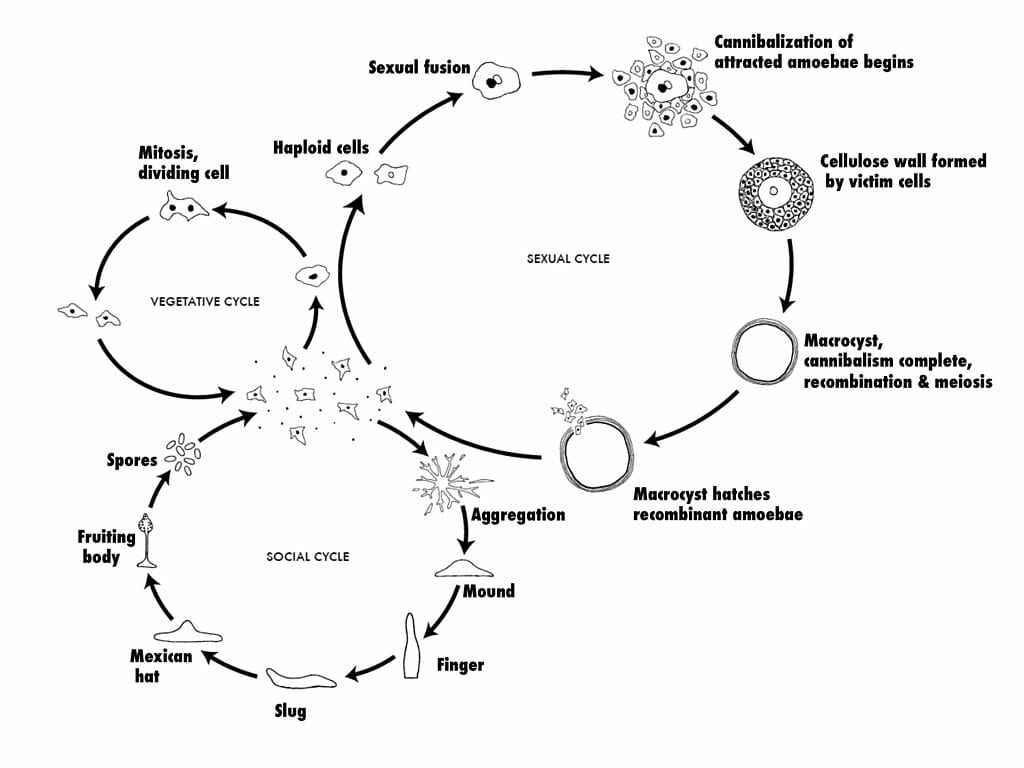
Solitary haploid amoebae (known as myxamoebae or “social amoebae”) reside on decaying vegetation (e.g., logs), eat bacteria, and reproduce asexually via binary fission as described above. However, unlike the amoebae, which undergo encystment when the food supply becomes exhausted, tens of thousands of myxamoebae will fuse, forming a moving stream of cells converging at a central location. It is at this region that the cells stack on top of each other and form a conical mound termed a “tight aggregate”. Next, a tip rises from the top of the conical mound and the tight aggregate folds to produce a mobile “grex” (also termed a pseudoplasmodium or slug), 2–4 mm in length and surrounded by a slimy substance. The grex will then migrate towards an illuminated area, where it will differentiate into a fruiting body composed of a tubed stalk (approximately 15%–20% of the entire cellular population) and spore cells. This process involves the secretion of an extracellular coating and the extension of a tube through the grex by prestalk cells located in the anterior of the grex. As the prestalk cells differentiate into stalk cells, they create vacuoles and become enlarged. This serves to lift the prespore cells in the posterior section of the grex. The elevated prespore cells differentiate into spore cells and disperse, each representing a new myxamoeba, while the stalk cells die.


Dictyostelium discoideum life cycle

Dictyostelium discoideum life cycle


Sexual Reproduction


Myxamoebae are also unique in that they can also reproduce sexually. This occurs when two myxamoebae fuse to create a giant cell. This giant cell will then engulf all other cells in a myxamoebae aggregate. After ingesting all of its neighbors, the giant cell will encyst itself, and undergo meiosis and mitosis division a number of times under the protective cover of the cyst. When appropriate environmental conditions are met, the cyst will burst, releasing new myxamoebae. Since this process involves meiosis and the genetic information from two amoebae, the resulting daughter cells will be genetically distinct from the parent cells.


Temperature and Reproduction


Temperature is a critical factor which impacts the amoebae growth. While several amoebae species have been found to grow at a wide range of temperatures ranging from 10°C to 37°C, pathogenic strains have been found to survive more efficiently at higher temperatures (between 32°C and 37°C). This indicates that amoebae are highly resistant to temperature fluctuations and most are adapted to survival within humans. Therefore, this may have pathogenic implications, as amoeboid cysts are extremely resistant to microbicides and can infect humans via contaminated drinking water.


Quiz


1. What is a “grex”?
A. A method of phagocytosis.
B. The joining of myxamoebae to form a giant slug.
C. An intracellular organelle.
D. An amoeboid daughter cell.

Answer to Question #1

2. Which is NOT a method of reproduction exhibited by amoebae?
A. Sexual
B. Binary fission
C. Spore Formation
D. All are forms of amoebae reproduction.

Answer to Question #2

3. The purpose of cyst formation is:
A. Protection
B. Dormancy until favorable conditions are achieved.
C. Migration
D. A and B only
E. All of the above

Answer to Question #3

References


  • Baron S, editor. (1996). Medical Microbiology, 4th. ed. University of Texas Medical Branch at Galveston Garland Science: Galveston (TX).

  • Farra et al. (2017). Free-living amoebae isolated in the Central African Republic: epidemiological and molecular aspects. The Pan African Medical Journal. 2017;26: p. 57.

  • Levy, J. (1924). Studies on reproduction in amoeba proteus. Genetics. 9(2): pp.124-150.

  • Lodish, H., Berk, A., Zipursky SL, et al. (2000). Molecular Cell Biology. 4th edition. W. H. Freeman: New York.


Amoeba