Showing posts with label 2k. Show all posts

Monday, October 8, 2018

Nitrogenous Base

Nitrogenous Base Definition


Several chemicals with a similar cyclic structure, each known as a nitrogenous base, play several important roles in biology. Not only is a nitrogenous base the building blocks for genetic information carrying molecules like DNA and RNA, but different forms of the nitrogenous base serve in various cellular roles from signal transduction to growing microtubules.


In DNA and RNA, a nitrogenous base forms a bond with a 5-sided carbon sugar molecule, which forms a “backbone” for the entire molecule. A nitrogenous base plus this sugar backbone is known as a nucleotide, and forms the building blocks of DNA and RNA.


Nitrogenous Base within Nucleic Acids


Purines and Pyrimidines


When talking about a nitrogenous base in the context of DNA or RNA, it is important to note that there are two base classes of nitrogenous base. Every nitrogenous base shares one feature: a six-sided ring with 4 carbon atoms and 2 nitrogen atoms. A purine has an additional 5-sided ring, created by 1 more carbon and 2 more nitrogen atoms. A pyrimidine nitrogenous base has only 1 six-sided ring. Each nitrogenous base has unique bonds, which makes it function in a unique way within the DNA or RNA. Each base can be seen in the image below.
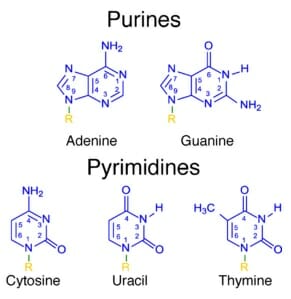

Purines and Pyrimidines

Purines and Pyrimidines


Deoxyribonucleic Acid (DNA)


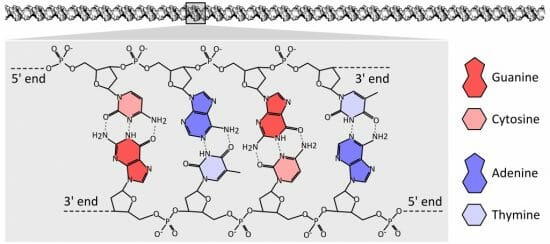
The image below shows the structure of DNA. DNA has a “backbone” of deoxyribose, shown here as the colorless molecules with a 5’ and 3’ end. These numbers refer to the exposed carbons in the sugar chain, which gives DNA its directionality and readability. This allows various proteins to read and process the DNA efficiently.

DNA chemical structure

DNA chemical structure


Each colored molecule represents a nitrogenous base. Note how each nitrogenous base pairs with the nitrogenous base across from it. This is called base pairing, and is an important part of DNA replication, repair, and maintenance. Seen here in a proper configuration, each pyrimidine pairs with a purine, allowing several hydrogen bonds to be formed. These bonds, the dashed lines in the image above, hold the DNA in a regular spiraling shape, as well as protect the DNA from having a nitrogenous base accidentally break off.


Enzymes which repair and maintain the DNA can “sense” malformations caused by a lack of hydrogen bonding. If, for example, two purines tried to pair they would not be able to form hydrogen bonds. A repair enzyme would find a “bulge” or irregularity in the DNA. Certain enzymes can then slice out and replace the incorrect base.


Ribonucleic Acid (RNA)


There are two noticeable differences between RNA and DNA. The first is in the name itself. Where DNA is built on deoxyribose, RNA is built on ribose. The only difference between ribose and deoxyribose is an oxygen atom.


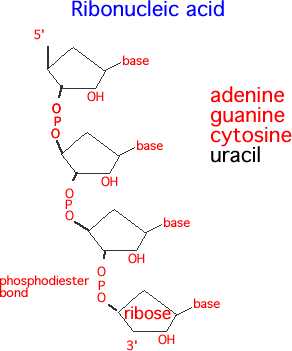
The second difference between DNA and RNA is that RNA uses a slightly different set of nitrogenous bases. Seen in the image below, an RNA molecule substitutes uracil for thymine. The reasons for this are not fully understood, although RNA is generally a shorter lived molecule. Further, RNA often exists as a single-strand, rather than a double-strand with hydrogen bonds. This is not always the case, as seen in double-stranded RNA viruses, but RNA is typically single stranded in most animals.

RNA structure

RNA structure


Regardless of whether the nucleic acid is DNA or RNA, the basic formula is the same. Take a nitrogenous base, add on a 5-carbon sugar with a phosphorous group, and bind together. The bonds formed between the phosphorous group and the oxygen of the next 5-carbon ring are called a phosphodiester bond, and form the backbone of both RNA and DNA.


How a Nitrogenous Base Carries Genetic Information


Each nitrogenous base carries little information itself. Rather, each nitrogenous base is read as a unit, with two other bases. These three-base information packets are called codons. Each codon specifies a certain amino acid. Put together in proper order and folded into shape, a chain of amino acids creates a protein. These proteins then carry out the functions of life, including everything from growth to reproduction.


It takes around 3,000,000,000 base pairs to create a functioning human. This means that there are around 6,000,000,000 individual bases in each cell of your body. While this may seem like an enormous amount, your body is constantly processing and replicating your DNA. This is probably the main and most important function of a nitrogenous base for any organism.


Nitrogenous Bases in Other Cell Functions


Energy Transfer


Genetic information storing is not the only task of a nitrogenous base. Many are used in the transfer of energy between food molecules like glucose and the energy needs of proteins within the cell. The most recognized of these molecules is adenine triphosphate, more commonly known as ATP. While biology textbooks often refer to this molecule as the cell’s universal energy transfer molecule, it is important to note that it is based on adenine, the nitrogenous base.


While ATP is widely recognized in a number of cellular reactions, it is not the only nitrogenous base that serves in cellular energy transfer. Another molecule, guanine triphosphate (GTP), is used in a number of cellular functions. GTP opens protein channels, aids in the formation of microtubules, and even energizes the import of important proteins into the mitochondria. This in turn helps produce more ATP via aerobic respiration, which powers the cell’s growth.


Cell Signaling


A nitrogenous base can also serve important roles in cell signaling, a process known as signal transduction. The general scheme involves a number of chemical messengers acting on various proteins within a cell to send a signal. A pancreas cell may measure the blood glucose, transduce a signal to release insulin, and disperse the insulin into the blood stream. This process is integrated and coordinated by a number of factors involving a nitrogenous base.


ATP and cyclic adenine monophosphate play important roles in intracellular signaling such as this. Their ratio drives various chemical reactions to different equilibrium points, which in effect drives the activies of the cell. GTP is implicated in a number of pathways from growth and metabolism to signaled cell death (apoptosis).


Quiz


1. How much information does a nitrogenous base carry?
A. One-third of one amino acid
B. None
C. One amino acid

Answer to Question #1
B is correct. While you may have guessed (A), the answer is actually nothing. There are only 5 nitrogenous base molecules, yet there are over 20 amino acids which can be called for. By itself, a single base does not have enough information to specify any one of these. With two other base molecules, it can specify exactly which of the amino acids is called for.

2. Which of the following is NOT a nitrogenous base?
A. Adenine
B. Thymine
C. Ribose

Answer to Question #2
C is correct. Ribose is a sugar molecule which forms the backbone of RNA. From this backbone various nitrogenous base molecules attach and convey genetic information to the ribosomes, which can use the information to build proteins.

3. A scientist is creating synthetic DNA in a laboratory. At first, he decides to use only two synthetic nitrogenous base molecules. Both of them resemble purine molecules. Which of the following problems will the scientist experiment?
A. Nothing, it should work fine.
B. The DNA will not be double stranded.
C. The DNA will twist too much.

Answer to Question #3
B is correct. The DNA will not be double stranded because the double-stranded nature of DNA is due specifically to the opposite attractive nature of purine nitrogenous bases with pyrimidines. Here, without an opposite to pair to, opposing strands of artificial DNA will not attract to each other and form hydrogen bonds. The scientist must create 2 pyrimidine nitrogenous base molecules for the purines to attract to.

References


  • Hartwell, L. H., Hood, L., Goldberg, M. L., Reynolds, A. E., & Silver, L. M. (2011). Genetics: From Genes to Genomes. Boston: McGraw Hill.

  • Lodish, H., Berk, A., Kaiser, C. A., Krieger, M., Scott, M. P., Bretscher, A., . . . Matsudaira, P. (2008). Molecular Cell Biology (6th ed.). New York: W.H. Freeman and Company.

  • Nelson, D. L., & Cox, M. M. (2008). Principles of Biochemistry. New York: W.H. Freeman and Company.


Nitrogenous Base

Facultative Anaerobe

Facultative Anaerobe Definition


A facultative anaerobe is an organism which can survive in the presence of oxygen, can use oxygen in aerobic respiration, but can also survive without oxygen via fermentation or anaerobic respiration. Most eukaryotes are obligate aerobes, and cannot survive without oxygen. Prokaryotes tolerate a wide range of oxygen, from obligate anaerobes which are poisoned by oxygen, to facultative anaerobes and obligate aerobes. Some prokaryotes are even aerotolerant, meaning they can survive in oxygen, but use anaerobic pathways for energy.


A facultative anaerobe can experience the best of both worlds. In times of low oxygen, a facultative anaerobe can use fermentation or anaerobic respiration to create ATP for the cells, typically still from the breakdown of glucose. The only real difference in these pathways from aerobic respiration is that they use a different electron receptor at the end of the pathway. Aerobic respiration relies on oxygen to accept electrons at the end of the electron transport chain. A facultative anaerobe can use a variety of other pathways to deal with these extra electrons, as discussed in the examples.


It should be noted that facultative anaerobes are sometimes referred to as facultative aerobes. The terms are generally interchangeable.


Examples of a Facultative Anaerobe


Yeast


A common facultative anaerobe is yeast, used in various cooking applications such as making bread or beer. In either case, this facultative anaerobe must function without oxygen. Yet, the yeast can still survive, and must for these products to come out right.


In bread, yeast is responsible for making the bubbles in the dough. These pockets of air make the bread light and fluffy. Otherwise, the bread would bake into a solid mass more like a cake or brownie. Yeast creates these air pockets through the release of carbon dioxide, a byproduct of converting the glucose in the dough into energy. For a lighter, more airy dough chefs often let the dough “rise”. This term simply means setting the yeast-laden dough in a warm place, and allowing the facultative anaerobe to do its work. Over the course of an hour or so, the yeast will create large amounts of carbon dioxide within the dough, expanding it and making it lighter.


In beer, wine, and other alcoholic beverages, yeast is the key ingredient. The process of fermentation, or the creation of alcohol, occur in yeast when they have plenty of sugar but little oxygen. Brewers and wine-makers use this aspect of the facultative anaerobe to generate the alcohol within their products. Aerobic respiration completely reduces glucose to a few recyclable molecules and carbon dioxide. Fermentation, on the other hand, leaves a final product: ethanol. Beer and wine makers create the ethanol (an alcohol) in their products by strictly controlling the amount of sugar and oxygen in their fermentation tanks. In these conditions any facultative anaerobe will resort to fermentation, and put off ethanol as a byproduct. When the alcohol reaches the proper level in the mixture, the yeast are filtered out and the drink is bottled.


Mollusks


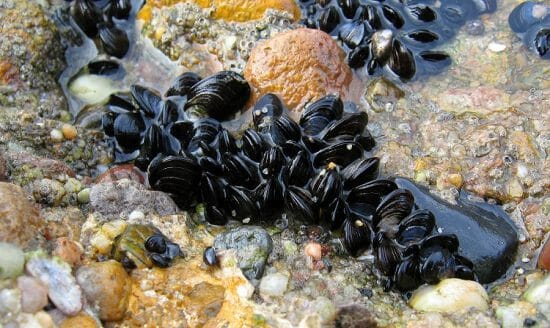
While most think only of small, single-celled facultative anaerobes, several larger groups of animals have evolved the ability to survive without oxygen. One of these, the mollusks, has a group of organisms which have adapted to regularly survive stints without oxygen. Mussels, often found in intertidal areas, experience daily shifts in their access to water. When the tide drops, the mussels become exposed to the air, and must close their shells to avoid drying out. In some areas, the tide can go out for significant periods of time. The mussels cannot open their shells to get oxygen, or risk drying out and dying of dehydration.


Blue mussel


To solve their conundrum, mussels like those in the image above have evolved the abilities of a facultative anaerobe. Instead of relying on their normal aerobic respiration when the tide goes out, the mussels switch to a form of energy which breaks down amino acids. This allows the mussel to survive hours, or even days, without getting a fresh source of oxygen.


Quiz


1. Humans muscles rely on aerobic respiration to produce the ATP necessary to work them. However, in times of stress and intense exercise, these muscles often run out of oxygen. In this case, the muscles must resort to a form of fermentation which produces lactic acid. Lactic acid can damage cells when it builds up, so the cells must quickly revert to aerobic respiration if they are to survive. Are humans facultative anaerobes?
A. No
B. Yes
C. Maybe

Answer to Question #1
A is correct. Humans are usually considered obligate aerobes, as we need oxygen pretty much all the time. Although our muscles can survive short bursts without oxygen, our bodies are still actively working on getting oxygen to the muscles. Lactic acid is a temporary, short-term fix that can last only a few minutes. However, the line between facultative anaerobe and obligate aerobe is not clear, as many animals have alternate methods of generating energy when oxygen is low.

2. What is the difference between a facultative anaerobe and an obligate anaerobe?
A. A facultative anaerobe only has anaerobic pathways.
B. An obligate anaerobe can survive the presence of oxygen.
C. A facultative anaerobe can survive and use oxygen.

Answer to Question #2
C is correct. A facultative anaerobe can switch between aerobic and anaerobic metabolisms. An obligate anaerobe does not have this capability. Oxygen, to an obligate anaerobe, is toxic. To a facultative anaerobe, oxygen represents an opportunity to make more ATP than normally possible.

3. While scientists used to believe that facultative anaerobe organisms were typically single-celled remnants of an earlier time, evidence has showed that many gut parasites are often facultative anaerobes. Which of the following provides an explanation of this fact?
A. These organisms have a constant access to oxygen.
B. Often, areas of the gut are anaerobic, forcing these organisms to use an anaerobic pathway.
C. These organisms do not represent a facultative anaerobe.

Answer to Question #3
B is correct. The gut is a dangerous place, for obligate aerobes. The gut of most animals receives little to no oxygen input. Yet, every once in a while animals will swallow small pockets of air or oxygen is present in their food. Gut parasites, hoping to make the most of these conditions, can operate without oxygen. But, when oxygen is present they want to take advantage and produce as much energy as possible.

References


  • Brusca, R. C., & Brusca, G. J. (2003). Invertebrates. Sunderland, MA: Sinauer Associates, Inc.

  • Muller, M., Mentel, M., Hellemond, J., & Henze, K. (2012). Biochemistry and Evolution of Anaerobic Energy Metabolism in Eukaryotes. Microbiology and Molecular Biology Reviews. doi:10.1128/MMBR.05024-11

  • University of Comenius. (2018, October 3). Anaerobic Bacteria. Retrieved from Jfmed.uniba.sk: https://www.jfmed.uniba.sk/fileadmin/jlf/Pracoviska/ustav-mikrobiologie-a-imunologie/ANAEROBIC_BACTERIA.pdf


Facultative Anaerobe

Facultative Anaerobe

Facultative Anaerobe Definition


A facultative anaerobe is an organism which can survive in the presence of oxygen, can use oxygen in aerobic respiration, but can also survive without oxygen via fermentation or anaerobic respiration. Most eukaryotes are obligate aerobes, and cannot survive without oxygen. Prokaryotes tolerate a wide range of oxygen, from obligate anaerobes which are poisoned by oxygen, to facultative anaerobes and obligate aerobes. Some prokaryotes are even aerotolerant, meaning they can survive in oxygen, but use anaerobic pathways for energy.


A facultative anaerobe can experience the best of both worlds. In times of low oxygen, a facultative anaerobe can use fermentation or anaerobic respiration to create ATP for the cells, typically still from the breakdown of glucose. The only real difference in these pathways from aerobic respiration is that they use a different electron receptor at the end of the pathway. Aerobic respiration relies on oxygen to accept electrons at the end of the electron transport chain. A facultative anaerobe can use a variety of other pathways to deal with these extra electrons, as discussed in the examples.


It should be noted that facultative anaerobes are sometimes referred to as facultative aerobes. The terms are generally interchangeable.


Examples of a Facultative Anaerobe


Yeast


A common facultative anaerobe is yeast, used in various cooking applications such as making bread or beer. In either case, this facultative anaerobe must function without oxygen. Yet, the yeast can still survive, and must for these products to come out right.


In bread, yeast is responsible for making the bubbles in the dough. These pockets of air make the bread light and fluffy. Otherwise, the bread would bake into a solid mass more like a cake or brownie. Yeast creates these air pockets through the release of carbon dioxide, a byproduct of converting the glucose in the dough into energy. For a lighter, more airy dough chefs often let the dough “rise”. This term simply means setting the yeast-laden dough in a warm place, and allowing the facultative anaerobe to do its work. Over the course of an hour or so, the yeast will create large amounts of carbon dioxide within the dough, expanding it and making it lighter.


In beer, wine, and other alcoholic beverages, yeast is the key ingredient. The process of fermentation, or the creation of alcohol, occur in yeast when they have plenty of sugar but little oxygen. Brewers and wine-makers use this aspect of the facultative anaerobe to generate the alcohol within their products. Aerobic respiration completely reduces glucose to a few recyclable molecules and carbon dioxide. Fermentation, on the other hand, leaves a final product: ethanol. Beer and wine makers create the ethanol (an alcohol) in their products by strictly controlling the amount of sugar and oxygen in their fermentation tanks. In these conditions any facultative anaerobe will resort to fermentation, and put off ethanol as a byproduct. When the alcohol reaches the proper level in the mixture, the yeast are filtered out and the drink is bottled.


Mollusks


While most think only of small, single-celled facultative anaerobes, several larger groups of animals have evolved the ability to survive without oxygen. One of these, the mollusks, has a group of organisms which have adapted to regularly survive stints without oxygen. Mussels, often found in intertidal areas, experience daily shifts in their access to water. When the tide drops, the mussels become exposed to the air, and must close their shells to avoid drying out. In some areas, the tide can go out for significant periods of time. The mussels cannot open their shells to get oxygen, or risk drying out and dying of dehydration.


Blue mussel


To solve their conundrum, mussels like those in the image above have evolved the abilities of a facultative anaerobe. Instead of relying on their normal aerobic respiration when the tide goes out, the mussels switch to a form of energy which breaks down amino acids. This allows the mussel to survive hours, or even days, without getting a fresh source of oxygen.


Quiz


1. Humans muscles rely on aerobic respiration to produce the ATP necessary to work them. However, in times of stress and intense exercise, these muscles often run out of oxygen. In this case, the muscles must resort to a form of fermentation which produces lactic acid. Lactic acid can damage cells when it builds up, so the cells must quickly revert to aerobic respiration if they are to survive. Are humans facultative anaerobes?
A. No
B. Yes
C. Maybe

Answer to Question #1
A is correct. Humans are usually considered obligate aerobes, as we need oxygen pretty much all the time. Although our muscles can survive short bursts without oxygen, our bodies are still actively working on getting oxygen to the muscles. Lactic acid is a temporary, short-term fix that can last only a few minutes. However, the line between facultative anaerobe and obligate aerobe is not clear, as many animals have alternate methods of generating energy when oxygen is low.

2. What is the difference between a facultative anaerobe and an obligate anaerobe?
A. A facultative anaerobe only has anaerobic pathways.
B. An obligate anaerobe can survive the presence of oxygen.
C. A facultative anaerobe can survive and use oxygen.

Answer to Question #2
C is correct. A facultative anaerobe can switch between aerobic and anaerobic metabolisms. An obligate anaerobe does not have this capability. Oxygen, to an obligate anaerobe, is toxic. To a facultative anaerobe, oxygen represents an opportunity to make more ATP than normally possible.

3. While scientists used to believe that facultative anaerobe organisms were typically single-celled remnants of an earlier time, evidence has showed that many gut parasites are often facultative anaerobes. Which of the following provides an explanation of this fact?
A. These organisms have a constant access to oxygen.
B. Often, areas of the gut are anaerobic, forcing these organisms to use an anaerobic pathway.
C. These organisms do not represent a facultative anaerobe.

Answer to Question #3
B is correct. The gut is a dangerous place, for obligate aerobes. The gut of most animals receives little to no oxygen input. Yet, every once in a while animals will swallow small pockets of air or oxygen is present in their food. Gut parasites, hoping to make the most of these conditions, can operate without oxygen. But, when oxygen is present they want to take advantage and produce as much energy as possible.

References


  • Brusca, R. C., & Brusca, G. J. (2003). Invertebrates. Sunderland, MA: Sinauer Associates, Inc.

  • Muller, M., Mentel, M., Hellemond, J., & Henze, K. (2012). Biochemistry and Evolution of Anaerobic Energy Metabolism in Eukaryotes. Microbiology and Molecular Biology Reviews. doi:10.1128/MMBR.05024-11

  • University of Comenius. (2018, October 3). Anaerobic Bacteria. Retrieved from Jfmed.uniba.sk: https://www.jfmed.uniba.sk/fileadmin/jlf/Pracoviska/ustav-mikrobiologie-a-imunologie/ANAEROBIC_BACTERIA.pdf


Facultative Anaerobe

Facultative Anaerobe

Facultative Anaerobe Definition


A facultative anaerobe is an organism which can survive in the presence of oxygen, can use oxygen in aerobic respiration, but can also survive without oxygen via fermentation or anaerobic respiration. Most eukaryotes are obligate aerobes, and cannot survive without oxygen. Prokaryotes tolerate a wide range of oxygen, from obligate anaerobes which are poisoned by oxygen, to facultative anaerobes and obligate aerobes. Some prokaryotes are even aerotolerant, meaning they can survive in oxygen, but use anaerobic pathways for energy.


A facultative anaerobe can experience the best of both worlds. In times of low oxygen, a facultative anaerobe can use fermentation or anaerobic respiration to create ATP for the cells, typically still from the breakdown of glucose. The only real difference in these pathways from aerobic respiration is that they use a different electron receptor at the end of the pathway. Aerobic respiration relies on oxygen to accept electrons at the end of the electron transport chain. A facultative anaerobe can use a variety of other pathways to deal with these extra electrons, as discussed in the examples.


It should be noted that facultative anaerobes are sometimes referred to as facultative aerobes. The terms are generally interchangeable.


Examples of a Facultative Anaerobe


Yeast


A common facultative anaerobe is yeast, used in various cooking applications such as making bread or beer. In either case, this facultative anaerobe must function without oxygen. Yet, the yeast can still survive, and must for these products to come out right.


In bread, yeast is responsible for making the bubbles in the dough. These pockets of air make the bread light and fluffy. Otherwise, the bread would bake into a solid mass more like a cake or brownie. Yeast creates these air pockets through the release of carbon dioxide, a byproduct of converting the glucose in the dough into energy. For a lighter, more airy dough chefs often let the dough “rise”. This term simply means setting the yeast-laden dough in a warm place, and allowing the facultative anaerobe to do its work. Over the course of an hour or so, the yeast will create large amounts of carbon dioxide within the dough, expanding it and making it lighter.


In beer, wine, and other alcoholic beverages, yeast is the key ingredient. The process of fermentation, or the creation of alcohol, occur in yeast when they have plenty of sugar but little oxygen. Brewers and wine-makers use this aspect of the facultative anaerobe to generate the alcohol within their products. Aerobic respiration completely reduces glucose to a few recyclable molecules and carbon dioxide. Fermentation, on the other hand, leaves a final product: ethanol. Beer and wine makers create the ethanol (an alcohol) in their products by strictly controlling the amount of sugar and oxygen in their fermentation tanks. In these conditions any facultative anaerobe will resort to fermentation, and put off ethanol as a byproduct. When the alcohol reaches the proper level in the mixture, the yeast are filtered out and the drink is bottled.


Mollusks


While most think only of small, single-celled facultative anaerobes, several larger groups of animals have evolved the ability to survive without oxygen. One of these, the mollusks, has a group of organisms which have adapted to regularly survive stints without oxygen. Mussels, often found in intertidal areas, experience daily shifts in their access to water. When the tide drops, the mussels become exposed to the air, and must close their shells to avoid drying out. In some areas, the tide can go out for significant periods of time. The mussels cannot open their shells to get oxygen, or risk drying out and dying of dehydration.


Blue mussel


To solve their conundrum, mussels like those in the image above have evolved the abilities of a facultative anaerobe. Instead of relying on their normal aerobic respiration when the tide goes out, the mussels switch to a form of energy which breaks down amino acids. This allows the mussel to survive hours, or even days, without getting a fresh source of oxygen.


Quiz


1. Humans muscles rely on aerobic respiration to produce the ATP necessary to work them. However, in times of stress and intense exercise, these muscles often run out of oxygen. In this case, the muscles must resort to a form of fermentation which produces lactic acid. Lactic acid can damage cells when it builds up, so the cells must quickly revert to aerobic respiration if they are to survive. Are humans facultative anaerobes?
A. No
B. Yes
C. Maybe

Answer to Question #1
A is correct. Humans are usually considered obligate aerobes, as we need oxygen pretty much all the time. Although our muscles can survive short bursts without oxygen, our bodies are still actively working on getting oxygen to the muscles. Lactic acid is a temporary, short-term fix that can last only a few minutes. However, the line between facultative anaerobe and obligate aerobe is not clear, as many animals have alternate methods of generating energy when oxygen is low.

2. What is the difference between a facultative anaerobe and an obligate anaerobe?
A. A facultative anaerobe only has anaerobic pathways.
B. An obligate anaerobe can survive the presence of oxygen.
C. A facultative anaerobe can survive and use oxygen.

Answer to Question #2
C is correct. A facultative anaerobe can switch between aerobic and anaerobic metabolisms. An obligate anaerobe does not have this capability. Oxygen, to an obligate anaerobe, is toxic. To a facultative anaerobe, oxygen represents an opportunity to make more ATP than normally possible.

3. While scientists used to believe that facultative anaerobe organisms were typically single-celled remnants of an earlier time, evidence has showed that many gut parasites are often facultative anaerobes. Which of the following provides an explanation of this fact?
A. These organisms have a constant access to oxygen.
B. Often, areas of the gut are anaerobic, forcing these organisms to use an anaerobic pathway.
C. These organisms do not represent a facultative anaerobe.

Answer to Question #3
B is correct. The gut is a dangerous place, for obligate aerobes. The gut of most animals receives little to no oxygen input. Yet, every once in a while animals will swallow small pockets of air or oxygen is present in their food. Gut parasites, hoping to make the most of these conditions, can operate without oxygen. But, when oxygen is present they want to take advantage and produce as much energy as possible.

References


  • Brusca, R. C., & Brusca, G. J. (2003). Invertebrates. Sunderland, MA: Sinauer Associates, Inc.

  • Muller, M., Mentel, M., Hellemond, J., & Henze, K. (2012). Biochemistry and Evolution of Anaerobic Energy Metabolism in Eukaryotes. Microbiology and Molecular Biology Reviews. doi:10.1128/MMBR.05024-11

  • University of Comenius. (2018, October 3). Anaerobic Bacteria. Retrieved from Jfmed.uniba.sk: https://www.jfmed.uniba.sk/fileadmin/jlf/Pracoviska/ustav-mikrobiologie-a-imunologie/ANAEROBIC_BACTERIA.pdf


Facultative Anaerobe

Sunday, August 26, 2018

Nonsense Mutation

Nonsense Mutation Definition


A nonsense mutation occurs when the sequence of nucleotides in DNA is changed in a way that stops the normal sequence of amino acids in the final protein. In central dogma of biology, DNA is transposed into RNA, which is then translated into a protein. The protein is a particular sequence of amino acids which confers a particular function onto the cell. The sequence of amino acids determines this role by the properties they contain and the ways they interact.


In the DNA, each amino acid is designated by a series of three nucleotides, called a codon. There are around 21 amino acids which can be designated by this system. There are also two other important signals, “START” and “STOP”. These signals allow the ribosome assembling the protein to know where to begin, and where to end. A nonsense mutation changes the codon for an amino acid into the codon for a “STOP” signal.


This completely changes the structure of the protein, because anything after the “STOP” signal is ignored. The ribosome snips off the incomplete protein, and goes on its way. Without the remainder of the amino acid chain, the protein may function and form completely differently than before. A nonsense mutation can have three basic outcomes.


Outcomes of a Nonsense Mutation


Deleterious


The vast majority of mutations are deleterious, meaning they cause a decrease in the overall fitness and reproductive success of the organism. A nonsense mutation would fall into this category if the mutation affected an important functional protein. Imagine if the nonsense mutation was found in the DNA which coded for an ion channel protein. If this protein was incomplete, it could not function to properly transport ions across the membrane. This would be deleterious to the organism with the nonsense mutation.


Cystic fibrosis is a genetic disorder caused by a nonsense mutation which does exactly that. The protein affected by the nonsense mutation in cystic fibrosis is a regulator protein for ion channels. Without the ability to properly move ions, people with cystic fibrosis often have respiratory problems caused by a mucous buildup due to the unregulated ions in their system. Duchenne muscular dystrophy is another disease cause by a nonsense mutation, and there are many more examples.


Neutral


A neutral mutation occurs when the effects of the mutation go undetected. Imagine that the mutation is found right before the last amino acid in a protein. Further, this final amino acid is really unnecessary for the actual function of the protein within the cell. If this is the case, the nonsense mutation will produce no effect at all. The protein will continue to function, even without the final amino acid. In this case, nothing really changes for the organism.


Beneficial


The least common type of mutation is a beneficial mutation. This is a mutation in which the protein changes in such a way that it increases the fitness and reproductive success of the organism. However, it is extremely unlikely that a nonsense mutation will end up being beneficial. In only the rarest of circumstances, a nonsense mutation may be beneficial if changing the protein it affects somehow provides a benefit to the organism. Imagine if the nonsense mutation affected a protein which inadvertently transports a toxin into cells. In an environment filled with the toxin, a dysfunctional protein might very well be the cure to being constantly bombarded with a toxin. If the protein no longer transported the toxin in, the cells wouldn’t need to worry about it.


In an even more unlikely circumstance, the nonsense mutation may completely alter the function of the protein. In this case, it might alter the protein to not transport the toxin, but rather destroy it or bind to it. This could also be a case in which the nonsense mutation became beneficial. In the most extreme circumstance the nonsense mutation may take a protein used for one process, and create an entirely new active protein by cutting the other one in pieces. Much of this has to do with the exact protein affected and the resulting effects on the organism.


Nonsense Mutation Example


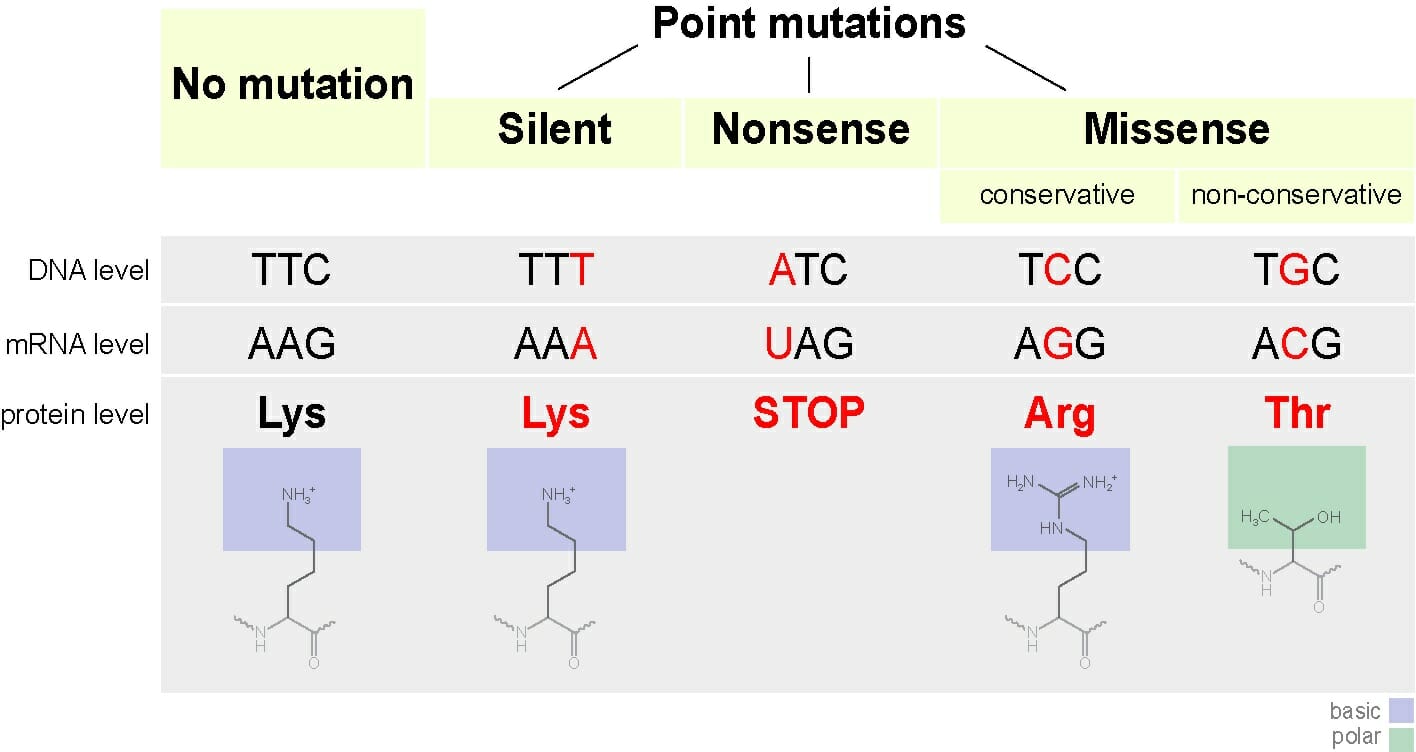
Below is a chart of several point mutations, or mutations of a single nucleotide. A nonsense mutation can be seen in the middle.


Point mutations

Point mutations


In this case, the original codon read “TTC”. This called for an mRNA with the codon “AAG”, which then produced a lysine in the amino acid chain. A nonsense mutation would change the first “T” to an “A”. This makes the first codon “ATC”. The corresponding mRNA segment, “UAG”, is a signal to the ribosome to stop the chain. Unlike any of the other mutations, this ends the chain entirely.


This is likely why nonsense mutations are often noticeable. It is unlikely that these mutations do not affect the resulting protein. Given that all of the amino acids play a role in a protein, dividing it at any point will likely change the way it interacts with the environment. Even if only several amino acids are lost, these could be the crucial external amino acids which attach the protein to the cell membrane or help it interact with other cells.


Quiz


1. What is the difference between a nonsense mutation and a missense mutation?
A. No difference
B. A missense mutation stops the chain of amino acids
C. A nonsense mutation cannot provide the same type of amino acid

Answer to Question #1
C is correct. A nonsense mutation, by definition, is an end to the amino acid chain. In a missense mutation, there is at least still a chance that the amino acid will be replaced with something very similar, and that no loss in protein function will result. A missense mutation also allows the continuation of the chain, which can lessen the impact of the mutation.

2. Which of the following could NOT be caused by a nonsense mutation?
A. A protein controlling glucose intake is disabled, due to the protein being only half formed
B. A protein in jellyfish gains the ability of fluorescence, due to the addition of amino acids
C. A protein used to transport ions is hampered, because several amino acids have been lost

Answer to Question #2
B is correct. The addition of amino acids cannot happen through a nonsense mutation. A nonsense mutation always causes a loss of amino acids. Either A or C could be reasonably caused by this mutation. Remember that they could also be caused by incorrect protein folding and processing after translation. To know that a nonsense mutation occurred, one would have to compare the mutated DNA to the original.

3. Your friend says that because nonsense mutations cause a loss of amino acids, they are always bad. What can you tell him to change his mind?
A. A nonsense mutation on an overactive protein would increase fitness
B. Nonsense mutations can cause functional proteins to stop working
C. All mutations are bad

Answer to Question #3
A is correct. If the protein affected by the mutation is overactive, producing too much of a product, or otherwise hindering fitness through its action, then a nonsense mutation can eliminate that function and provide benefit for the organism. A nonsense mutation could also create a protein with an entirely new beneficial function. Remember that mutation is the driving force behind evolution.

References


  • Hartwell, L. H., Hood, L., Goldberg, M. L., Reynolds, A. E., & Silver, L. M. (2011). Genetics: From Genes to Genomes. Boston: McGraw Hill.

  • Nelson, D. L., & Cox, M. M. (2008). Principles of Biochemistry. New York: W.H. Freeman and Company.

  • Widmaier, E. P., Raff, H., & Strang, K. T. (2008). Vander’s Human Physiology: The Mechanisms of Body Function (11th ed.). Boston: McGraw-Hill Higher Education.


Nonsense Mutation

Thursday, August 16, 2018

Missense Mutation

Missense Mutation Definition


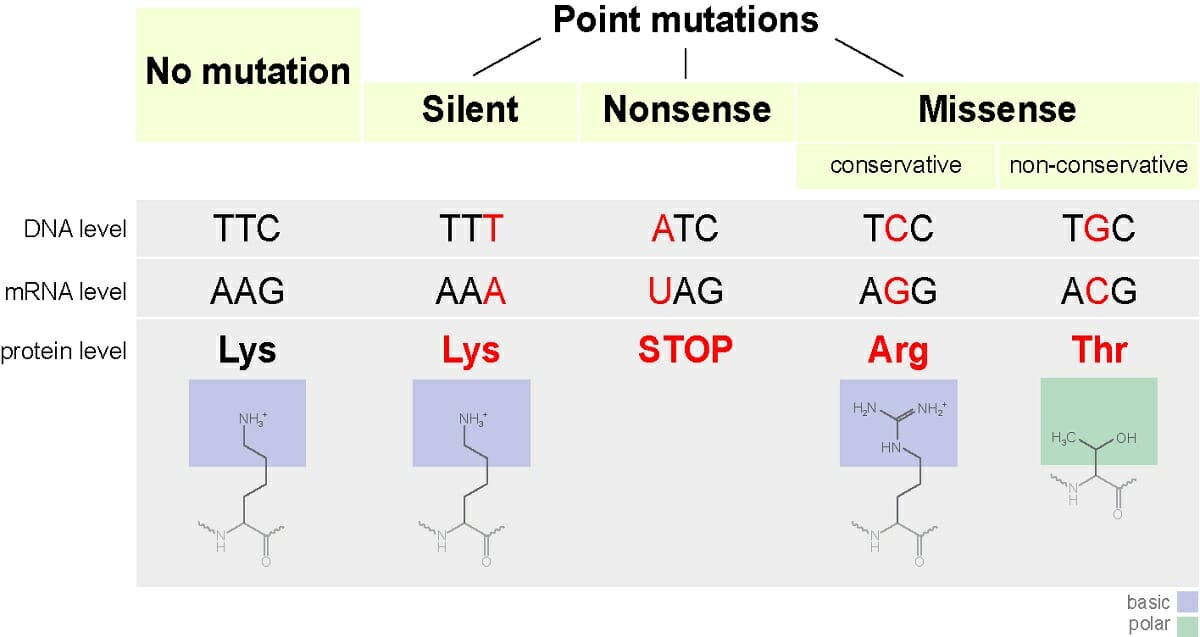
A missense mutation is a type of point mutation in which a different amino acid is placed within the produced protein, other than the original. In the process of converting DNA into protein, the language of DNA must be translated into the language of proteins. During this process, a change in the structure of DNA, or a mutation, can change the sequence of amino acids which creates a protein. If it does not change the structure or function of the protein, it may be considered a silent mutation. If it does change the protein, it is considered a missense mutation.


Point mutations

Point mutations


The above image shows various point mutations, and their effects on the resulting amino acid. The DNA is read in units of three, called codons. These codons call for one of 21 amino acids, which the ribosome complex will assemble in order by reading the messenger RNA, or mRNA. If there are 3 spots in a codon, and 4 possible nucleotides to go in that spot, the codons can call for 64 different signals. Since there are only 21 amino acids, many of these codons call for the same amino acid. If a mutation calls for the same amino acid as before the mutation, it is considered silent.


On the other hand, several other codons also call for signals to stop and process the protein. In this case, instead of adding an amino acid, the sequence is ended and the protein is ejected from the ribosome. In this case, the mutation would be a nonsense mutation, because the protein would be incomplete. A missense mutation continues the chain of the protein, but it may also interfere with the functioning of the protein. To this end, there are two basic types of missense mutation.


Types of Missense Mutation


Conservative


In a conservative missense mutation, the amino acid replaced is similar in function and shape to the amino acid being replaced. A conservative missense mutation may result in loss of function, but it may only be minor. In the context of population genetics and ecology, a missense mutation may not necessarily be a negative thing. A slowed or slightly changed function of a protein may actually increase the fitness of an organism. If the product of the protein needs to be regulated, or is currently hindering the fitness of the organism, a change may be beneficial. A conservative missense mutation is typically changes the function of a protein less drastically than the other type of missense mutation.


Non-conservative


In a non-conservative missense mutation, a completely different kind of amino acid is added to the chain. Where a polar amino acid was present, a non-polar amino acid will be added. This type of missense mutation can greatly change the function of a protein, as it will likely change the shape and structure of the protein.


Proteins have various levels of structure, all which depend upon the DNA. If a missense mutation changes an amino acid, it first changes the primary structure, or the basic sequence of amino acids. The secondary structure of proteins consists of patterns and structures formed by interactions between these amino acids. A missense mutation could completely disrupt a form such as an alpha helix or beta sheet. These structures can be crucial to the overall tertiary structure of the protein, or its general shape and size. This structure informs how the protein interacts with other molecules within the environment. A non-conservative missense mutation may completely change these interactions. At the final level of protein structure, quaternary structure, a missense mutation can even prevent a protein from joining a larger protein complex it is intended to be a part of. This can render entire biochemical pathways useless, or give them a completely new use.


Missense Mutation Example


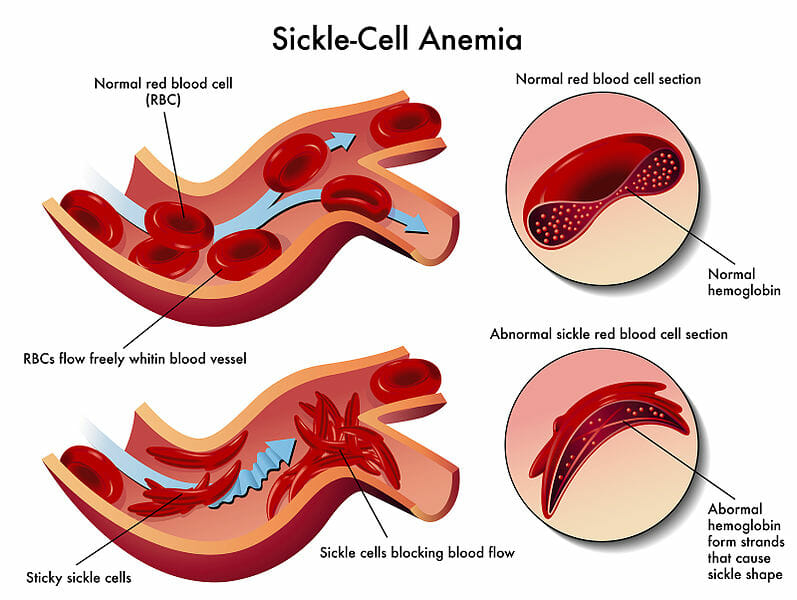
A common and well-known example of a missense mutation is sickle-cell anemia, a blood disease. People with sickle-cell anemia have a missense mutation at a single point in the DNA. This missense mutation calls for a different amino acid, and affects the overall shape of the protein produced. This, in turn, causes the entire shape of blood cells to be different. People with the disease experience symptoms of not being able acquire oxygen efficiently, and experience blood clotting. However, they are partially protected from blood borne parasites which live in blood cells. Malaria is a disease caused by these parasites, and people with sickle-cell anemia have an inherent defense against the parasite. Their sickle-shaped blood cells cannot support the life cycle of the parasite.


The missense mutation which causes all of this is the difference of one nucleotide. It is first translated into mRNA, then into a protein. The missense mutation causes a valine to be placed where a glutamic acid normally goes. This non-conservative missense mutation causes the shape of the protein, hemoglobin, to change. Where normal hemoglobin separates, the mutated hemoglobin forms long chains. These chains, when incorporated into blood cells, change their shape and force them into a sickle. This can be seen in the image below.


Risk Factors for Sickle Cell Anemia


Many other anemias and various genetic diseases are caused by a missense mutation. All proteins are reliant on the sequence of amino acids which makes it up. While mutations may sometimes bring benefits to an organism, they more often disrupt a stable and relied-upon process. In disrupting even a single protein, cells can become functionless, or at least struggle to function.


Quiz


1. Which of the following is a missense mutation?
A. Serine is substituted for Serine
B. Arginine is substituted for Glutamine
C. A STOP signal is substituted for Cysteine

Answer to Question #1
B is correct. The other two answers can both be point mutations, but only B is a missense mutation. Remember that a missense mutation continues the chain of amino acids, but changes the exact amino acid. Answer C would be a nonsense mutation.

2. Which of the following would be the worst mutation?
A. Missense Mutation
B. Nonsense Mutation
C. It depends…
D. XXXX

Answer to Question #2
C is correct. A mutation in itself does not mean that something is bad. In fact, all new adaptations and forms come from some sort of mutation. Therefore, depending on the environment or organisms, a mutation may actually be beneficial. There is nothing inherently “good” or “bad” about them.

3. Sickle-cell anemia, and some other genetic diseases, recur at steady low rates throughout some populations. Why is this?
A. The mutations are partially beneficial
B. Single point mutations are more likely than others
C. Both

Answer to Question #3
C is correct. A point mutation requires only a single nucleotide to be replaced. These small errors can easily be missed by genetic proof-reading proteins. Thus, small levels of mutation in all genes are seen across the population. Like sickle-cell anemia and resistance to malaria, some missense mutations are also beneficial in some ways.

References


  • Hartwell, L. H., Hood, L., Goldberg, M. L., Reynolds, A. E., & Silver, L. M. (2011). Genetics: From Genes to Genomes. Boston: McGraw Hill.

  • Lodish, H., Berk, A., Kaiser, C. A., Krieger, M., Scott, M. P., Bretscher, A., . . . Matsudaira, P. (2008). Molecular Cell Biology (6th ed.). New York: W.H. Freeman and Company.

  • Nelson, D. L., & Cox, M. M. (2008). Principles of Biochemistry. New York: W.H. Freeman and Company.


Missense Mutation

Wednesday, June 20, 2018

Stabilizing Selection

Stabilizing Selection Definition


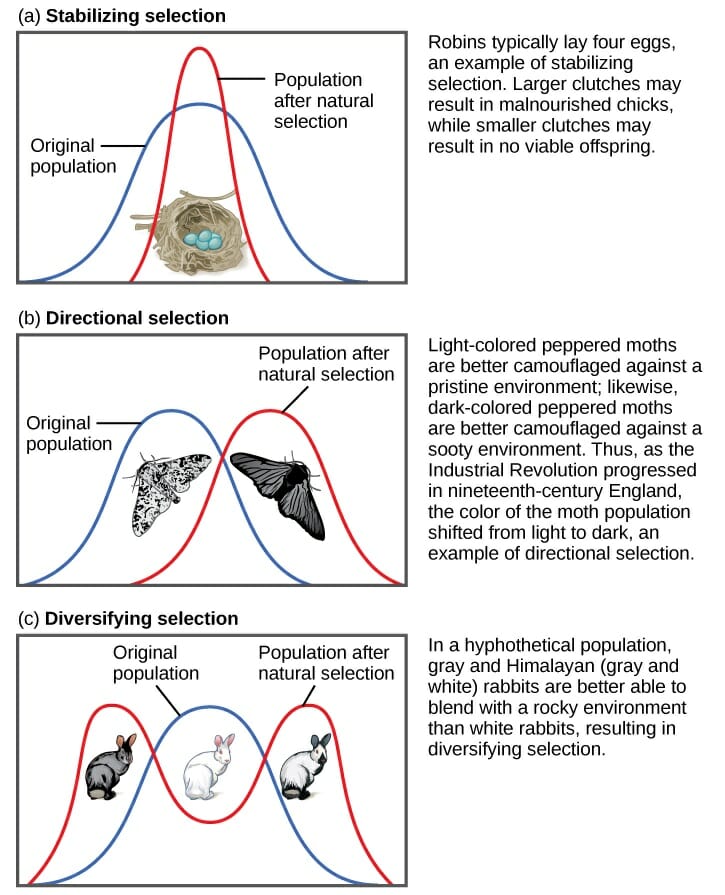
Stabilizing selection is any selective force or forces which push a population toward the average, or median trait. Stabilizing selection is a descriptive term for what happens to an individual trait when the extremes of the trait are selected against. This increases the frequency of the trait in the population, and the alleles and genes which help form it. Many traits which are common across entire groups of species have been formed through the effects of stabilizing selection. Stabilizing selection can be seen in the image below, comparing the three types of selection.


Stabilizing Selection vs Directional Selection vs Diversifying Selection


Stabilizing Selection Examples


Robin eggs


In this case, the number of eggs in a robin nest has been selected for through a stabilizing selection. Robins are apparently not ably to raise more than 4 chicks with much success. This is probably because of the size of the birds and the amount of food that two adults can provide. By comparison, most penguins can only raise one chick at a time, due to the size of the chick and the amount of food it requires. While they stabilized on different numbers, both are forms of stabilizing selection which maximize the fitness of the species in their environment.


As opposed to the other forms of selection, you can clearly see in the stabilizing selection graph that the population of the median trait increases, while the other populations decrease. In this case, 5 eggs is too many and some would die. On the other hand, 3 is too few. Either the eggs are not viable enough to only rely on 3 eggs, or predation and other forces require more than 3 eggs to overcome them and carry on to another generation.


Hypothetical Lemurs


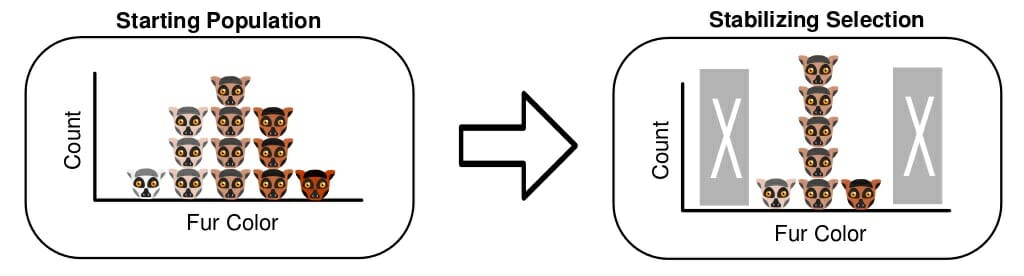
There is a population of multicolored lemurs on Crazy Island. This particular population of lemurs has been observed by scientists, and they have noticed the following changes in the lemur’s color.


Stabilizing Selection


As you can see, the lemurs have obviously undergone a stabilizing selection. The light and dark lemurs have almost disappeared, while the middle brown lemurs have increased. Without further information, it is not clear why this would be the case. It is the job of ecologists and evolutionary biologists to observe the population, noting peculiar aspects of the various forms to understand what may have caused the stabilizing selection. This is no easy question to answer and may have many more than one answer.


In the case if the lemurs, it could be that the darker and lighter lemurs were both easier to spot by predators. If the lemurs only have one predator, this is as easy hypothesis to test. A scientist would simply observe the predator, and see which lemurs it prefers. This would lend evidence to the hypothesis that the stabilizing selection is caused by predation. Further evidence could include the amount of lemurs the predators eat, and models showing how that level of predation could produce the coloration seen.


However, it is much more common that a species has multiple selective pressures, and that each pressure acts on various traits in different ways. For example, the lighter color could be suffering from predation, whereas the darker version could be overheating. (Dark colors absorb more solar heat.) Likewise, predation could be driving both traits, but not influencing them totally. Female lemurs might have a preference for brown lemurs, due to their increased survival. This would be a form of sexual selection, driving a trend of stabilizing selection.


Common Causes of Stabilizing Selection


Stabilizing selection, along with directional selection and disruptive selection, refer to the direction of individual traits. While stabilizing selection pushed the trait towards the average instead of one or both of the extremes, it can be driven by any form of selection. Some of the most common forms of selection are from predation, resource allocation, coloration of the environment, food type, and a wide variety of other forces.


Many traits we don’t talk about regularly have been driven by a variety of causes throughout history. Take the modest insect, for example. All insects have an exoskeleton, a miraculous structure made of chitin and other structural molecules which form a shield around their organs and allow them to maintain a water balance in the harshest of environments. This shield, while it has been modified in to an almost infinite number of forms, was first selected for out of stabilizing selection. The ancestors to insects did not have this adaptation, but once it evolved it was highly favored.


Simply stated, there is no common cause of stabilizing selection, besides the fact that the most average individual is selected for. In that way, like all forms of selection, the cause of stabilizing selection is the increased fitness and reproductive success that the median individuals have. The extreme versions or traits have a disadvantage, in one way or another. This disadvantage, in evolutionary terms, is decreased reproduction. The traits they carry are coded for in part by their DNA, which they can only pass on through reproduction. In stabilizing selection, the increase in the median traits represents their increased success. The other extreme traits are not as successful, possibly causing their owners to die. This increases the resources available to the median animals, further boosting their success. In this way, stabilizing selection is the cause of many traits that entire groups of animals share. These are known as synapomophies.


Quiz


1. Which of the following is NOT stabilizing selection?
A. A population of foxes shifts from mostly red to mostly grey
B. The most common color of rabbit increases after new predators are introduced
C. A population of purple sea urchins stays purple, as starfish eat other colors

Answer to Question #1
A is correct. In this case, the foxes are changing in majority from red to grey. This could indicate a number of driving factors, but is directional selection, not stabilizing selection. The other two cases represent situations in which the majority was selected for, and increased in frequency, due to the forces of predation.

2. Which of the following was not caused by forces driving stabilizing selection?
A. A species of moth, divided by selection, becomes two species
B. A species of rhino has 2 horns, instead of any other number
C. Most vertebrates with limbs have 4 or 5 toes

Answer to Question #2
A is correct. Again, anything which selects against the majority is not from stabilizing selection. Here, a group of moths becomes divided, a form of disruptive selection. In the other two answers, the number has been determined by stabilizing forces on both sides of the trait. Notice that questions one and two are very similar, but are asked in different ways. Don’t get tricked up by complex wording!

3. A trait has been selected for by stabilizing selection, to the extreme. There are no other forms left in the environment. How can variety be reintroduced into the population?
A. Genetic variation and recombination
B. Mutations
C. Both

Answer to Question #3
C is correct. Although there may be only one trait present within the population, remember that this is the phenotype. Many creatures are diploid or more, and carry multiple copies of the DNA. Some of the alleles present in the DNA are recessive and will not show up until it is the only allele present in an organism. When DNA is copied and divided during sexual reproduction, these genes get mixed up and the recessive alleles can come to the surface. If no more recessive alleles exist, mutations caused by toxins, sunlight, and various chemicals can induce a new allele to be present within a population. It may react differently to the selective pressures and change the direction of selection.

References


  • Brusca, R. C., & Brusca, G. J. (2003). Invertebrates. Sunderland, MA: Sinauer Associates, Inc.

  • Feldhamer, G. A., Drickamer, L. C., Vessey, S. H., Merritt, J. F., & Krajewski, C. (2007). Mammology: Adaptation, Diversity, Ecology (3rd ed.). Baltimore: The Johns Hopkins University Press.

  • Kaiser, M. J., Attrill, M. J., Jennings, S., Thomas, D. N., Barnes, D. K., Brierley, A. S., & Hiddink, J. G. (2011). Marine Ecology: Processes, Systems, and Impacts. New York: Oxford University Press.


Stabilizing Selection

Monday, May 14, 2018

Creatine Kinase

What is Creatine Kinase?


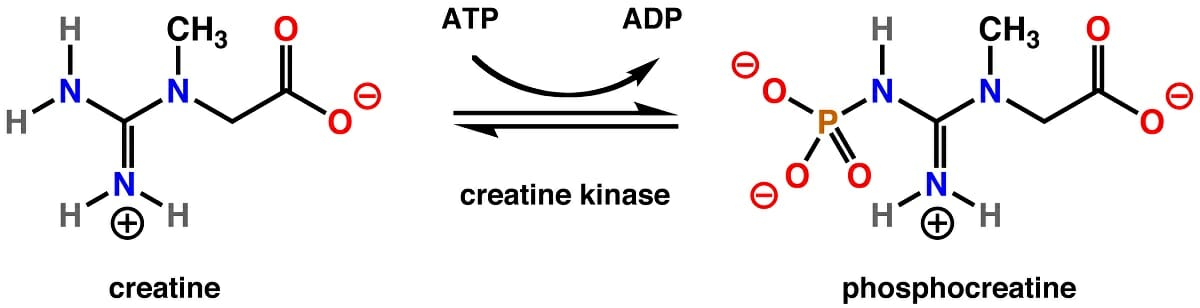
Creatine phosphokinase, or simply creatine kinase, is an enzyme found in many tissues which helps regulate the concentration of ATP (adenosine triphosphate) within a cell. In cells which need a lot of ATP, it is more economical to the cell to store the ATP as a less reactive molecule until it is needed. Thus, the phosphate group is transferred from ATP by creatine kinase to a creatine molecule. The end products are ADP (adenosine diphosphate), and PCr (phosphocreatine). This reaction is reversible, and when ATP is needed, it can easily be regenerated by the enzyme from the stored pool of PCr.


Function of Creatine Kinase


Creatine Kinase is found primarily in tissues which require a lot of ATP. Muscle cells, nerve cells, and even sperm cells are examples of highly active cells which contain large amounts of creatine kinase. This is because these cells must use a large amount of ATP to complete their work. Because of the nature of ATP, it must remain at certain concentrations to preserve the function of certain biochemical pathways. Therefore, the energy of ATP must be held in another place until it is needed. This place is PCr, which is simply a creatine molecule attached to a phosphate group.


The energy held in this bond can be efficiently and quickly converted by creatine kinase either to or from ATP. When there is too much ATP, creatine kinase functions to lower the concentration by converting ATP to ADP. It stores the extra phosphate on a creatine molecule, creating PCr. The pool of PCr in the cell is much larger than the amount of ATP. For this reason, it is considered a “fuel tank” or energy storage and utility system. As the mitochondria produce ATP through oxidative phosphorylation, the energy is transferred to PCr molecules, which are distributed to the cell.


These molecules do not affect the concentration of ATP, and therefore don’t interfere with cellular process. Other creatine kinase enzymes, which are attached to protein that require the energy from ATP, will use the pool of PCr to power whatever it is that they do. In this way, the production of ATP and the use of ATP are not directly tied to one another. The cell will usually only use high levels of ATP for a short amount of time, after which the system must return to normal. Using creatine kinase to maintain the “energy reservoir” is an efficient way to save up the ATP produced, without creating disruptive conditions for the cell. This is known as the PCr circuit. The chemical equation of the effects of creatine kinase can be seen below.


Creatine kinase


Structure of Creatine Kinase


Creatine kinase, like all proteins, is a specific chain of amino acids. When folded properly, this chain takes on a three-dimensional form, which gives it the ability to interact with certain molecules. The amino acids in creatine kinase are specific in that, when folded, they increase the interaction ability of creatine kinase with both creatine and phosphocreatine (PCr). Because the enzyme has a specificity for these molecules, it binds to them preferably over other molecules. Another site on creatine kinase is dedicated for interaction with ATP and ADP. As both molecules attach to the enzyme, it will either take a phosphate group from ATP and add it to creatine, or take a phosphate group from PCr and transfer it to ADP. The end result is either the creation or usage of ATP.


There are multiple types of creatine kinase, coded by different genes. While these forms of creatine kinase differ in their amino acid structure, their function remains similar. However, slight subtleties in function allow the creatine kinase to operate in different environments. For instance, mitochondrial creatine kinase, responsible for turning the ATP generated in the mitochondria into PCr for addition to the reservoir, must operate at different conditions than the creatine kinase in the cytosol. The pH balance and composition of solution are very different in the two areas of the cell.


Different cells even have different versions of creatine kinase, likely based on their function. The brain has a different form of creatine kinase than skeletal muscle. Smooth muscle and heart tissue use a combination of both types of creatine kinase. The different forms of creatine kinase all perform the same function, but under different conditions. These different forms are necessary to manage the energy reservoir in many different types of cell. In most cells, this reservoir of PCr is maintained at a concentration much higher than that of ATP. This makes it possible to do a lot of work.


Creatine Kinase Test


The different forms of creatine kinase make it a useful diagnostic took. Like other enzymes, creatine kinase is leaked into the bloodstream when a cell becomes damaged. If many cells are damaged at the same time, a detectable level of creatine kinase and other enzymes can be detected in the blood. Doctors can determine which form of creatine kinase is in the blood, which can give them clues as to which organs are being damaged.


A serum creatine kinase test can detect many conditions, such as a heart attack, muscle breakdown, and even autoimmune diseases which are attacking certain organs and tissues. After a heart attack, for instance, the creatine kinase level rapidly spikes in the blood. Further, a doctor can determine that it is a combination of muscular and brain creatine kinase. This is evidence that the heart has been damaged. Because the enzyme rapidly disappears from the blood, it can be used as an indicator to determine when a damaging event happened in the system. This can help find the cause of major events.


Quiz


1. A man enters the hospital with mild chest pain. The doctors test his blood serum, and find creatine kinase. Which of the following is a possible diagnosis?
A. Heart Attack
B. Indigestion
C. Lung irritation

Answer to Question #1

2. What would happen if you changed the amino acid structure of creatine kinase?
A. It would function worse
B. It would function better
C. It would change function

Answer to Question #2

3. Why does creatine kinase keep PCr at higher levels than ATP?
A. PCr is like the energy reservoir molecule
B. The opposite is true
C. PCr can be used directly by enzymes for energy

Answer to Question #3

References


  • Bruice, P. Y. (2011). Organic Chemistry (6th ed.). Boston: Prentice Hall.

  • Nelson, D. L., & Cox, M. M. (2008). Principles of Biochemistry. New York: W.H. Freeman and Company.

  • Widmaier, E. P., Raff, H., & Strang, K. T. (2008). Vander’s Human Physiology: The Mechanisms of Body Function (11th ed.). Boston: McGraw-Hill Higher Education.


Creatine Kinase

Sunday, April 22, 2018

Ligand

Ligand Definition


In biochemistry, a ligand is any molecule or atom which binds reversibly to a protein. A ligand can be an individual atom or ion. It can also be a larger and more complex molecule made from many atoms. A ligand can be natural, as an organic or inorganic molecule. A ligand can also be made synthetically, in the laboratory. This is because the key properties of a ligand are found in its chemical structure. If that structure can be recreated in the laboratory, the synthetic ligand will be able to interact in the same ways a natural ligand acts.


How a Ligand Works


The ligand travels through the watery fluids of an organism, within the blood, tissues, or within a cell itself. The ligand travels at random, but once the concentration is high enough, a ligand will eventually reach a protein. Proteins receiving ligands can be receptors, channels, and can even be the start of a complex series of intertwined proteins. When the ligand binds to the protein, it undergoes a conformational change. This means that while no chemical bonds have been formed or broken, the physical action of the ligand fitting into the protein changes the overall shape of the entire structure. This can trigger many actions. In most cases, the movement of the protein itself activates another chemical pathway, or triggers the release of another messenger ligand, to carry the message to other receptors.


The reversibility of the bond between ligand and protein is a crucial aspect of all forms of life. If ligands bound irreversibly, they could not serve as messengers, and most biological processes would fall apart. If ligands were changed, the way an enzyme changes a substrate, the ligand would become something else after the interaction, and could not be as easily recycled as a messenger. Biologically active proteins are active because of their shape. This shape interacts with the chemistry of the ligand to create a stable connection between the two molecules, which will eventually reverse, leaving both molecules the same. In a substrate and enzyme reaction, the substrate is permanently changed.


It is this ability of the ligand, to activate a protein for a short amount of time and then be recycled, which allows for the biological control of many interactions. The amount of time a ligand spends attached to its receptor or specific protein is a function of the affinity between the ligand and the protein. If there is a high affinity, the ligand will tend to stick to the protein and modify its function for longer. If the ligand has a low affinity for the protein, it will be less likely to bond in the first place and will release from the receptor faster.


The affinity of a particular ligand for a particular protein is determined entirely by its chemical makeup and that of the binding site of the protein. At the binding site, amino acids will be exposed which tend to complement the desired ligand. The amino acids will match the ligand in certain aspects. For instance, both will be hydrophilic or hydrophobic. This increases the attraction between the substances. The amino acids tend to differ from the ligand in terms of electrical activity. If the ligand is positively charged, the binding site should be negatively charged. This creates the strongest interaction. In this way, proteins can obtain a certain degree of specificity for a ligand.


While this is the basis for how cells can begin to tell different molecules apart, it is also at the heart of one of an organism’s biggest problems. Many poisons and toxic substances are so toxic because of their ability to interfere with the protein-ligand binding process. Either the toxin directly binds to the protein itself, because it has a higher affinity, or the toxin otherwise prevents the normal bonding of a ligand to its target protein. Examples of ligands and some competitive toxins can be seen below.


Examples of a Ligand


Oxygen


One ligand that people often overlook is oxygen. In the bloodstream and body tissues, oxygen must reach all the mitochondria in the body if the organism is to survive. But, it is not an easy task to get oxygen everywhere. If oxygen were left to diffuse through the tissue to the cells, it can only pass a few cell layers thick. That is why all organisms of a certain size must contain some sort of circulatory system. Even still, it is hard to move the oxygen ligand where it is needed. Many organisms use specialized proteins for this.


In humans and other mammals, hemoglobin is the major blood protein responsible for transporting oxygen. The hemoglobin protein first attaches to a ligand called heme, which has an iron atom and can help bind oxygen. Thus, hemoglobin picks up oxygen in the lungs. As it travels to the body, the carbon dioxide content in the blood rises. As this happens, the pH lowers, and the conformation of hemoglobin changes. This forces the release of the ligand, oxygen, which can then be absorbed by the cells which need it.


A main competitor of oxygen is carbon monoxide. This is because carbon monoxide has a higher affinity for hemoglobin than oxygen has. In other words, once carbon monoxide is bound to the hemoglobin, it won’t come off. This means that someone exposed to large amounts of carbon monoxide will soon have all their hemoglobin saturated by the wrong ligand. Their body will have no ability to transfer oxygen to the brains and tissues. Even if the person gets oxygen after this, they can still suffocate because of their inability to transport the oxygen.


Dopamine


Dopamine is a ligand used heavily in the brain. When the brain releases dopamine, it is as a signal of a pleasure coming from success. In other words, dopamine is tied to the sensation of motivation. The dopamine receptors in your brain are activated when the ligand dopamine is released by the brain. When the receptors are full of dopamine, your brain feels as if you’ve done something good. This common reward center can be easily thrown off by drugs such as cocaine and methamphetamine.


These drugs, instead of being in direct competition with the ligand, actually increase its effectiveness. They do this by limiting the amount of dopamine which can be recycled. Thus, the brain stays in a constant state of feeling “rewarded”. This is the dangerous feeling which can easily lead to drug addiction. Even though logic tells you drugs are bad, the feelings produced by your brain and the extra dopamine feel real, and tell you to use the drug more.


Other Ligand Uses


Ligands are used in many other applications by cells. The proteins they control can range widely in type and function. Some ligands, like insulin, are used to signal various things to the metabolism of each cell. Another ligand, such as acetylcholine, is used by the brain to transfer nerve impulses between nerves. In this case, it opens an ligand-gated channel, which allows the electrical impulse to flow into the cell and down the length of it. This cell will then transmit acetylcholine to the next cell, and the signal will continue.


Some enzymes are controlled by regulatory ligands, which effectively turn the enzyme on. Without it, they do not have the proper shape to transform the molecules they operate on. When the ligand is present, however, these enzymes spring to life and function properly. Many ligands are needed for controlling the metabolism and other complex processes. Each ligand has a certain affinity, which is important, and also a point at which the receptors become saturated. Above this limit, no higher concentration of ligand will bring a greater reaction.


In general chemistry, a ligand may refer to any molecule bound to a transition metal. This is not the case in biology. In biology, a ligand is any molecule which attaches reversibly to a protein. These are typically used in cellular signaling and cellular regulation, but have many other uses.


Quiz


1. Which of the following is NOT a ligand?
A. Air
B. Insulin
C. Bacterial protein

Answer to Question #1

2. Select the true statement.
A. All ligands evolved for their specific protein
B. A ligand can only be used once
C. A ligand changes the conformation of the protein it affects

Answer to Question #2

3. Which organism below DOES NOT use ligands?
A. Tree
B. Fish
C. Worm
D. All organisms use ligands

Answer to Question #3

References


  • Bruice, P. Y. (2011). Organic Chemistry (6th ed.). Boston: Prentice Hall.

  • Nelson, D. L., & Cox, M. M. (2008). Principles of Biochemistry. New York: W.H. Freeman and Company.

  • Widmaier, E. P., Raff, H., & Strang, K. T. (2008). Vander’s Human Physiology: The Mechanisms of Body Function (11th ed.). Boston: McGraw-Hill Higher Education.


Ligand

Sexual Dimorphism

Sexual Dimorphism Definition


Sexual dimorphism is when the genders of a particular species have different characteristics, not related to their sexual organs. On the other hand, a sexually monomorphic species would look nearly identical, except for their sexual organs. Sexual dimorphism can be expressed in a number of different traits. Typically these include size, coloration, bone shape, and even bodies that hardly resemble one another. Sexual dimorphism is seen in birds, reptiles, mammals, fishes, humans, and many other sexually reproducing species. Sexual dimorphism is thought to be caused by sexual selection, a type of selection driven by the desire of every organism to find an evolutionarily fit mate.


Causes of Sexual Dimorphism


Sexual dimorphism is a product of evolution. There are many benefits and detriments to sexual dimorphism, and each species has evolved to further this trait or reduce it. In all sexually reproducing animals with distinct genders, there is a fundamental difference in the sexual organs. In hermaphroditic species, both sets of organs are present and these species are monomorphic. Sexual dimorphism then encompasses a huge spectrum. It goes from creatures which are only slightly different between the genders to animals which hardly look like they belong to the same species.


One force which usually drives sexual dimorphism in evolution is sexual selection. In this form or selection, the interaction between the genders seeking and choosing mates causes differences in the male and female populations. For instance, females seeking a fit partner might look for a large male, as confirmation of his success. Over time, males would tend to become larger, as a sign to females they were the most successful mate. This is not an active process on the part of the males, but simply the result of the largest males having the most offspring. Smaller males have less offspring, and thus have less of a contribution to the next generation. This type of size-based sexual selection can be seen in many animals.


Size is a commonly sexually selected trait for many reasons. Not only does it suggest to females that the male is capable of surviving, but also of fighting. Many males which compete for mates will develop high levels of sexual dimorphism. If not seen directly in their size, it can often be seen in other appendages, such as horns or enlarged appendages used for battles. Both Big Horn Sheep and Crabs share these enlargements caused by evolution, and both use them to battle for mates. However, size is far from the only trait selected for.


Other traits include color and other visual indications of success. A lion’s mane does not make the lion any bigger, or protect him in battle against other lions. However, a large mane simply looks more formidable. Manes may have developed as a type of sexually selected sexual dimorphism. Birds are often a clear example of sexual dimorphism. Males and females have starkly different feathers and markings, while their bodies are usually of similar size. Males are often brightly colored, with extravagant and cumbersome ornamental feathers. Think of the peacock. The extra weight of the tail feathers should be a detriment to his success. However, in attracting females, it is extremely useful and the benefits outweigh the consequences.


There are many other examples, from simple things like eye color all the way to very complex rearrangements of each organism. Remember too that each species is different. Not all birds are sexually dimorphic. There are many species which have evolved monomorphic patterns. The following examples will provide insight into several different species, and how evolution may have formed the sexual dimorphism seen.


Sexual Dimorphism Examples


Birds of Paradise


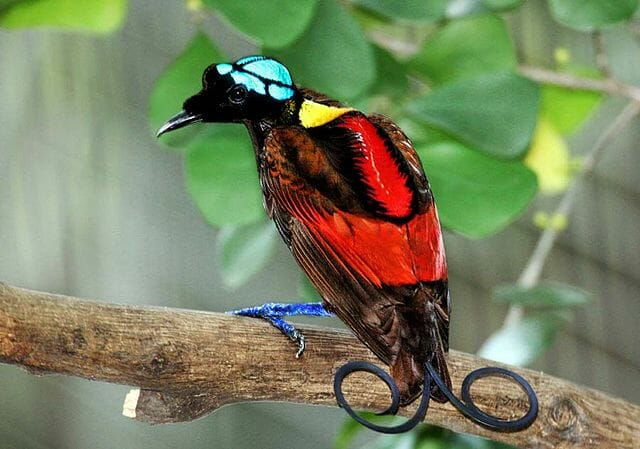
The Bird-of-Paradise is actually an entire family of bird species found from Indonesia to Australia. There are many different species, but almost all of them have evolved some of the most extreme forms of sexual dimorphism of any animals. Seen below is a male of one of the species.


Wilson


The females are typically the same size, but contain no special coloration. Each species has a unique and complex pattern. In addition, many species have complex courtship rituals in which the male tries to seduce the female with his pattern. The extremely bright coloration is a dead give-away to predators, but it is also the only way to attract females.


This form of sexual selection displays one theory of sexual selection, the so-called sexy-sons hypothesis. In the theory, females try to select males which will produce offspring which will be most attract to the next generation of females. In other words, the mother wants her son to be able to attract a mate. Therefore, she selects the brightest and most flashy male. In doing so, the males who are the brightest and have the best patterns are selected and contribute more offspring to the next generation. The power of this form of sexual selection can transform similar species in a very short time. The family of the Birds-of-Paradise has around 42 different species, which have emerged over only 24 million years from a common ancestor. Each species has a unique and different pattern, which further drives their separation form the other groups.


Ornate Box Turtle


A box turtle is any turtle which has a hinge on its shell, allowing it to completely enclose itself within the shell. Ornate box turtles live on the plains of the United States, across several states. The turtle is a sexually dimorphic species, but only to the trained eye. Both genders have similar markings on their shell, and from afar would appear to be the same.


However, the males have several traits which are sexually dimorphic from the females. Males have red eyes, where females have brown. Like the Bird-of-Paradise, this may be a trait which has no real benefit, but females find attractive. It may also have benefits which scientists are not yet aware of. While the two genders are roughly the same size, they are not the same shape. This is for a very good reason: turtle sex.


Turtle sex is much more difficult than most forms of mating. The shell, which does so much to protect the turtle from predators, is a huge hindrance for male turtles. That is, until sexual dimorphism. Male turtle have a unique bend on the underside of their shell. Instead of being flat, like the female, the male has a large inward bend. This allows him to slide on top of the female. The curve of her shell fits into his curve, and they can balance. He also has a much longer tail, in which his penis is housed. This allows him to tuck it under the female once he is in position, and successfully mate. The sexual dimorphism in turtles, therefore, is caused less by sexual selection and more out of necessity for evolutionary success. This is a good example of the difference between sexual dimorphism and sexual selection.


Humans


Humans have clearly sexual dimorphic traits. Males are slightly larger than females, as in many primate species. However, in humans it is much reduced. A male orangutan is much larger than a female, where a human male is only slightly larger than a human female. Human breasts are different between males and females. Besides Bonobos, this is not necessarily common. A dog, for instance, will only develop visible breasts when it is breastfeeding or has in the past. Humans and bonobos develop larger breasts on females. This could be a symbol to males that the female will be a supportive mother for their offspring. This would give these females more opportunities to reproduce, and with the best males.


There are a few other areas which differ between men and women, particularly body hair and bone structure. Men tend to have more body hair, and narrower hips. While these traits aren’t related, both are sexually-distinct traits which were likely caused by sexual selection. While humans do have some sexual dimorphism, we are near the monomorphic side of the scale.


Quiz


1. Which of the following is an example of sexual dimorphism?
A. A female flamingo picks the pinkest male, a sign of success
B. The male Black Widow spider is about a tenth of the size of the female
C. A male and female Rattlesnake look identical, except their reproductive organs

Answer to Question #1

2. Many species of spider, upon breeding with a male, will eat him. Scientist speculate that this process has driven the size difference in the spiders. What is this process called?
A. Sexual Dimorphism
B. Sexual Selection
C. Mating

Answer to Question #2

3. Why do some scientists argue that “sexual monomorphism” is an oxymoron (a phrase which contradicts itself)?
A. Sexual describes two forms already
B. That is a bad argument
C. Only hermaphrodites can be monomorphic

Answer to Question #3

References


  • Brusca, R. C., & Brusca, G. J. (2003). Invertebrates. Sunderland, MA: Sinauer Associates, Inc.

  • De luliis, G., & Pulera, D. (2007). The Dissection of Vertebrates. Amsterdam: Academic Press.

  • Feldhamer, G. A., Drickamer, L. C., Vessey, S. H., Merritt, J. F., & Krajewski, C. (2007). Mammology: Adaptation, Diversity, Ecology (3rd ed.). Baltimore: The Johns Hopkins University Press.

  • Pough, F. H., Andrews, R. M., Cadle, J. E., Crump, M. L., Savitzky, A. H., & Wells, K. D. (2004). Herpetology. Upper Saddle River, NJ: Pearson Prentice Hall.


Sexual Dimorphism