Friday, February 17, 2017

Archaebacteria

Archaebacteria Definition


Archaebacteria are a type of single-cell organism which are so different from other modern life-forms that they have challenged the way scientists classify life.


Until the advent of sophisticated genetic and molecular biology studies allowed scientists to see the major biochemical differences between archaebacteria and “normal” bacteria, both were considered to be part of the same kingdom of single-celled organisms. “Kingdoms,” a way of organizing life forms based on their cell structure, traditionally included Animalia, Planitia, Fungi, Protista (for single-celled eukaryotes), and Monera (which was once considered to hold all forms of prokaryotes).


However, genetic and biochemical studies of bacteria soon showed that one class of prokaryotes was very different from “modern” bacteria, and indeed from all other modern life forms. Eventually named “archaebacteria” from “archae” for “ancient,” these unique cells are thought to be modern descendants of a very ancient lineage of bacteria that evolved around sulfur-rich deep sea vents.


Sophisticated genetic and biochemical analysis has led to a new “phylogenetic tree of life,” which makes use of the concept of “domains” to describe divisions of life that are bigger and more basic than that of “kingdom.”


The most modern version of this system shows all eukaryotes – animals, plants, fungi, and protists – constituting the domain of “Eukaryota,” while the more common and modern branching of bacteria constitutes “Prokarya,” and archaebacteria constitute their own domain altogether – the domain of “Archaea.”


Phylogenetic tree


The discovery of Archaea and its unique differences is exciting for scientists, because it’s believed that archaebacteria’s unique biochemistry might give us insight into the workings of very ancient life. Some scientists propose that the archaebacteria Thermoplasma may in fact be ancestors of the nuclei of our own eukaryotic cells, which are believed to have developed through the process of endosymbiosis.


Another remarkable trait of archaebacteria is their ability to survive in extreme environments, including very salty, very acidic, and very hot surroundings. Archaebacteria have been recorded surviving temperatures as high as 190° Fahrenheit, which is only twenty-two degrees shy of the boiling point of water, and acidities as high as 0.9 pH.


Archaebacteria have even challenged scientist’s ideas about how to define a species, since they practice a lot of horizontal gene transfer – where genes are transferred from one individual to another during their lifetimes – making it difficult to determine how closely different cells are related, or even if archaebacteria cells have the sort of stable combinations of traits that scientists typically use to define a species.


The domain of Archaea include both aerobic and anaerobic species, and can be found living in common environments such as soil as well as in extreme environments.


So what biochemical characteristics make scientists so excited about archaebacteria? Well…


Archaebacteria Characteristics


Archaebacteria have a number of characteristics not seen in more “modern” cell types. These include:


1. Unique cell membrane chemistry.


Archaebacteria have cell membranes made of ether-linked phospholipids, while bacteria and eukaryotes both make their cell membranes out of ester-linked phospholipids


Archaebacteria use a sugar that is similar to, but not not the same as, the peptidoglycan sugar used in bacteria cell membranes.


2. Unique gene transcription.


Archaebacteria have a single, round chromosome like bacteria, but their gene transcription is similar to that which occurs in the nuclei of eukaryotic cells.


This leads to the strange situation that most genes involving most life functions, such as production of the cell membrane, are more closely shared by Eukarya and Bacteria – but genes involved in the process of gene transcription are most closely shared by Eukarya and Archaea.


This has led some scientists to propose that eukaryotic cells arose from a fusion of archaebacteria with bacteria, possibly when an archaebacteria began living endosymbiotically inside a bacterial cell.


Other scientists believe that eukaryotes descended directly from archaebacteria, based on the findings of archaebacteria species, Lokiarcheota, which contains some found only in eukaryotes, which in eukaryotes code for genes with uniquely eukaryotic abilities.


It is thought that Lokiarcheota may be a transitional form between Archaea and Eukaryota.


3. Only archaebacteria are capable of methanogenesis – a form of anaerobic respiration that produces methane.


Archaebacteria who use other forms of cellular respiration also exist, but methane-producing cells are not found in Bacteria or Eukarya.


4. Differences in ribosomal RNA that suggest they diverged from both Bacteria and Eukarya at a point in the distant past


Types of Archaebacteria


There are three main types of archaebacteria. These are classified based on their phylogenetic relationship (how closely related they are to each other), and members of each type tend to have certain characteristics. The major types are:


1. CrenarchaeotaCrenarchaeota are extremely heat-tolerant.


They have special proteins and other biochemistry that can continue to function at temperatures as high as 230° Fahrenheit! Many Chrenarchaeota can also survive in very acidic environments.


Many species of Crenarchaeota have been discovered living in hot springs and around deep sea vents, where water has been superheated by magma beneath the Earth’s surface.


One theory of the origin of life suggests that life may have originally started around deep sea vents, where high temperatures and unusual chemistries could have led to the formation of the first cells.


2. Euryarchaeota are able to survive in very salty habitats. They are also able to produce methane, which no other life form on Earth is able to do!


Euryarchaeota are the only form of life known to be able to perform cellular respiration using carbon as their electron acceptor.


This gives them an important ecological niche because the breakdown of complex carbon compounds into the simple molecule of methane is the final step in the decomposition of most life forms. Without methanogens, the Earth’s carbon cycle would be impaired.


Wherever methane gas is produced by life, Euryarchaeota are responsible.


Methanogen archaebacteria can be found in marshes and wetlands, where they are responsible for “swamp gas” and part of the marsh’s distinctive smell, and in the stomachs of ruminants such as cows, where they break down sugars found in grass that are undigestible to eukaryotes by themselves. Some methanogens live in the human gut and assist us in the same way.


They can also be found in deep sea sediments, where they produce pockets of methane beneath the ocean floor.


3. Korarchaeota are the least-understood, and thought to be the oldest lineage of archaebacteria. This makes them possibly the oldest surviving organisms on Earth!


Korarchaeota can be found in hydrothermal environments much like Crenarchaeota. However, Korarchaeota have many genes found in both Crenarchaeota and Euryarcheaota, and also genes which are different from both groups. To scientists, this suggests that both other types of archaebacteria may have descended from a common ancestor similar to Korarchaeota.


Korarchaeota are rare in nature, perhaps because other, newer forms of life are better adapted to survive in modern environments than they are. Still, Korearchaeota can be found in hot springs, around deep sea vents.


Examples of Archaebacteria


Example #1: Lokiarcheota


Lokiarcheota is a hyperthermophile discovered at the deep sea vent called Loki’s Castle, which some scientists think has unique evolutionary significance.


It has a highly unique genome, consisting of roughly 26% proteins that are known to be found in other archaebacteria, 29% proteins that are known to be found in bacteria, 32% genes that do not correspond to any known protein, and – 3.3% genes that correspond to those only found in eukaryotes.


The eukaryotic genes are particularly exciting for scientists, because they are genes that appear to code for proteins that eukaryotes use to actively control the shape of their cell, including proteins for cytoskeletons, the motor protein actin, and several proteins that in eukaryotes are involved in changing cell membrane shape.


Some of these genes are involved in phagocytosis, which is exciting because the process of phagocytosis could have been used by eukaryotic ancestors to “swallow” other cells – which may have gone on to become endosymbiotes, leading to the endosymbiotic relationships between eukaryotic cells and their mitochondria, chloroplasts, and nuclei.


Lokiarchaeota’s unique genome makes it possibly our closest relative among prokaryotes, and possibly a transitional form in the extremely important jump from prokaryotic to eukaryotic life, which made the evolution of the animal, plant, fungi, and protist kingdoms possible. Scientists think that Lokiarchaeota and ourselves probably shared a common ancestor around 2 billion years ago.


It is unknown whether this means that eukaryotes likely evolved around deep sea vents, or whether Lokiarchaeota’s relatives may once have been common in other environments before they were outcompeted and driven to extinction by their more advanced descendants, the eukaryotes.


Example #2: Methanobrevibacter Smithii


Methanobrevibacter smithii is a methane-producing archaebacteria that lives in the human gut. This member of Euryarchaeota helps us to break down complex plant sugars and extract extra energy from the food we eat.


The microorganisms in our guts – including members of Euryarchaeota – also have a complex relationship with our health. While some studies show that many people with obesity and colon cancer have above-average levels of Euryarchaeota in their guts, Euryarchaeota also help people who don’t have enough food to produce more energy, and some types of these archaebacteria appear to protect against colon cancer.


Related Biology Terms


  • Domain – The highest level of classification currently recognized by biologists, refers to the broad differences between the cells of eukaryotes, bacteria, and archaebacteria.

  • Kingdom – The level of classification below “domain,” kingdoms separate eukaryotes, such as plants and animals, into groups based on their phylogenetic relationships.

  • Phylogenetics – The study of evolutionary relationships between life forms.

Test Your Knowledge


1. Which of the following is NOT a domain of life?
A. Animalia
B. Archaea
C. Bacteria
D. Eukarya

Answer to Question #1

2. Which of the following is NOT a difference between archaea and other forms of life?
A. Archaebacteria use different lipids in their cell membranes.
B. Archaebacteria have a circular chromosome like bacteria, but also a nuclear envelope like eukaryotes.
C. Archaebacteria have a circular chromosome like bacteria, but their gene transcription is more similar to that of eukaryotes.
D. Only archaebacteria can perform methanogenesis.

Answer to Question #2

3. Which of the following is not true about the major types of archaebacteria?
A. Crenarchaeota can live in temperatures as high as 230° Fahrenheit.
B. Euryarchaeota includes both methanogens who produce methane, and halophiles who prefer salty environments.
C. Lokiarchaeota is a methanogen that lives in the digestive tracts of cows.
D. Korarchaeota may be related to the common ancestor of Crenarchaeota and Euryarchaeota.

Answer to Question #3


Archaebacteria

Thursday, February 16, 2017

Phosphate Group

Phosphate Group Definition


Phosphate, chemical formula PO43-, is a chemical compound made up of one phosphorus and four oxygen atoms. When it is attached to a molecule containing carbon, it is called a phosphate group. It is found in the genetic material DNA and RNA, and is also in molecules such as adenosine triphosphate (ATP) that provide energy to cells. Phosphates can form phospholipids, which make up the cell membrane. Phosphate is also an important resource in ecosystems, especially in freshwater environments.
Phosphat Ion

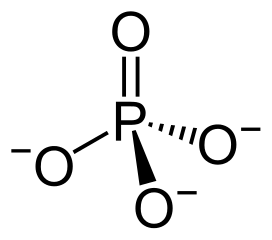
This figure depicts a phosphate group.


Functions of Phosphate Groups


Part of Nucleic Acids


DNA and RNA, the genetic material of all living things, are nucleic acids. They are made up of nucleotides, which in turn are made up of a nitrogenous base, a 5-carbon sugar, and a phosphate group. The 5-carbon sugar and the phosphate group of each nucleotide attaches to form the backbone of DNA and RNA. When nucleotides are not attached to other nucleotides to form part of DNA or RNA, two more phosphate groups are attached.


Activating Proteins


Phosphate groups are important in activating proteins so that the proteins can perform particular functions in cells. Proteins are activated through phosphorylation, which is the addition of a phosphate group. Protein phosphorylation occurs in all forms of life. Dephosphorylation, the removal of a phosphate group, deactivates proteins.


Part of Energy Molecules


Adenosine triphosphate, or ATP, is the main source of energy in cells. It is made up of adenosine and three phosphate groups, and the energy derived from ATP is carried in the phosphates’ chemical bonds. When these bonds are broken, energy is released. ATP is formed when the molecule ADP (adenosine diphosphate) is phosphorylated. Phosphate groups are also found in other energy molecules that are less common than ATP, such as guanosine triphosphate (GTP), cytidine triphosphate (CTP), and uridine triphosphate (UTP).


Part of Phospholipids


Phospholipids are the main component of cell membranes. Each phospholipid is made up of a lipid molecule and a phosphate group. Many phospholipids arrange in rows to form what is called a phospholipid bilayer, a double layer of phospholipids. This bilayer is the main component of membranes such as the cell membrane and the nuclear envelope that surrounds the nucleus. It is semipermeable, meaning that only certain molecules can pass through it and enter or exit the cell.


As a Buffer


Phosphate is an important buffer in cells. A buffer keeps the pH of a substance neutral, not too acidic or too basic. Living things need to have neutral conditions for life because most biological activities can only occur at a neutral pH. Phosphate-buffered saline, a buffer solution containing water, salt, and phosphate, is often used in biological research.


In Ecosystems


Phosphorus is a nutrient that limits the growth of plants and animals in freshwater environments. An increase in phosphorous-containing molecules like phosphates can cause more plankton and plants to grow, which are then eaten by other animals like zooplankton and fish, continuing up the food chain to humans. An increase in phosphates will initially increase the numbers of plankton and fish, but too much will limit other nutrients that are important for survival, like oxygen. This depletion of oxygen is called eutrophication and can kill aquatic animals. Phosphates can increase due to human activities such as wastewater treatment, industrial discharge, and using fertilizers in agriculture.


In the Body


About 85% of the phosphorus in the human body is located in bones and teeth. Calcium phosphate is the main element of both teeth and bones, and gives them their hard structure. Phosphorus is the second-most common element in the body after calcium, and it is important to have neither too much nor too little of it in the body. Phosphorus can be found in grain products, milk, and foods high in protein.


Related Biology Terms


  • Phosphorus – a chemical element that, with oxygen, forms the molecule phosphate. Phosphorus has an atomic number of 15 and is represented by the letter P.

  • Nucleotide – the building block of DNA and RNA; consists of a phosphate group attached to a 5-carbon sugar and nitrogenous base.

  • Adenosine triphosphate (ATP) – the main energy molecule of cells, made up of an adenosine molecule attached to three phosphate groups.

  • Phospholipid – the main component of cell membranes, consisting of a lipid attached to a phosphate group.

Test Your Knowledge


1. Which of these activities involves phosphate groups?
A. Providing energy to cells
B. Activating proteins to perform certain functions in cells
C. Limiting the growth of plants and animals in ecosystems
D. All of the above

Answer to Question #1

2. Phosphate consists of phosphorus bonded to what other element?
A. Oxygen
B. Fluorine
C. Hydrogen
D. Sulfur

Answer to Question #2

3. What is phosphorylation?
A. The saturation of an ecosystem with phosphate
B. The hardening of calcium phosphate during the formation of bones and teeth
C. The addition of a phosphate group to a molecule
D. The use of a phosphate-buffered saline in a solution

Answer to Question #3


Phosphate Group

Sunday, February 12, 2017

Punctuated Equilibrium

Punctuated Equilibrium Definition


Punctuated equilibrium is a theory that states that evolution occurs primarily through short bursts of intense speciation, followed by lengthy periods of stasis or equilibrium. It postulates that nearly 99% of a species’ existence on earth is spent in stasis. So, if a species appears in fossil records for about 10 million years, it is likely that speciation occurred over the span of less than 100,000 years. Once complete however, there is little, if any, morphological change.


The theory also provides an explanation for the absence of intermediate forms in fossil records, where new species seem to appear from ancestral forms abruptly and ultimately disappear without experiencing any apparent morphological change during their existence.


While this was a shift from the idea that all new species arose due to continuous, gradual and incremental changes, the founders of this theory have also conceded that other modes of evolution could co-exist.


Features of Punctuated Equilibrium


One of the cornerstones of this hypothesis is that reproductive isolation is necessary for the formation of new species. This implies that the fossil record at any one place is unlikely to record the process of speciation because new species can evolve only from small, isolated populations. Therefore, variations will be seen only in fossils of the same age arising from different geographical locations.


Punctuated equilibrium postulates that genetic and morphological changes that bestow a survival advantage will be amplified quickly in small populations. The rapid pace of evolution in these isolated groups is also stated as the reason why there is no fossil record of evolution, and new species seem to appear abruptly.


It also predicts that while intermediates will be rare in the evolution of single species, they will be seen among larger groups. For example, while, Australopithecus afarensis, is the precursor of modern humans, there are no fossils showing a gradual change in the cranial capacity or body size of the Australopithecus. However, there are other species such as Homo habilis and Homo erectus that show the transition from Australopithecus towards modern man in terms of cranial capacity and body size.


Another important feature of this hypothesis is the explanation given for extended periods of stasis. It implies that the average morphology of a species is under a homogenizing influence. Interbreeding populations are said to appear static because, in the absence of active selection pressure, any changes are diluted among the large number of individuals. A number of explanations have been given for this phenomenon observed in fossil record. These include the effect of gene flow, assertions that the morphology of a species is under ‘homeostatic’ pressure, and koinophilia or the rejection of mates with unusual attributes.


Examples of Punctuated Equilibria


Support for punctuated equilibrium is seen in fossil records, and the impact of reproductive isolation has been observed by biologists, systematists and taxonomists across the world. Given the fact that this is a theory of evolution, its predictions cannot be directly tested. While fossil record can provide support for the theory, some indications need to arise from the living world. For example, animals living in similar environments but experiencing reproductive isolation must become incapable of interbreeding, indicating the emergence of a new species.


Example #1: Reproductive Isolation among Kingfishers


The study of kingfishers in Papua New Guinea showed the deep impact of reproductive isolation on speciation. There are three subspecies that reside on the mainland, where the environment can vary wildly from humid, dense rain forest, to monsoon forests with extended dry seasons. These subspecies can not only interbreed, but are nearly indistinguishable from each other. However, on islands a few hundred kilometers away, even when the environment is similar to the nearest part of the mainland, the kingfishers are markedly different. More species have been found on these smaller islands than in mainland – a landmass spanning nearly 300,000 square miles. Similar observations have been made for birds and reptiles and invertebrates across the world, where geographical separation has led to the emergence of new species, while large continuous tracts with varying conditions maintain homogeneous populations.


Example #2: Land Snails of Bermuda


About 300,000 years ago, Poecilozonites bermudensis, an air-breathing land snail, colonized the island of Bermuda, possibly carried on driftwood from North America. The fossils of these snails constitute the large majority of Bermuda’s land fossils and, until recently, one species continued to survive on the island. The earliest populations of this snail had two stocks, with distinct color banding patterns. When these became extinct, a derivative from a peripheral population that was evolving on a separate island became dominant. Fossil samples taken from six different geological times and from various geographical locations points to the repeated evolution of species from peripherally isolated populations that ultimately led to the formation of the land snail that remained morphologically static till it was observed in the 1950s.


Gradualism vs Punctuated Equilibrium


Punctuated equilibrium is often pitted against phyletic gradualism as competing theories of evolution. Both of these hypothesize about the rate of emergence of species. Gradualism places importance on the slow appearance of new characters in interbreeding subspecies that, over time, lead to the evolution of a new species from ancestral forms.


However, this is not supported by fossil data, where new species seem to appear suddenly. Punctuated equilibrium tries to explain these fossil ‘gaps’ or the absence of intermediate forms, but stating that they exist for very short periods of time, when speciation occurs intensely in an isolated population.


The criticism of punctuated equilibrium focuses on the possibility that fossil records may simply be incomplete and intermediate forms may still be found in regions where fossils are abundant and well-preserved. In addition, critics point to the fact that there is no evidence that an external homogenizing influence keeps interbreeding populations in stasis.


Related Biology Terms


  • Allopatric speciation – Speciation that occurs after a population splits into two groups that are reproductively isolated from each other.

  • Koinophilia – Phenomenon where individuals with unusual features are not preferred for sexual reproduction.

  • Peripatric speciation – Speciation in a small, isolated, peripheral population.

  • Phyletic Gradualism – A model that theorizes that speciation is gradual, incremental and slow.

  • Saltation – Sudden change that occurs over the span of a single generation.

Test Your Knowledge


1. Which of these is a major feature of punctuated equilibrium?
A. Rapid increase in reproductive capacity
B. Detailed fossil record of intermediates
C. Long periods of stasis with no morphological changes
D. Mutation

Answer to Question #1

2. How does punctuated equilibrium explain the lack of intermediates in the fossil record?
A. Fossil record is incomplete
B. Environmental change destroys fossils
C. Speciation is too rapid to leave behind a fossil record
D. All of the above

Answer to Question #2

3. Gradualism and punctuated equilibrium are often considered as opposing theories of evolution.
A. True
B. False

Answer to Question #3


Punctuated Equilibrium

Friday, February 10, 2017

Homologous

Homologous Definition


“Homologous,” in biology, means a similarity in internal or chromosomal structures.


With internal structures, homology indicates organs that have similar positions, structures, or evolutionary origins. It’s important to note, however, that organs do not have to have the same function to be homologous.


When it comes to chromosomal structures, “homologous” is used to describe chromosomes that carry the same type of genetic material. Nonetheless, this genetic material does not have to be the same: one half comes from the mother and the other half from the father.


Examples of Homologous


As stated above, “homologous” can be used to describe two things:


  • Structures

  • Chromosomes


Example #1: Climbers, Flyers, and Swimmers


What do squirrels, birds, and whales have in common? The obvious answer is that they breathe, have beating hearts, and use their upper appendages to move. Let’s explore this latter idea a bit more, using the squirrel’s ability to climb, the bird’s ability to fly, and the whale’s ability to swim as examples:


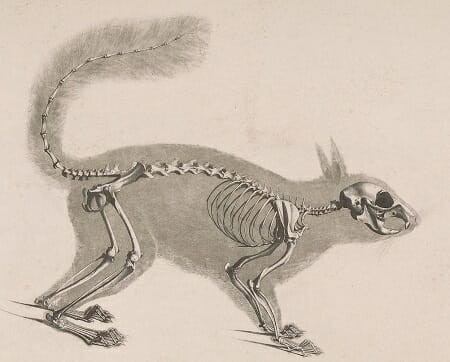
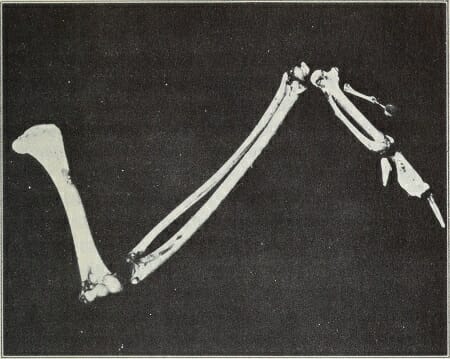
Examine the images below, focusing on the squirrel’s arm, the bird’s wing, and the whale’s fin. Note some similarities and differences.


Red squirrel skeleton

Red squirrel skeleton


X-ray of a bird wing

X-ray of a bird wing


Sperm whale skeleton

Sperm whale skeleton


One of the things these illustrations show is that each example consists of three main parts: the humerus, or the “upper arm,” the radius and ulna, which form the “forearm,” and the metacarpals, which form the “fingers.”


On the other hand, we can also identify differences. The whale’s humerus, for instance, tends to be shorter, wider, and flatter. In fact, some whales have a patella, or “shoulderblade,” instead of a humerus. Likewise, the bird has no fingers; its metacarpals taper into something that resembles a dagger.


Despite minor differences in form and major variation in function, these structures still qualify as homologous. In the simplest terms, the squirrel, the bird, and the whale all possess tripartite, or “three-parted,” upper appendages. This evidence allows us surmise that these animals might have evolved from a common ancestor, which used its tripartite limbs to move.


Because the wing, the fin, and the arm allow us to connect the bird, the squirrel, and the whale to a common ancestor, we can conclude that the appendages are homologous.


Example #2: The Genetic Code


To quote the popular Darwinist phrase, you are 98% chimp. While technically true, this information can mislead beginning biologists who have yet to explore it further.


The genetic code of most animals contains four nucleotide bases, also called nucleobases, and marked as A, T, C, and G. In different combinations, they account for features such as the color and location of body hair, nose size, blood type, and even ear lobe attachment. More recent research even suggests that nucleobases also determine whether you will develop a psychological or personality disorder.


Nonetheless, most genetic expression, or the manner in which nucleobase combinations manifest themselves, is relatively benign. We don’t give much thought, for instance, to the nucleobase combinations that make our bones hard, our heart muscular, or our liver able to regenerate. In fact, geneticists estimate that only 0.1% (that’s one-tenth of a percent) of our genes actually account for the features we see. The other 99.9% rests dormant as “junk DNA,” or makes up features that we take for granted.


The four nearly-universal nucleobases in the genetic code, when paired with the fact that some human DNA remains dormant, permits us to understand the phrase “You are 98% chimp” more deeply. In short, however, humans and chimps have a homologous genetic code. The differences lie in how that code is expressed.


Example #3: Your Mother’s Eyes, but Your Father’s Hands


If you know your birth parents, you have probably noticed that you have inherited some features from your mother, and some features from your father. You may have also had relatives and friends tell you resemble one or the other.


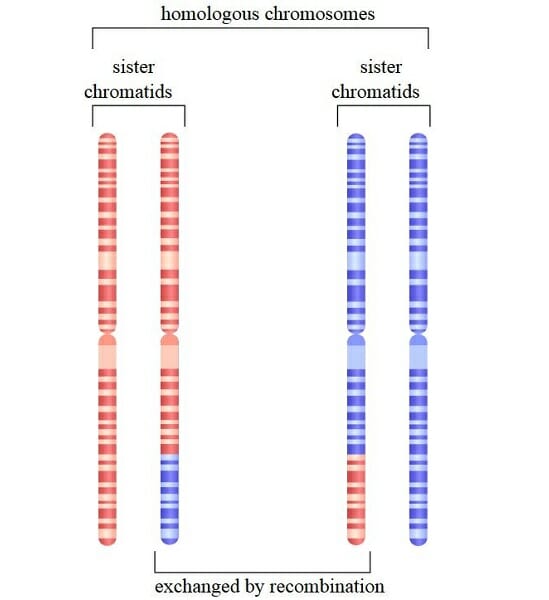
For better or for worse, you probably resemble both of your parents. This is because, during conception, you inherited a set of 23 chromosomes from your mother’s egg, and a set of 23 chromosomes from your father’s sperm. The same genetic information is stored on each set, in similar locations.


Because you can “match” one of your mother’s chromosomes with one of your father’s, they are homologous.


Homologous chromosome pairs

Homologous chromosome pairs


Nonetheless, the alleles, or modes of expression, of these genes may differ. This is why you may have inherited your mother’s brown eyes, a dominant allele, but not your father’s cleft chin, a recessive allele. Typically, however, the fact that you have colored eyes or a chin in the first place indicates that your parents’ chromosomes both carried the information necessary for creating them.


Related Biology Terms


  • Chromosome – A combination of genes and proteins, some inherited from the mother and some inherited from the father, located within the nucleus of the cell.

  • Nucleotide base, nucleobase – A protein that combines with another protein to form a gene.

  • Gene – A sequence of nucleobases that gives cells the “information” for certain physical features, or how the body should function.

  • Allele – An expression of a gene. Many alleles come from mutations.

Test Your Knowledge


1. A, T, C, and G are parts of the genetic code called
A. Nuclear bombs
B. Nucleotide bases or nucleobases
C. Nucleotidal waves
D. Alleles

Answer to Question #1

2. Homologous structures do not have to have the same function.
A. True
B. False

Answer to Question #2

3. The genetic information you inherit from your parents is carried on:
A. Genes
B. Nucleotide bases or nucleobases
C. Chromosomes
D. Mitochondria

Answer to Question #3


Homologous

Thursday, February 9, 2017

Pedigree

Pedigree Definition


A pedigree is a diagram that depicts the biological relationships between an organism and its ancestors. It comes from the French “pied de grue” (“crane’s foot”) because the branches and lines of a pedigree resemble a thin crane’s leg with its branching toes. A pedigree is used for different animals, such as humans, dogs, and horses. Often, it is used to look at the transmission of genetic disorders.


Function of Pedigrees


The purpose of a pedigree is to have an easy-to-read chart that depicts a certain characteristic or disorder in an individual. It can be used for a characteristic like having a widow’s peak or attached earlobes, or a genetic disorder like colorblindness or Huntington’s disease. Besides being used to represent familial characteristics in humans, pedigrees are also important in animals that are selectively bred for certain characteristics. They visually represent the ancestors of an animal and make it easier to understand whether that animal will pass on certain characteristics to its offspring.


Pedigrees use a standard set of symbols to make them easier to understand. Males are represented by squares, while females are represented by circles. Parents are connected by horizontal lines, and vertical lines stemming from horizontal lines lead to the symbols for their offspring. The generations are also clearly marked with numbers, with I being the first generation, II being the children of the first generation, and III being the grandchildren, for example.


Dominant and Recessive Genes


To be able to understand pedigrees, one must understand dominant and recessive genes. Some characteristics, such as height, are influenced by a variety of genes and an individual’s environment. Height cannot be easily represented by a pedigree. Pedigrees are normally used to represent simple dominant and recessive traits. For example, having a widow’s peak hairline is dominant. If an individual has that trait, their symbol on the pedigree will be shaded in. If they have no widow’s peak, their symbol will not be shaded in because having no widow’s peak is recessive.


Certain traits like colorblindness are located on the X or Y chromosome and are called sex-linked. Colorblindness is more commonly found in males because males have only one X chromosome. Females are usually not colorblind because they have two X chromosomes and would need to inherit one defective X from both their mother and father. However, they can be carriers of the trait, and if they are carriers, their male children will be colorblind. On a pedigree, carriers are represented either by a half-shaded symbol or a shaded dot in the middle of the symbol.


Understanding Genes and Alleles


Why is it that two people with a dominant trait can sometimes have a child that shows the recessive trait? This can occur because people have two copies of each gene, one from their mother and one from their father. Different forms of a gene—such as widow’s peak or no widow’s peak—are called alleles. In genetics, the dominant allele is represented by a capital letter, like W, while the recessive allele is represented by a lowercase letter, like w. There are three different genotypes (genetic makeups):


  • WW = dominant

  • Ww = dominant

  • ww = recessive


People with WW and Ww will have a widow’s peak, while ww individuals will have no widow’s peak. But if two people who have the Ww genotype reproduce, they could both pass on their w allele to the offspring, who will then be ww and will show the recessive trait.


WW and ww individuals are called homozygous because they have two copies of the same allele and will always pass that form of the allele on to offspring, while Ww individuals are called heterozygous because they have two different alleles and can pass on either allele to their offspring. In pedigrees, heterozygous individuals are represented by half-shaded symbols (just like carriers in pedigrees for sex-linked traits).


Punnett square mendel flowers


This diagram, called a Punnett square, shows the possible offspring of this heterozygotic pea plant, where purple is dominant (represented by B) and white is recessive (represented by b).


Examples of Pedigrees


Autosomal Dominant


Autosomal dominant

This pedigree shows an autosomal dominant trait or disorder. Autosomal means the gene is on a chromosome that is not a sex chromosome (X or Y). Not all of the offspring inherited the trait because their parents were heterozygous and passed on two recessive genes to those that do not show the trait. None of the offspring of two recessive individuals have the trait. Examples of autosomal dominant disorders are Huntington’s disease and Marfan syndrome.


Autosomal Recessive


Autosomal recessive

This pedigree is of an autosomal recessive trait or disorder. The completely red square represents a male that is homozygous recessive and has the trait. All of the half-shaded individuals are carriers; they do not exhibit the trait because it is recessive, but they could pass it on to their offspring if their partner is also a heterozygote. Autosomal recessive disorders include cystic fibrosis and Tay-Sachs disease.


Sex-Linked


Sex linked inheritance

This pedigree depicts a sex-linked disorder on the X chromosome. Some sex-linked disorders are dominant, and some are recessive; the pedigree above is of a sex-linked recessive disorder. In this pedigree, only males have the disorder, but some of the females are heterozygotic carriers who can pass down the trait even though they do not show it themselves. Colorblindness, hemophilia, and Duchenne muscular dystrophy are all sex-linked disorders.


Related Biology Terms


  • Allele – a form of a gene. For example, in pea plants, B represents the dominant trait (purple color) and b represents the recessive trait (white color).

  • Homozygote – an individual that has two of the same alleles for a gene, e.g., BB for a purple pea plant or bb for a white pea plant.

  • Heterozygote – an individual with two different alleles, such as a pea plant that is Bb.

  • Autosomal – relating to a chromosome that is not a sex chromosome.

Test Your Knowledge


1. Which genotype represents a heterozygous individual?
A. AA
B. Aa
C. aa
D. A and C

Answer to Question #1

2. An individual that shows a dominant trait could have one of what two genotypes for that trait?
A. AA or aa
B. Aa or aa
C. AA or Aa

Answer to Question #2

3. What does a completely shaded-in symbol on a pedigree of an autosomal recessive trait represent?
A. An individual who shows the trait
B. An individual who does not show the trait
C. An individual who does not show the trait, but is a carrier
D. An unrelated individual

Answer to Question #3


Pedigree

Osmosis

Osmosis Definition


Osmosis is a type of diffusion that, in biology, is usually related to cells. Diffusion is when molecules or atoms move from an area of high concentration to an area of low concentration. Osmosis is when a substance crosses a semipermeable membrane in order to balance the concentrations of another substance. In biology, this is usually when a solvent such as water flows into or out of a cell depending on the concentration of a solute such as salt. Osmosis happens spontaneously and without any energy on the part of the cell.


Solvents and Solutes


Osmosis deals with chemical solutions. Solutions have two parts, a solvent and a solute. When solute dissolves in a solvent, the end product is called a solution. Salt water is an example of a solution; salt is the solute, and water is the solvent.


Types of Solutions


In biology, there are three different types of solutions that cells can be in: isotonic, hypotonic, and hypertonic. Different types of solutions have different impacts on cells due to osmosis.


Isotonic


An isotonic solution has the same concentration of solutes both inside and outside the cell. For example, a cell with the same concentration of salt inside it as in the surrounding water/fluid would be said to be in an isotonic solution. Under these conditions, there is no net movement of solvent; in this case, the amount of water entering and exiting the cell’s membrane is equal.


Hypotonic


In a hypotonic solution, there is a higher concentration of solutes inside the cell than outside the cell. When this occurs, more solvent will enter the cell than leave it to balance out the concentration of solute.


Hypertonic


A hypertonic solution is the opposite of a hypotonic solution; there is more solute outside the cell than inside it. In this type of solution, more solvent will exit the cell than enter it in order to lower the concentration of solute outside the cell.


How Osmosis Affects Cells


Osmosis affects plant and animal cells differently because plant and animal cells can tolerate different concentrations of water. In a hypotonic solution, an animal cell will fill with too much water and lyse, or burst open. However, plant cells need more water than animal cells, and will not burst in a hypotonic solution due to their thick cell walls; hypotonic solutions are ideal for plant cells. The optimal condition for an animal cell is to be in an isotonic solution, with an equal amount of water and solutes both inside and outside. When a plant cell is in an isotonic solution, its cells are no longer turgid and full of water, and the leaves of the plant will droop. In a hypertonic solution, water will rush out of both animal and plant cells, and the cells will shrivel (in plants, this is called plasmolyzation). This is why slugs and snails shrivel and die when salt is sprinkled onto them; water leaves their cells in order to balance the higher concentration of salt outside the cells.


This figure shows the effects of osmosis on red blood cells:
Osmotic pressure on blood cells diagram


Examples of Osmosis


Osmosis is how plants are able to absorb water from soil. The roots of the plant have a higher solute concentration than the surrounding soil, so water flows into the roots. In plants, guard cells are also affected by osmosis. These are cells on the underside of leaves that open and close to allow gas exchange. When the plant’s cells are full of water, the guard cells swell and open the stomata, small holes that allow the plant to take in carbon dioxide and release oxygen.


Osmosis can have adverse effects on animals such as fish. If freshwater or saltwater fish are put into water that has a different salt concentration than they are used to, they will die from having too much water enter or leave their cells. Osmosis can affect humans as well; in a person infected with cholera, bacteria overpopulate the intestines, leaving the intestines unable to absorb water. The bacteria actually reverse the flow of absorption because osmosis causes water to flow out of the intestinal cells instead of in. This causes severe dehydration and sometimes death. A milder effect of osmosis is the way fingers become pruney when placed in water for an extended period of time. They look that way as a result of being bloated from increased water flowing into the cells.


Related Biology Terms


  • Diffusion – a process by which molecules move from areas of high concentration to areas of low concentration. Osmosis is one type of diffusion.

  • Solution – a mixture made up of two or more substances where one substance, a solute, is dissolved into another substance, a solvent.

  • Semipermeable – also known as selectively permeable, this means that only certain substances can pass through a barrier. Cell membranes are semipermeable.

  • Cell – the smallest unit that makes up a living organism. It includes various different parts called organelles that have functions such as storing genetic material and making proteins and energy.

Test Your Knowledge of Osmosis


1. When a cell contains a lower concentration of solute than the solvent surrounding it, that cell is said to be in what kind of solution?
A. Hypertonic
B. Hypotonic
C. Isotonic

Answer to Question #1

2. Isotonic conditions are ideal for which cells?
A. Plant cells
B. Animal cells
C. Both
D. Neither

Answer to Question #2

3. What happens to an animal cell in a hypotonic solution?
A. There is no negligible effect, as the concentration of solute on both sides of the membrane is the same.
B. Water will rush out of the cell, making it shrivel.
C. Water will rush into the cell, and it will become turgid.
D. Water will rush into the cell, causing it to lyse (burst).

Answer to Question #3


Osmosis

Tuesday, February 7, 2017

Sylph


Hidden just inside the clouds is a thriving society of ethereal beings, so pure that they cannot be seen by the eyes of men. Still, the invisible Sylphs have managed to captivate the imagination of people for over six centuries, inspiring songs, debates, dances, and even occult rituals.


What Is a Sylph?


A Sylph (also known as Sylphid) is an air spirit. They are formed of air, they live in the air, and they have unusual power over the air, particularly the wind and the clouds. Usually, Sylphs are portrayed as guardians who protect secret knowledge, beautiful women, or the environment, but it’s not out of the question for a Sylph to cause mischief among men.


Characteristics


Physical Description


From the dawn of Sylph mythology in the 16th century, and throughout the classical era, Sylphs have been described as being something between a spirit and a creature. While they are invisible to human beings, they do have physical bodies—usually coarse, humanoid shapes that are larger and stronger than those of regular humans.


As the curtain closed on the classical era, Sylphs materialized in the spotlight of the romantic era’s operas and ballets. Here, not surprisingly, Sylphs take on a more romantic shape; they are dainty, fairy-like creatures with graceful wings.


Today, the word Sylph is tagged onto slender, attractive young females, much like the ballerinas who portrayed Sylphs during the romantic period. However, a camp of believers in the original Sylph still puts out a large volume of photos every year, claiming that they have captured one of the elusive Sylphs leering down from the clouds.


Special Abilities


Sylphs have more than just invisibility and brawn going for them. They also have a type of intelligence that men lack. They are born understanding the universe and the connections between all its parts, and they may know of ways of manipulating those parts to cause specific effects, knowledge which caused many alchemists to pursue them throughout the classical era. Perhaps the most impressive aspect of Sylph intelligence is their supernatural foresight. The future holds few mysteries for a Sylph.


Weaknesses


According to early mythology, Sylphs are only capable of moving freely through the air. They drown in water, burn in fire, and become trapped in earth, so they are basically powerless outside of their own element.


Early mythology also states that Sylphs are mortal in both body and soul. They can die from hunger, illness, or physical injury. Because they lack a soul, when they die, they simply cease to exist. Luckily, there is a loophole for Sylphs who marry humans; the Sylph might gain an immortal soul through the marriage. At the very least, the couple’s children will have immortal souls.


Related Characters


According to early Sylph mythology, the Sylph is one of four creatures, called elementals, who embody the cardinal elements. Sylphs, of course, embody air, while gnomes embody earth, salamanders embody fire, and undines embody water. The elementals guard great treasures of power and knowledge, which are hidden in the pure worlds of each element.


Occasionally, all of the elementals are capable of giving rise to monstrous offspring. The birth of one of these monsters is rare and apparently spontaneous, but disaster usually follows at their heels. When a Sylph delivers one of these monsters, it takes the form of a giant.


Over time and through cultural shifts, the Sylph became estranged from the other three elementals and were linked, instead, to air spirits like fairies and pixies. They also filled the void left by the sirens of classical mythology, becoming a slightly more innocent version of the seductive, magical creature who lures men to their doom.


Cultural Representation


Origin


Sylphs make their debut on the pages of the Liber de Nymphis, which was penned during the 16th century by Paracelsus, a renowned Swiss-German occultist. Not only was Paracelsus the first to refer to Sylphs in writing, he gave such a definitive study of them that his name became a fixture in Sylph mythology. For hundreds of years, no discussion of Sylphs failed to include Paracelsus’ name.


Paracelsus himself made no claims about seeing Sylphs. Instead, he credited his knowledge of these air spirits to folklore; his study of the Sylph attempted to fit accounts from folklore into his own worldview. By the end of his analysis, Paracelsus made it clear that his own understanding of Sylphs was much more advanced than the folklore he had based his ideas on, stating that, “The names have been given [to Sylphs] by people who did not understand them.”


Classical Era


The political turmoil of the early 17th century created a hotbed for cults who offered clarity and knowledge to their followers. The Sylph, who was believed to possess both, emerged as a figurehead of some prominent cult movements, including Rosicrucianism.


The Rosicrucians claimed to be capable of seeing Sylphs, as well as the other elementals, by treating their eyes with alchemical medicines or gazing into crystal balls. Many Rosicrucians took chastity vows, hoping to marry an elemental.


Romantic Era


By the time the 19th century rolled around, bringing greater stability to European society, the occult beliefs that had raged during the 17th century had become the stuff of satire.

The Sylph found a safe-haven in the theaters of the romantic period. They appeared as charming, ethereal, and ultimately unattainable women in multiple operas and ballets. Perhaps the most famous ballet was La Sylphide, which immortalized the image of the graceful, fairy-like Sylph.


Modern Era


Thanks to Vladimir Nabokov’s society-shaking novel, Lolita, most people today would define a “sylph” as an enchanting, slightly devious young girl.


Role-playing games, like Dungeons and Dragons, have stayed truer to the original meaning of the word “sylph.” Players often incorporate Sylphs into their games as strong, magical creatures with power over the wind.


There are still some pockets of believers in the elemental Sylph. They frequently photograph Sylphs in the clouds and describe the Sylph as a valiant protector of the environment. One of their pet beliefs is that, in order to eliminate pollution, Sylphs eat the harmful “chemtrails” left behind by airplanes.


Sylph