Sunday, October 2, 2016

Grasshopper Facts

Fast FactsEssential FactsInteresting Facts


Grasshoppers Are Locusts


Grasshopper External Features (Male and Female)

Grasshopper External Features (Male and Female)

One of the grasshopper facts you may be surprised to learn is that grasshoppers and locusts are essentially the same thing. All these little critters belong to the order Orthoptera. We have come to refer to some species as grasshoppers, and other species as locusts, but they are actually just variants of the same animal. Typically, when they migrate or fly in swarms, they are referred to as locusts.

Grasshoppers Go through Three Stages of Development


A grasshopper’s lifecycle consists of three stages of development: egg, nymph, and adult. Female grasshoppers lay pods containing several eggs in fall, and these then hatch in the spring. The baby grasshopper, known as a nymph, resembles a small adult grasshopper, but without wings. As a nymph grows in size, it will shed its skin about five or six times. It does this by swallowing a large amount of air to split the cuticle so it can break out its exoskeleton. Finally, the nymph develops wings in order to become an adult grasshopper.


Grasshoppers Do Actually Fly


Many people are under the false impression that grasshoppers tend to jump, and not fly. Although grasshoppers have powerful legs that enable them to jump very well, they jump primarily to give them a lift into the air. Grasshoppers do in fact have wings and are actually very strong fliers. The ability to fly is particularly useful when they are trying to escape predators. So a flying grasshopper is a very real thing!


Grasshoppers Jump the Equivalent Length of a Football Field


Grasshoppers Life Cycle

Grasshoppers Life Cycle

If we were equipped with the equivalent jumping power of a grasshoppers, we would be able to jump the length of a football field – or even more! That’s because grasshoppers can jump 20 times their body length. Grasshopper facts reveal that they are able to jump this far because they have powerful six-jointed legs that use a catapult design. In order to jump, a grasshopper will bend its hind legs at the knee, thereby slowly contracting its big flexor muscles. This potential energy is stored in a piece of cuticle in the knee, just like a spring. In order to jump, the grasshopper then relaxes its muscles, which causes the cuticle to release the stored energy (again, just like a spring). This catapults the grasshopper into the air. Suddenly long jump athletes don’t seem quite so impressive…

Grasshoppers Are Diurnal Animals


Grasshoppers are diurnal, which means they rest at night and are active during the day. This is largely because grasshoppers need to absorb sunlight in order to raise their body temperature so that they have their required energy. This then enables them to be active during the day. However, they are also known to sometimes feed at night. Midnight snack anyone?


Grasshoppers’ ‘Ears’ Are on Their Abdomens


One of the most intriguing grasshopper facts is that a grasshopper’s ‘ears’ are located on its abdomen. On either side of the first abdominal segment, just beneath the wings, is a simple eardrum. These eardrums, called tympana, consist of membranes that vibrate in response to sound waves. The tympanum enables the grasshopper to hear the noises emitted by other grasshoppers.


Female Male Grasshoppers’ Songs Aren’t Melodic
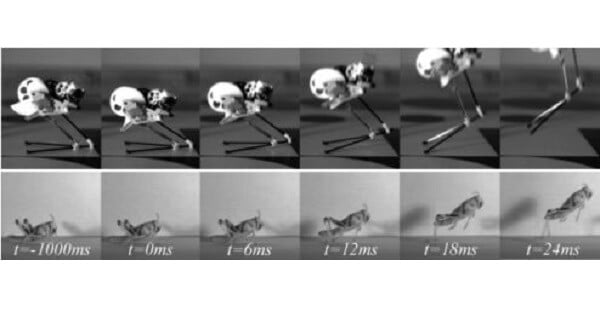

Jumping Robot Mimic a Grasshoppers

Jumping Robot Mimic a Grasshoppers

Because grasshoppers have tympana organs, they can hear and detect any changes in the intensity and rhythm of the sounds that they hear. However, because these tympana are very rudimentary auditory organs, grasshoppers are in fact unable to discern differences in pitch. Therefore, the different species of grasshopper have distinctive rhythms to their songs. This enables them to distinguish between the different species so that males and females can find partners from their own species in order to mate. Male grasshoppers are fortunate that the females rely on rhythm to find mates, because male grasshoppers’ songs are not known to be particularly melodic!

Grasshoppers Crepitate or Stridulate to Produce Music


Most of us are probably familiar with the sound of grasshoppers in the garden. However, one of the most surprising grasshopper facts involves the way in which these insects create these songs. Most male grasshoppers stridulate in order to produce music. This means they rub their hind leg against their forewing. Special pegs located on the inside of their hind legs come into contact with the thickened edge of their forewing. This works in a similar way to a percussion instrument, producing the characteristic grasshopper sound. Other grasshoppers crepitate when making their music. This applies to band-winged grasshoppers, which snap their wings loudly while they are in flight. Now that’s in-flight music with a difference!


Swarms of Locusts Can Destroy Food Crops


A grasshopper will eat approximately half its body weight in plant material every day. That might sound like a lot, but a solitary grasshopper won’t cause that much damage. It’s when they are in swarms that they become a potential threat. One of the more unfortunate grasshopper facts is that the combined effect from a swarm feeding on plants can completely defoliate an area. Farmers’ crops are then destroyed, including important sources of food. Grasshoppers incur damage in grazing lands to the sum of $1.5 billion every year in the US alone.


Grasshoppers Migrate During Winter


Although migration is something that we typically associate with birds, grasshoppers also migrate during the colder months of the year. They tend to migrate in large groups, or swarms. One of the most astonishing grasshopper facts is that a single swarm can consist of millions, or even billions, of grasshoppers! Migration enables grasshoppers to find better sources of food during the winter months when crops are scarcer. Incredibly, grasshoppers can remain in the air for as long as three days without landing.


Grasshoppers Have 5 Eyes


Grasshoppers have certain anatomical features that are common to all insects. A grasshopper’s body consists of three parts: the head, thorax and abdomen. Grasshoppers also have six legs, two antennae and two pairs of wings. These thin antennae are usually the length of the grasshopper’s body, although they can be longer. What you probably didn’t know is that grasshoppers are equipped with five eyes. There is a large eye on either side of a grasshopper’s head, each equipped with thousands of lenses. This enables grasshoppers to see in all directions. A grasshopper also has three smaller eyes, one at the base of each antenna and one between the two antennae. The purpose of these three smaller eyes is as yet unknown by scientists.


Grasshoppers Spit Brown Juice as a Defense Mechanism


One of the most distasteful grasshopper facts is that grasshoppers are known to spit brown juice as a means of defense. It is thought that they do this to repel predators. In the past, grasshoppers were associated with tobacco crops, which led people to say that this brown liquid was actually tobacco juice. However, this is not the case. So, there’s no need to place spittoons in your gardens for these little critters.


Grasshoppers Are Older than Dinosaurs


The very first primitive grasshoppers appear in fossils from the Carboniferous Period, which occurred more than 300 million years ago. Later, during the Triassic Period, which occurred more than 200 million years ago, the ancestors of the modern day grasshoppers evolved. This was at the same time that the first reptiles appeared on Earth. Although most of this information is gleaned from grasshoppers preserved in fossils, some grasshopper nymphs were preserved in amber.


Grasshoppers Consume Toxins


There are a few species of grasshoppers that actually feed on toxic plants. One of the most fascinating grasshopper facts is that, strangely enough, this actually works to their advantage. These grasshoppers contain the toxins in their bodies, which they then utilize as a form of protection: their bodies are brightly colored, which warns predators that these insects are full of toxins, and are unappetizing.


People Worldwide Regularly Eat Grasshoppers


refers to the eating of insects. Grasshoppers and locusts have been a regular part of many people’s diets for as long as we can remember. In the Bible, St John the Baptist was reputed to eat locusts and honey in the wilderness. Grasshoppers are a regular source of protein in many parts of Asia, Africa and America. For example, chapulines is a Mexican dish consisting of sautéed grasshoppers. Chapulines fundido is a type of grasshopper fondue. Yum! Are you still feeling hungry?


Some Grasshoppers Are Endangered


Although the conservation status of grasshoppers in general is of least concern, there are some species of grasshopper that are in fact considered to be endangered. This is primarily due to a loss of their natural habitat which has occurred as a result of urban development and an increase in agriculture.


Grasshoppers Are Considered Lucky in Japan


As unusual as this may sound, grasshoppers are considered to be a sign of good luck in Japan. In general, the green grasshopper is associated with fresh beginnings, growth, health, rejuvenation, youth, nature, adventure and sentimentality.


Grasshoppers Feature in Many Popular Movies


A Bug’s Life is a well-known and much-loved animated film by Pixar. The villains in this movie are actually grasshoppers! These grasshoppers are depicted as greedy creatures. The main antagonist is a grasshopper named Hopper, who is voiced by Kevin Spacey. Hopper also appeared in the film It’s Tough To Be A Bug!, where his voice was provided by Andrew Stanton.


Grasshopper Facts – Facts about Grasshoppers Summary
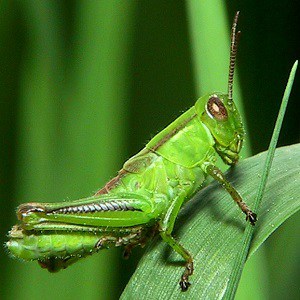

Grasshopper FactsThousands of species of grasshopper live in almost every climate on Earth. These diurnal insects have several distinctive features, including their ability to jump and fly very well. Even though they can be crop pests in swarms, they are seen as a delicacy or good luck charm in different cultures.


Grasshopper Facts

Saturday, October 1, 2016

Death Penalty Facts


The Death Penalty Dates Back to the Beginning of Time


Let’s begin our death penalty facts by discussing how the practice came to be. The first established laws related to the death penalty date back as far as the 18th century BC. In the seventh century BC, in the Draconian Code of Athens, the death penalty was the only punishment for all crimes, no matter how trivial. Criminals were put to death by crucifixion, drowning, beatings, being burned alive and even impalement. Death by hanging became the more common execution style by the 10th century. While it’s impossible to know how many executions have taken place over the years, it is estimated that in the 16th century as many as 72,000 people were executed. Punishable offenses at the time included treason, not confessing to a crime (even if innocent) and marrying a Jew.


The First Recorded Death Penalty in America Was in 1608


As European settlers arrived in America, they brought the death penalty with them. The first execution recorded in the New World was that of Captain George Kendall in Virginia in 1608. He was executed for being a spy. Every colony had different laws at the time regarding the death penalty. The colony of New York considered such offenses as hitting one’s mother or father or denying God as being punishable by death. As America grew older, the laws began to change. Pennsylvania was the first state to repeal the death penalty except in cases of first degree murder.


Lethal Injection is the Most Common Method


There are five legal methods of execution, including hanging, the use of a firing squad, a gas chamber, electrocution and lethal injection. Currently, 20 states use lethal injection as their main method of execution. 16 other states provide lethal injection but also give the inmate a choice of a different method. In 2008, almost 90% of United States based executions were carried out by lethal injection. During a lethal injection execution, the inmate goes into a chamber and is strapped to a gurney with restraints. He or she is then connected to a cardiac monitor and an IV is inserted into both arms to make sure that there is a usable vein available. At the warden’s signal, the lethal drugs are administered and the line is washed. Death typically occurs within eight minutes.


Death Penalty Trials Are Costly


Dozens of studies have been conducted to determine the real cost of keeping the death penalty legal in each state. In Washington at Seattle University, a study found that the estimated cost of a trial in which the death penalty was sought cost an average of $1 million more than a similar case in which the death penalty was not sought. In California, it has been estimated that the death penalty has cost the state over $4 billion since the late 1970s, including pending trial costs and the overall cost of incarceration. The cost of the actual execution is small in comparison, with the drug(s) used in lethal injections costing less than $100.


The Public Has Long Debated the Death Penalty


3 in 5 Americans support the death penalty

3 in 5 Americans support the death penalty

The death penalty is a common debate subject among Americans. A 2015 survey found that 61% of US adults support the use of the death penalty while 37% opposed. The opposing percentage has been rising gradually. About six out of every 10 Americans support the use of the death penalty for a person convicted of murder. There are wide gaps when it comes to supporting the death penalty between different races. 68% of white Americans support the death penalty compared to only 39% of black Americans. The same study showed that 56% of Hispanic Americans are in support of capital punishment. While the majority of the public continues to support the death penalty, less executions are being carried out each year in most states due to the friction caused by conflicting opinions.

Race Plays a Factor in the Death Penalty


There has long been speculation by many whether racial bias comes into play when it comes to the death penalty. A 2003 report issued by Amnesty International found that even though there are typically an even number of black and white murder victims, nearly 80% of people executed were convicted in murders involving black victims. More than 20% of black executions were convicted by all-white juries. Other reports agree that race plays a factor in convictions. A recent study performed at the University of Washington showed that jurors were four and a half times more likely to impose the death sentence on the defendant if they were black rather than white. Racial bias has been a pillar in the ongoing debate against the death penalty.


Death Penalty Laws Differ by State


US Death Penalty by state

US Death Penalty by state

According the death penalty facts, state government determines the stipulations of capital punishment, which vary across the United States. Lethal injection is currently the primary method in 32 states that still allow or have convicted criminals still on death row. Texas was the first state to use the method and 1982. If lethal injection is unavailable for whatever reason, 15 states have a secondary method including electrocution, lethal gas and hanging. Recently, New Mexico, Illinois, Connecticut, Maryland and Nebraska have abolished the death penalty and replaced it with the sentence of life in prison with no possibility for parole. Delaware has ruled that capital punishment is unconstitutional while other states still debate its fairness and effectiveness in controlling local crime.

The Majority of Countries Do Not Practice Capital Punishment


The death penalty is legal in and still practiced by 58 countries, including America. The five countries carrying out the most executions per year include China, Iran, North Korea, Yemen and the United States. From 2007 to 2012, thousands were executed in China while 220 prisoners were executed in the United States There are nearly five times more countries not practicing capital punishment than those that are. Public execution is still legal in Iran, North Korea, Saudi Arabia and Somalia. In one case, a Sudanese man’s head with sewn back onto his body after he was beheaded and hung from a pole in a public place.


Death Row Inmates Get to Choose Their Last Meal


Allowing a prisoner to order and enjoy the last meal is a customary ritual that many know about. But many of these requests are either strange or excessive. Allen Lee Davis, convicted of murder, ordered one lobster tail, fried potatoes, a half pound of fried shrimp, 6 ounces of fried clams, half a loaf of garlic bread and 32 ounces of A&W root beer. Ted Bundy, the famous serial killer, declined his last meal and was given the standard meal at the time, which included a steak, eggs, hash browns, toast, milk and juice. Timothy McVeigh, the Oklahoma City Bomber, simply asked for two pints of mint chocolate ice cream.


Ouch! Some Intense and Barbaric Methods of Execution Were Once Used


Lethal injection is a humane form of the death penalty in comparison to those used in the past. During the Middle Ages, people would be strung upside down between two trees and then virtually sawed in half, starting between the legs. Because they were upside down, blood would continue to flow to their brain, keeping them alive for hours after the beginning of the execution. Boiling was also a common method, with people being hung above large cauldrons of boiling liquid. Most of the time it was water but sometimes tar or oil was used, which essentially fried the person to death.


Women Avoided the Death Penalty for Over 100 Years in Texas


While not as common, a woman being on death row is not unheard of. Karla Faye tucker was executed in 1998, the first woman since 1984 in the United States and the first woman in Texas since 1863. She was convicted of murder but because of her gender and well-known Christianity, her execution inspired a large national movement. While on death row, Tucker requested that her life be spared because she was under the influence of drugs when committing the crime. She argued that she would not have committed the murders had she not been under the influence. Her plea was widely supported but was denied. After 14 years on death row, she was executed by lethal injection.


Sometimes, Executions Go Terribly Wrong


Unfortunately, death penalty facts reveals that executions can go wrong. In fact, just over 7% of lethal injections over the course of 100 years did not go according to plan. Out of nearly 9000 total executions, nearly 300 were botched. For example, in 1983 John Evans was sentenced to death by electrocution. After the first jolt, sparks and flames were seen coming from the electrode attached to Evans’ leg. It actually broke apart and caught fire. When a heartbeat was still found, the electrode was reattached and another jolt of electricity was applied, resulting in more smoke and the odor of burning flesh. A heartbeat was still found. Evans’ lawyer pleaded for the execution to be stopped but a third jolt was applied. The execution took a total of 14 minutes and left Evans’ body completely charred.


A Convicted Person’s Innocence Has Been Proven After Executions


With the advancement of technology, it’s become easier to prove both innocence and guilt in crimes. Unfortunately for some, their innocence was proven only after the execution had taken place. For example, Larry Griffin was convicted of the 1980 murder of Quintin Moss. The conviction was largely based on the testimony of one man who was at the scene at the time of the murder. Griffin’s attorney did not challenge the testimony, even though all evidence was circumstantial. Griffin was executed by lethal injection in 1995 and maintained his innocence right up until the last moment. In 2005, the University of Michigan Law School reopened the case and concluded that Griffin was in fact innocent.


Have a Weak Stomach? Up Until 1936, Executions Were Public


At one time in history, death penalty facts tells us that public executions were common public affairs. Reporters and photographers would cover the events and in some cases, thousands would come to witness them. The last public execution held in United States was in 1936 when Rainey Bethea with hanged for his conviction of rape and murder. The carnival-like atmosphere that surrounded the event led to the outlaw of public executions. In 2001, Timothy McVeigh was executed by lethal injection while family members of the deceased watched on a closed circuit television, making it the closest thing to a public execution in the recent past.


Death Penalty Facts – Facts about Death Penalty Summary


Death Penalty FactsDeath penalty facts opens up the discussion about what power humans have over one another. Do we have the right to punish by taking someone’s life? Is the death penalty fair? Learn all about the history of this practice, including past and current methods, and how much our views have changed throughout the years thanks to extensive studies surrounding the death penalty.


Death Penalty Facts